







Question: Deck - deck: vector +Deck(cards: int 10) Card enum Suit Write the Card class in file card.cpp as shown to the right with a regression
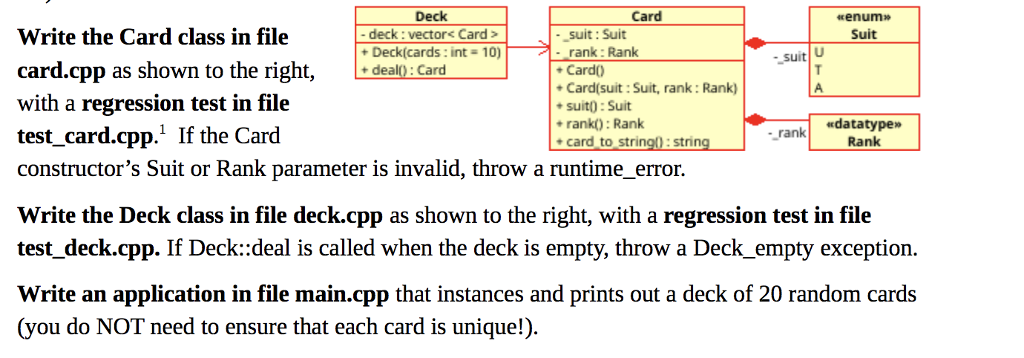

Deck - deck: vector +Deck(cards: int 10) Card enum Suit Write the Card class in file card.cpp as shown to the right with a regression test in file test card.cpp.1 If the Card constructor's Suit or Rank parameter is invalid, throw a runtime_error. suit: Suit - rank: Rank Card Card(suit: Suit, rank: Rank) suit):Suit rank): Rank + card to string: strin -Suit , +deal:Card datatype Rank - rank Write the Deck class in file deck.cpp as shown to the right, with a regression test in file test_ deck.cpp. If Deck::deal is called when the deck is empty, throw a Deck_empty exception. Write an application in file main.cpp that instances and prints out a deck of 20 random cards (you do NOT need to ensure that each card is unique!) Deck - deck: vector +Deck(cards: int 10) Card enum Suit Write the Card class in file card.cpp as shown to the right with a regression test in file test card.cpp.1 If the Card constructor's Suit or Rank parameter is invalid, throw a runtime_error. suit: Suit - rank: Rank Card Card(suit: Suit, rank: Rank) suit):Suit rank): Rank + card to string: strin -Suit , +deal:Card datatype Rank - rank Write the Deck class in file deck.cpp as shown to the right, with a regression test in file test_ deck.cpp. If Deck::deal is called when the deck is empty, throw a Deck_empty exception. Write an application in file main.cpp that instances and prints out a deck of 20 random cards (you do NOT need to ensure that each card is unique!)
Step by Step Solution
There are 3 Steps involved in it

Get step-by-step solutions from verified subject matter experts
 Study Help