







Question: Define a function named append_sums_to_end (listi, list2) which takes two lists of numbers as parameters. The function will append the sum of the integers in
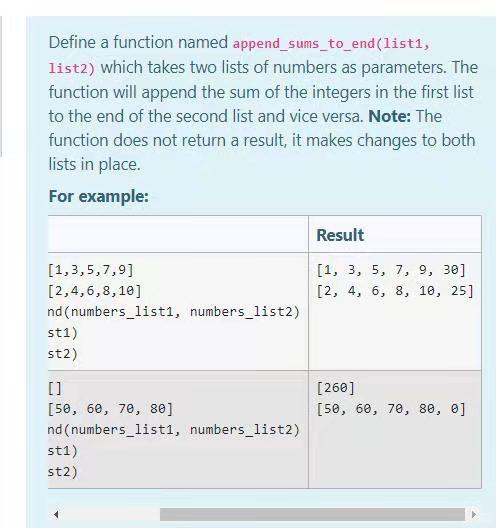
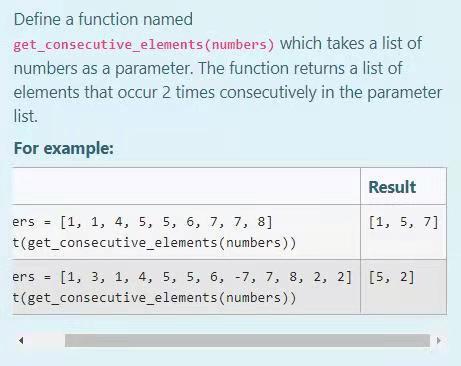
Define a function named append_sums_to_end (listi, list2) which takes two lists of numbers as parameters. The function will append the sum of the integers in the first list to the end of the second list and vice versa. Note: The function does not return a result, it makes changes to both lists in place. For example: Result [1, 3, 5, 7, 9, 30] [2, 4, 6, 8, 10, 25] (1,3,5,7,9) [2,4,6,8,10] nd (numbers_listi, numbers_list2) st1) st2) [260] [50, 60, 70, 80, 0] [] [50, 60, 70, 80] nd(numbers_listi, numbers_list2) sti) st2) Define a function named get_consecutive_elements (numbers) which takes a list of numbers as a parameter. The function returns a list of elements that occur 2 times consecutively in the parameter list. For example: Result [1, 5, 7] ers [1, 1, 4, 5, 5, 6, 7, 7, 8] t(get_consecutive_elements (numbers)) ers [1, 3, 1, 4, 5, 5, 6, -7, 7, 8, 2, 2] [5, 2] t(get_consecutive_elements (numbers))
Step by Step Solution
There are 3 Steps involved in it

Get step-by-step solutions from verified subject matter experts
 Study Help