Question: Define the following terms: 1. Analyze2. Objectively 3. Thesis Answer the Following Questions using the assignment sheet.What is the purpose of your third essay, according
Define the following terms: 1. Analyze2. Objectively 3. Thesis Answer the Following Questions using the assignment sheet.What is the purpose of your third essay, according to the assignment sheet? In other words, what are you trying to accomplish in this essay? Who is your audience for your third essay, according to the assignment sheet? How will that affect what and how you write? How will you support your ideas in this essay? How will you support your ideas in this essay? In other words, what evidence do you need to use in your essay? What evidence do you already have (if any), and why/how will this work in this assignment? What do you still need to do to find support for your essay?Assignment sheet:
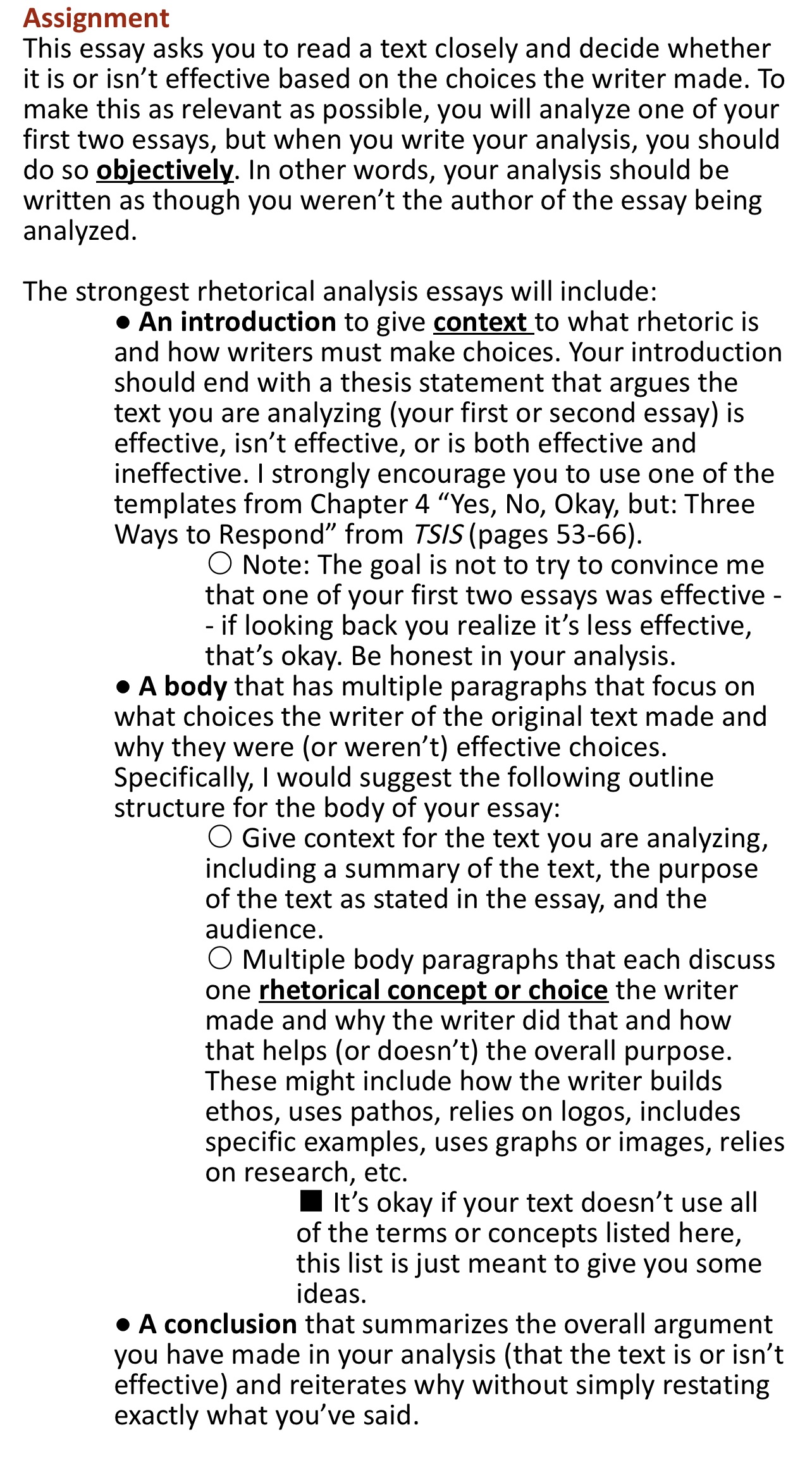
Assignment This essay asks you to read a text closely and decide whether it is or isn't effective based on the choices the writer made. To make this as relevant as possible, you will analyze one of your first two essays, but when you write your analysis, you should do so obiectively. In other words, your analysis should be written as though you weren't the author of the essay being analyzed. The strongest rhetorical analysis essays will include: 0 An introduction to give context to what rhetoric is and how writers must make choices. Your introduction should end with a thesis statement that argues the text you are analyzing (your first or second essay) is effective, isn't effective, or is both effective and ineffective. I strongly encourage you to use one of the templates from Chapter 4 \"Yes, No, Okay, but: Three Ways to Respond\" from T$l$(pages 53-66). 0 Note: The goal is not to try to convince me that one of your first two essays was effective - - if looking back you realize it's less effective, that's okay. Be honest in your analysis. 0 A body that has multiple paragraphs that focus on what choices the writer of the original text made and why they were (or weren't) effective choices. Specifically, I would suggest the following outline structure for the body of your essay: 0 Give context for the text you are analyzing, including a summary of the text, the purpose of the text as stated in the essay, and the audience. 0 Multiple body paragraphs that each discuss one rhetorical concept or choice the writer made and why the writer did that and how that helps (or doesn't) the overall purpose. These might include how the writer builds ethos, uses pathos, relies on logos, includes specific examples, uses graphs or images, relies on research, etc. I It's okay if your text doesn't use all of the terms or concepts listed here, this list is just meant to give you some ideas. 0 A conclusion that summarizes the overall argument you have made in your analysis (that the text is or isn't effective) and reiterates why without simply restating exactly what you've said









 Study Help