







Question: Demonstration Problem 5-5: Inventory Cost Flow Assumptions Crystal Apple Sales Company began 2019 with cash of $2,000, inventory of $3,600 (200 crystal apples that
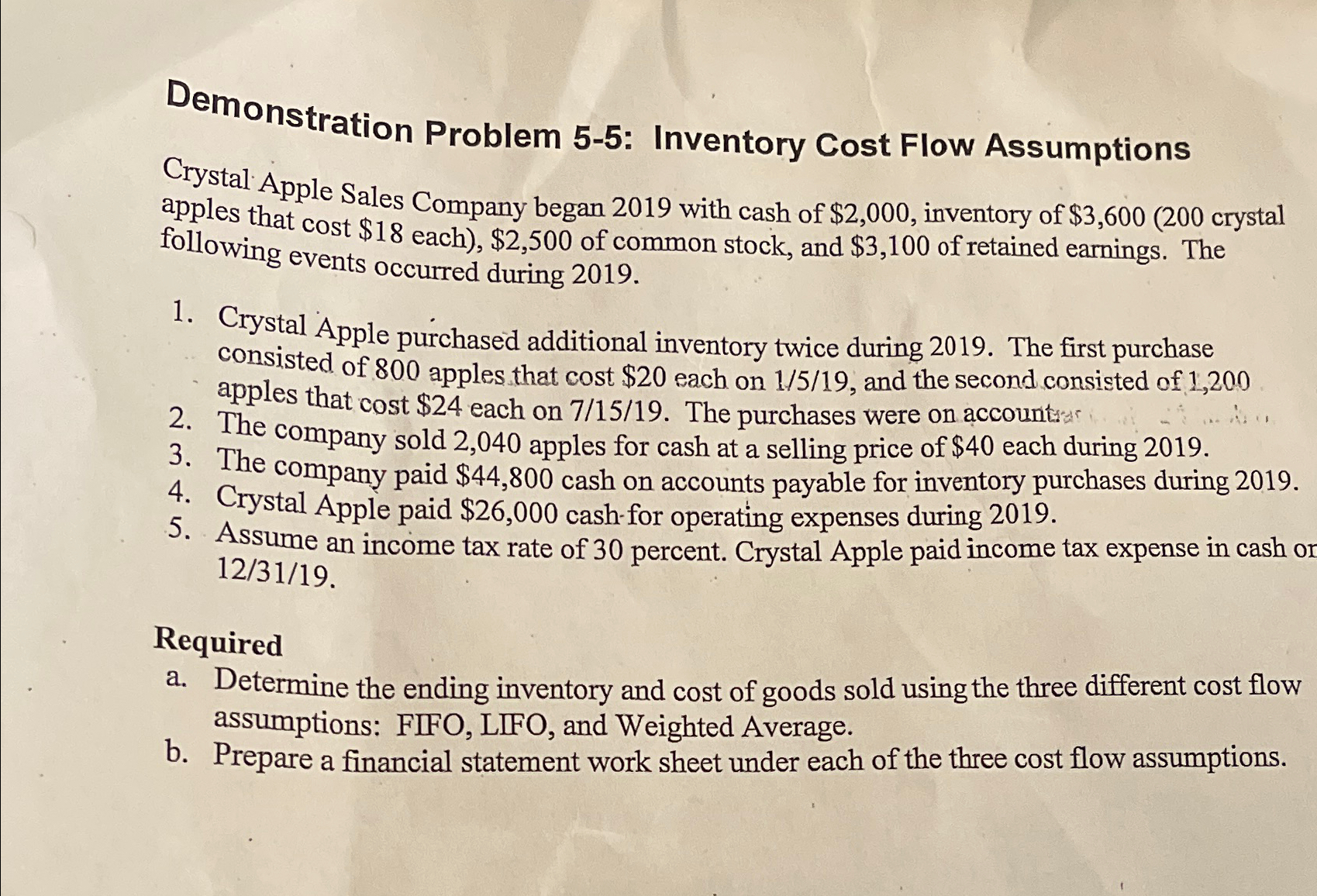
Demonstration Problem 5-5: Inventory Cost Flow Assumptions Crystal Apple Sales Company began 2019 with cash of $2,000, inventory of $3,600 (200 crystal apples that cost $18 each), $2,500 of common stock, and $3,100 of retained earnings. The following events occurred during 2019. 1. Crystal Apple purchased additional inventory twice during 2019. The first purchase consisted of 800 apples that cost $20 each on 1/5/19, and the second consisted of 1,200 apples that cost $24 each on 7/15/19. The purchases were on accounta 2. The company sold 2,040 apples for cash at a selling price of $40 each during 2019. 3. The company paid $44,800 cash on accounts payable for inventory purchases during 2019. 4. Crystal Apple paid $26,000 cash for operating expenses during 2019. 5. Assume an income tax rate of 30 percent. Crystal Apple paid income tax expense in cash or 12/31/19. Required a. Determine the ending inventory and cost of goods sold using the three different cost flow assumptions: FIFO, LIFO, and Weighted Average. b. Prepare a financial statement work sheet under each of the three cost flow assumptions.
Step by Step Solution
There are 3 Steps involved in it

Get step-by-step solutions from verified subject matter experts
 Study Help