Question: Describe each segment using multiple segmentation bases and multiple segmentation variables. Each segment should have a detailed profile so that readers can form an idea
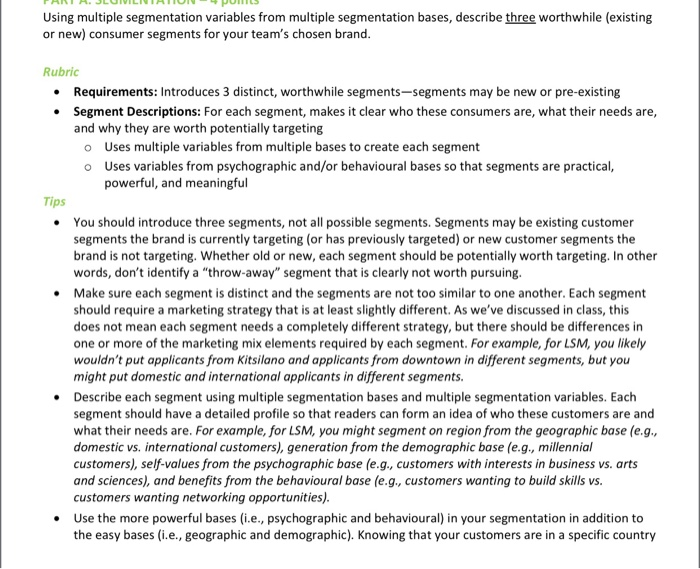
Describe each segment using multiple segmentation bases and multiple segmentation variables. Each segment should have a detailed profile so that readers can form an idea of who these customers are and what their needs are. For example, for LSM, you might segment on region from the geographic base (e.g., domestic vs. international customers), generation from the demographic base (e.g., millennial customers), self-values from the psychographic base (e.g., customers with interests in business vs. arts and sciences), and benefits from the behavioural base (e.g., customers wanting to build skills vs. customers wanting networking opportunities).
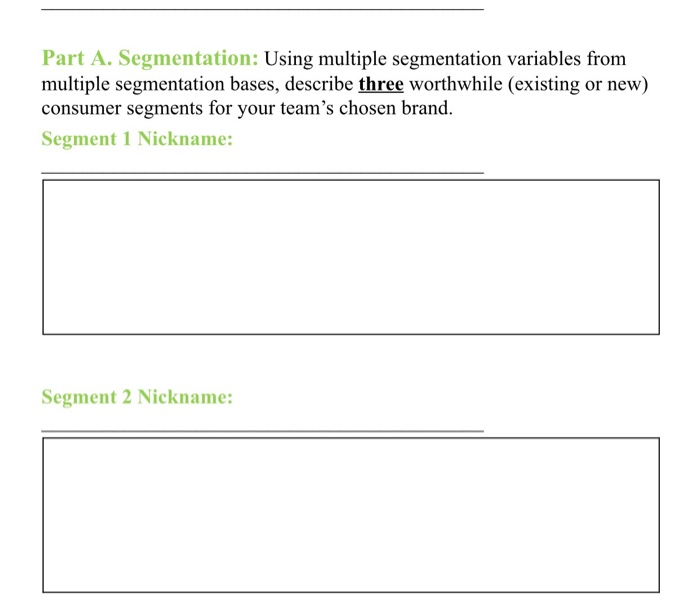
Part A. Segmentation: Using multiple segmentation variables from multiple segmentation bases, describe three worthwhile (existing or new) consumer segments for your team's chosen brand. Segment 1 Nickname: Segment 2 Nickname: Using multiple segmentation variables from multiple segmentation bases, describe three worthwhile (existing or new) consumer segments for your team's chosen brand. Rubric Requirements: Introduces 3 distinct, worthwhile segments-segments may be new or pre-existing Segment Descriptions: For each segment, makes it clear who these consumers are, what their needs are, and why they are worth potentially targeting Uses multiple variables from multiple bases to create each segment Uses variables from psychographic and/or behavioural bases so that segments are practical, powerful, and meaningful Tips You should introduce three segments, not all possible segments. Segments may be existing customer segments the brand is currently targeting (or has previously targeted) or new customer segments the brand is not targeting. Whether old or new, each segment should be potentially worth targeting. In other words, don't identify a "throw-away" segment that is clearly not worth pursuing. Make sure each segment is distinct and the segments are not too similar to one another. Each segment should require a marketing strategy that is at least slightly different. As we've discussed in class, this does not mean each segment needs a completely different strategy, but there should be differences in one or more of the marketing mix elements required by each segment. For example, for LSM, you likely wouldn't put applicants from Kitsilano and applicants from downtown in different segments, but you might put domestic and international applicants in different segments. Describe each segment using multiple segmentation bases and multiple segmentation variables. Each segment should have a detailed profile so that readers can form an idea of who these customers are and what their needs are. For example, for LSM, you might segment on region from the geographic base (e.g., domestic vs. international customers), generation from the demographic base (e.g., millennial customers), self-values from the psychographic base (e.g., customers with interests in business vs. arts and sciences), and benefits from the behavioural base (e.g., customers wanting to build skills vs. customers wanting networking opportunities). Use the more powerful bases (.e., psychographic and behavioural) in your segmentation in addition to the easy bases (i.e., geographic and demographic). Knowing that your customers are in a specific country









 Study Help