Describe the research objectives, the methodology used, how the quantitative versus qualitative results are presented and discussed. What is the conclusion?
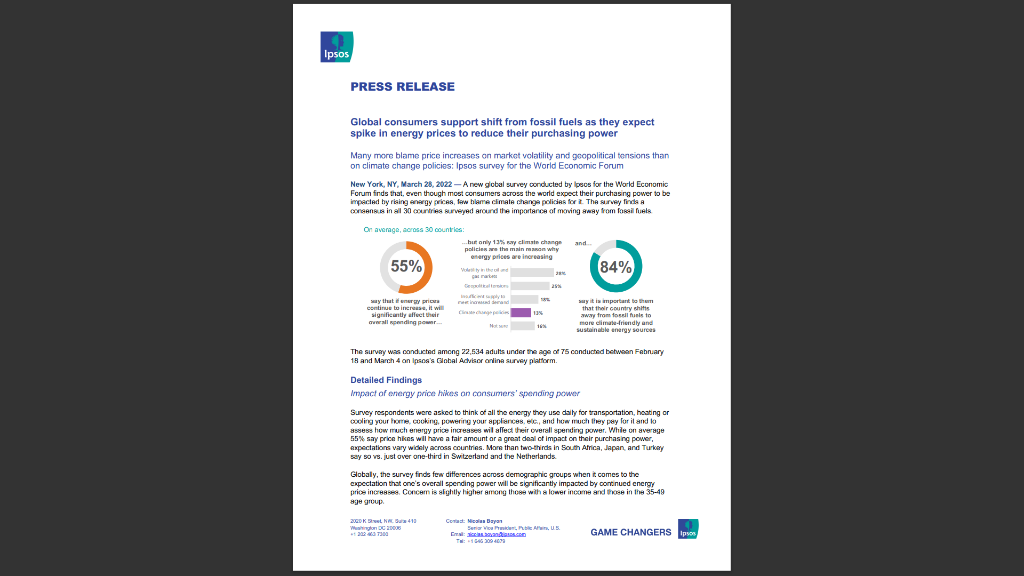
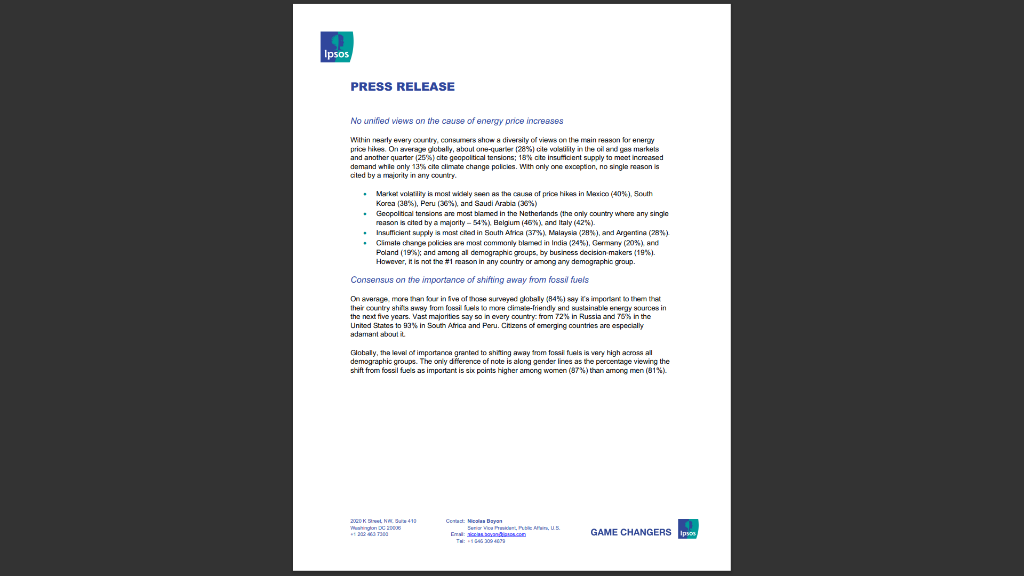
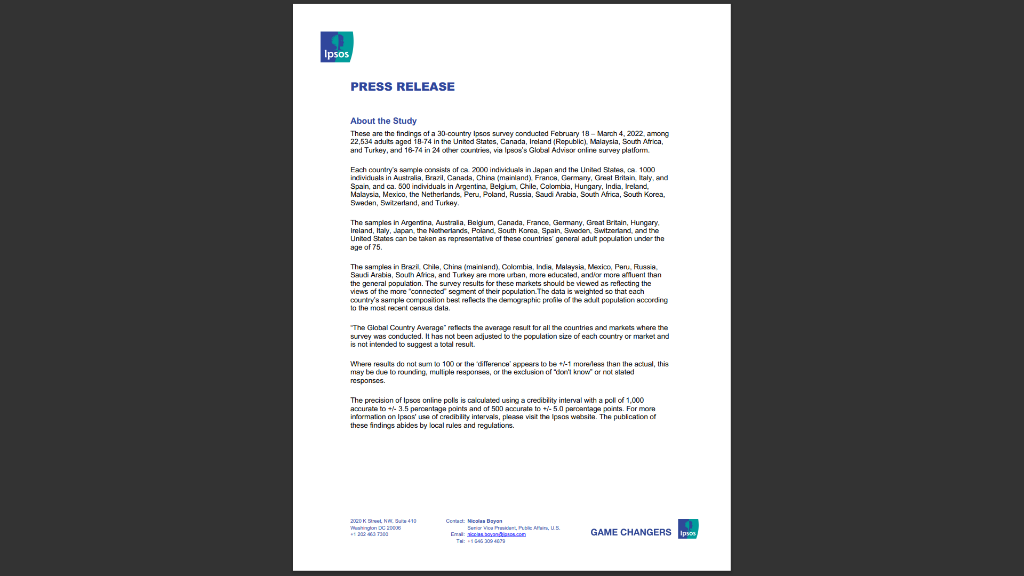
Global consumers support shift from fossil fuels as they expect splke in energy prices to reduce their purchasing power Many more blame price increases on market volatility and goopolitical tonsions than on climate change policies: Ipsos survey for the Worid Economic Forum New York, NY, March 25, 202z - A new global survey conducted by lpesos for the Workd Economic Forum fris that, even though most corsumers asross the world expect their purchasing power to be impactad by riaing energy gricas, few hlame cimate rehange policias for 2 . The sifvey finda a The survmy was canductad ameng 22,534 aduls under the age of 75 canduched betwaan Fabn.ary 18 and March 4 an lpens's Clabal Advisor online siarvey plattorm. Detailed Findings Impact of ertergy price thikes an oonstumers' spending pecwer Survey respondents were asked to think of all the encrgy they use daly for transportation, heating or yssess hew much energy pricz incresses wil alfect thir cwerall spending power. While on average 55\%, say prica hikns wil haw a fair amount or a great desl of impact on their purchasing power, expectations vary wiskly across countrins. Mane than twothinds in South Africa, Japan, and Turkey say so vs. just over one-third in Swizerland and the Netherlands. Elobaly, the survey frods few differences across demographic groups when it comes to the expectation that one's oreral spending power will be sigrifiearthy impacted by consued energf price incre8eed. Concern is alghtly higher gmong these with \& lower incame and trae in the 3549 yje group. No unifled wiews on the cause of energy price incresses Wihin nearly every couritry, consumers ghow \& diversily of views on the main a segon far energy and another quarter (25\%) cite gecpoltical tensions; 18\% cto insumicient supply to moct increased ciled by a majority in any courfry. Korea (3es), Peru (36\%) and Saudi Araba (30\%) - Cocpolital tensions ane moet blamed in the Natheriands (the only pountry whore any singlo mason is ditad by a majority - 54\%) Balgum (46\%) and ltaly (42\%). - Insi:ficiant sugply is most ched in South Atrica (3T\%) Malaysia (28\%), and Asgantina (28\%) - Climale charga policies ara mast commanly btamed in India (242), Cermary (20\%) ard Poland (19'\$); and among al demographic groups, by business docision makor (19\%). Hawever, it is not the # 1 reason in any country or among ary demographia group. Consensus on the importance of shifting away from fossi fuels the next five years. Vast majartices say so in cvery country: from 72% in Russia and 75% in the Unhod States to 93\% in South Africa and Poru. Craens of emerging countries are especially ydumunt aboul it. Clobaly, the laval of importarca grantad to shiting way trem fosei fi.sls is wary high arross al demographic groups. The only dffierence of note is along gender lines as the percentage viewing the shift from foesil fueis as importart is six points higher among women (97\%) then among men (101\%) About the Study These are the findings of a 30 -country lpses survey conducted February 18 - March 4, 202z, among 22,534 aduts aged 1974 in the Unhod States, Canada, Ireiand (Roputilic). Maliaysia, Sourn Arrica, and Turkey, and 16-74 in 24 other courinies, vig lpeos's Globy Adviox enline survey platfonm. insividuats in Austrelia, Brazil, Canada, China (mairland) Franca, Carmary, Corat Britain italy, and Span, and ca. 500 inchiduals in A vagentina, Oelgium, Chile, Colombia, Hungary, India, Ireland, Malsysa, Mexico, the Netherlands, Peru, Poland, Russia, Ssud Aratia, South Afria, South Korea, Swadan, Swizartand, and Turkay. The sampies in Argemana, Australa, Balgum, Canada, France, Gomany, Grant Brtain, Hungary, Imeland, Italy, Japan, the Nothortands, Poland, South Kares, Spain, Swoden, Switzertand, and the Unhod States uan be taknn as rapresantative of thase countries' general adul: populiation under the age of 75 . the general popuation. The survey results for these markets should be vicwed as reflecting the vicws of the more "conneched segment of their population. The data is weightod so that each to the most recant cansiat date. "Tha Clabal Courtry Avarage" raflects tha winrage rasilt far all the countries and markets where the survey was concucied. It has not been adiusted to the population size of each courtry or market and is not intended to suggest a botal result. responses. The precision of Ipsos online pels is caiculated using a crecibelity interval with a pol of 1,000 accurate to +i- 3.5 parsantage paints and of 502 accurate to ti- 5.0 parsantage points. For mora information on Ipeas' use of cracihility intarvals, please visit the Ipans woterita. The publeation of these indings abides by local rules and regulations




