







Question: Design and implement a distributed and parallel database system using PostgreSQL for an e - commerce platform. Focus on the following requirements: 1 . Brief
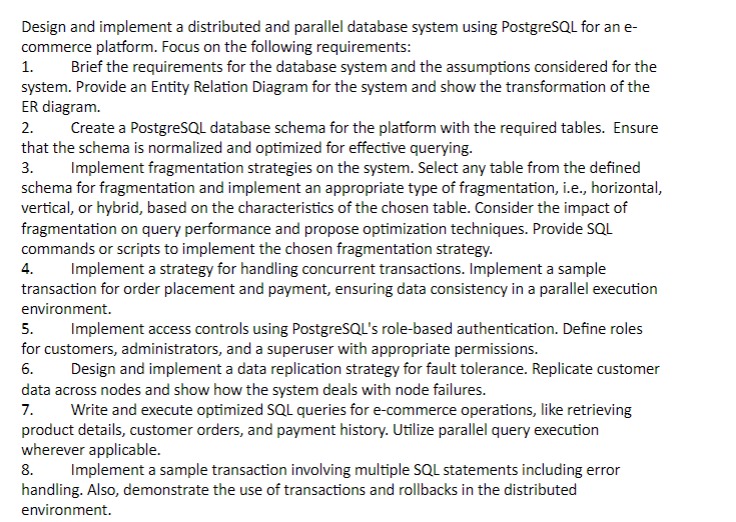
Design and implement a distributed and parallel database system using PostgreSQL for an ecommerce platform. Focus on the following requirements:
Brief the requirements for the database system and the assumptions considered for the system. Provide an Entity Relation Diagram for the system and show the transformation of the ER diagram.
Create a PostgreSQL database schema for the platform with the required tables. Ensure that the schema is normalized and optimized for effective querying.
Implement fragmentation strategies on the system. Select any table from the defined schema for fragmentation and implement an appropriate type of fragmentation, ie horizontal, vertical, or hybrid, based on the characteristics of the chosen table. Consider the impact of fragmentation on query performance and propose optimization techniques. Provide SQL commands or scripts to implement the chosen fragmentation strategy.
Implement a strategy for handling concurrent transactions. Implement a sample transaction for order placement and payment, ensuring data consistency in a parallel execution environment.
Implement access controls using PostgreSQL's rolebased authentication. Define roles for customers, administrators, and a superuser with appropriate permissions.
Design and implement a data replication strategy for fault tolerance. Replicate customer data across nodes and show how the system deals with node failures.
Write and execute optimized SQL queries for ecommerce operations, like retrieving product details, customer orders, and payment history. Utilize parallel query execution wherever applicable.
Implement a sample transaction involving multiple SQL statements including error handling. Also, demonstrate the use of transactions and rollbacks in the distributed environment.
Step by Step Solution
There are 3 Steps involved in it
1 Expert Approved Answer
Step: 1 Unlock

Question Has Been Solved by an Expert!
Get step-by-step solutions from verified subject matter experts
Step: 2 Unlock
Step: 3 Unlock
 Study Help