







Question: Determine whether the random variable X has a binomial distribution. If it does, state the number of trials n. If it does not, explain why
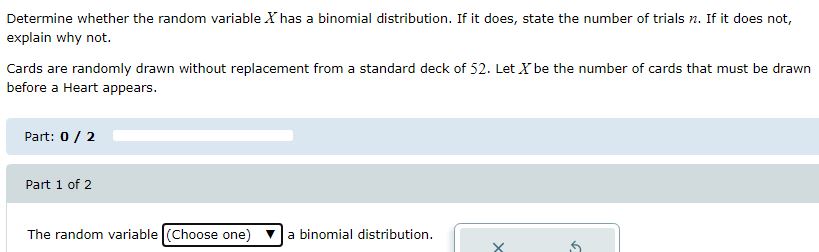
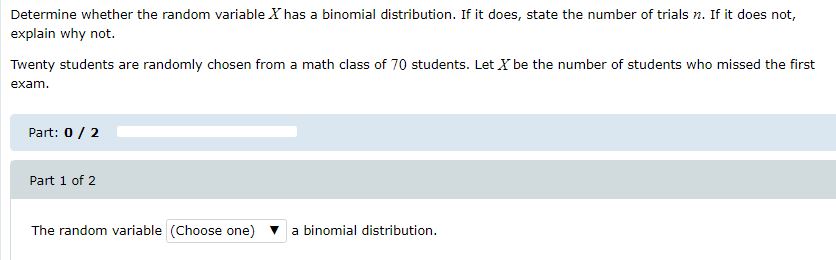
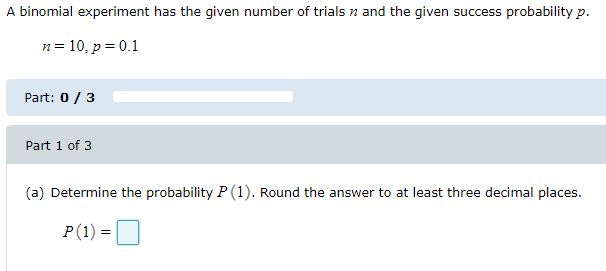
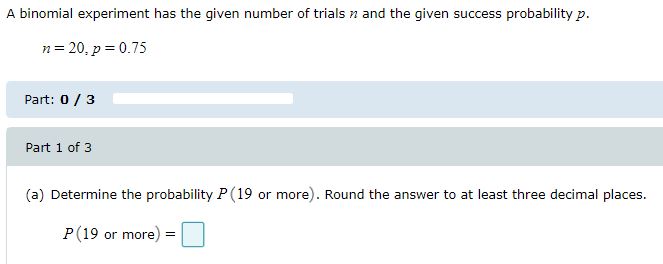
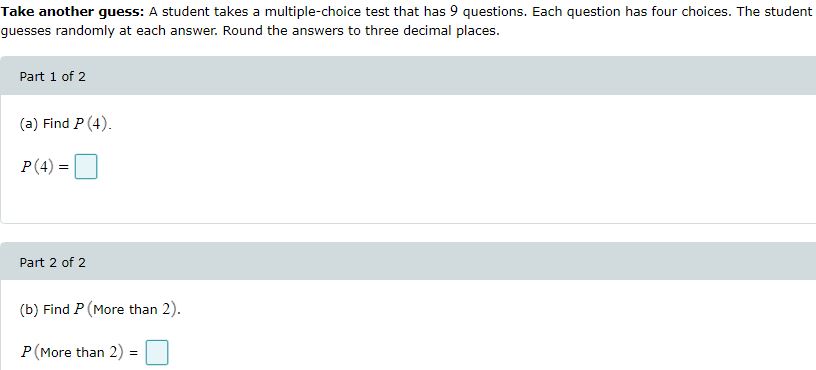
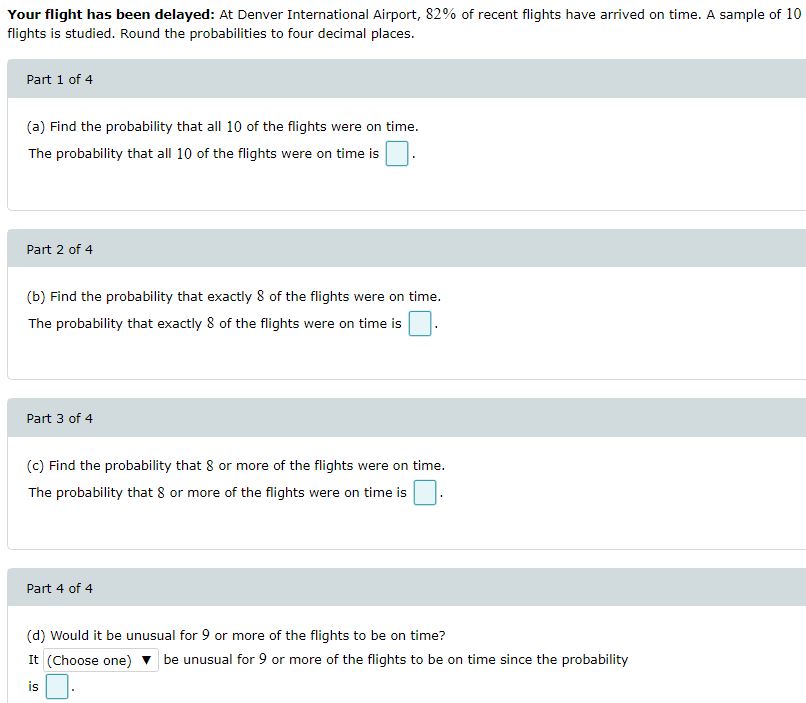
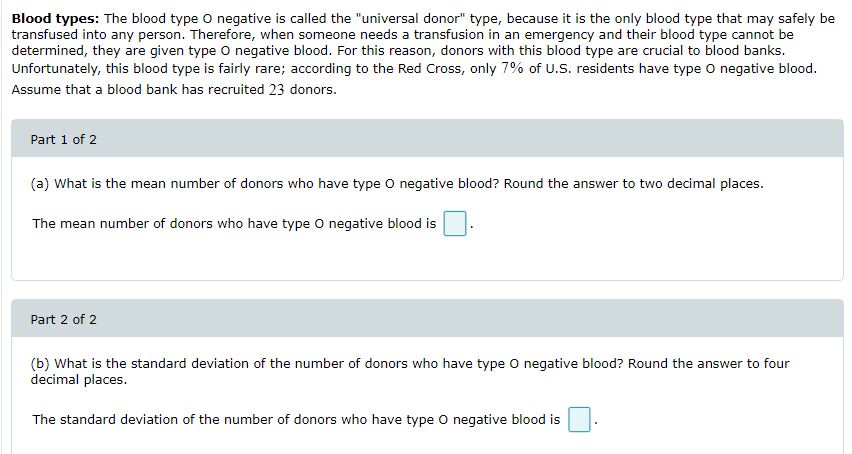
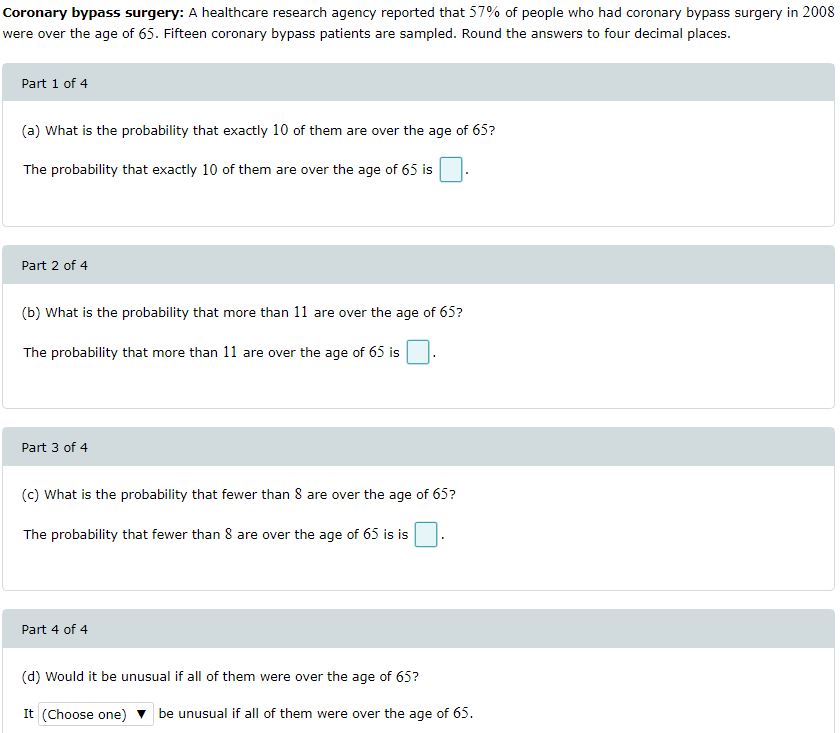
Determine whether the random variable X has a binomial distribution. If it does, state the number of trials n. If it does not, explain why not. Cards are randomly drawn without replacement from a standard deck of 52. Let X be the number of cards that must be drawn before a Heart appears. Part: 0 / 2 Part 1 of 2 The random variable (Choose one) a binomial distribution. 6Determine whether the random variable \\" has a binomial distribution. If it does, state the number of trials n. If it does not, explain why not. Twenty students are randomly chosen from a math class of 70 students. Let Y be the number of students who missed the first exam. Part: 0 / 2 Part 1 of 2 The random variable (Choose one) a binomial distribution.A binomial experiment has the given number of trials * and the given success probability p. n = 10, p = 0.1 Part: 0 / 3 Part 1 of 3 (a) Determine the probability P (1). Round the answer to at least three decimal places. P(1) =\f\f\fBlood types: The blood type 0 negative is called the "universal donor" type, because it is the only blood type that may safely be bansfused into any person. Therefore, when someone needs a transfusion in an emergency and their blood type cannot be determined, they are given type 0 negative blood. For this reason, donors with this blood type are crucial to blood banks. Unfortunately, Ihis blood type is fairly nare', according to the Red Cross, only T91: of U.S. residents have type 0 negaye blood. Assume that a blood bank has recruited 23 donors. {a} What is the mean number of donors who haye'type' negative blood? Round the answer to two decimal places. The mean number of donors who have type 0 negative blood is D. [b] What is the standard deviation of the number ofdonors who have type 0 negative blood? Round the answer to-four decimal places. The slandard deviation of the number of donors who have type 0 negative blood is D. Coronary bypass surgery: A. healicare reseamh'agency ieported that 53"}6 of people who had coronary bypass surgery in 2509; were over the age of 65'. Fifteen coronary bypass patients are sampled. Round the answers to four decimal plaees. (a) What is the probability that exactly 10 ofthem are merthe age of 65'? The probability that exactly 10 ofthem are over the-age of 65 is D. [b] What is the probability that more than 11 are Dryer the age of 65? The probability that more'than 11 are over the age of 65 is E]. {c} What is the pfobability that fewer than 8 are over the age of 65? The probability that fewer than .8 are over the age of 65 is is D. (d) Would it be unusual ifall of then} were over the age ofj? It I(choose one] 7 be unusual if all of them were over the age of 55
Step by Step Solution
There are 3 Steps involved in it

Get step-by-step solutions from verified subject matter experts
 Study Help