







Question: Develop a emergency action plan that includes the following:VII. Fire (Critical; However, some sub elements (i.e., industrial fire brigade) may not be applicable to all
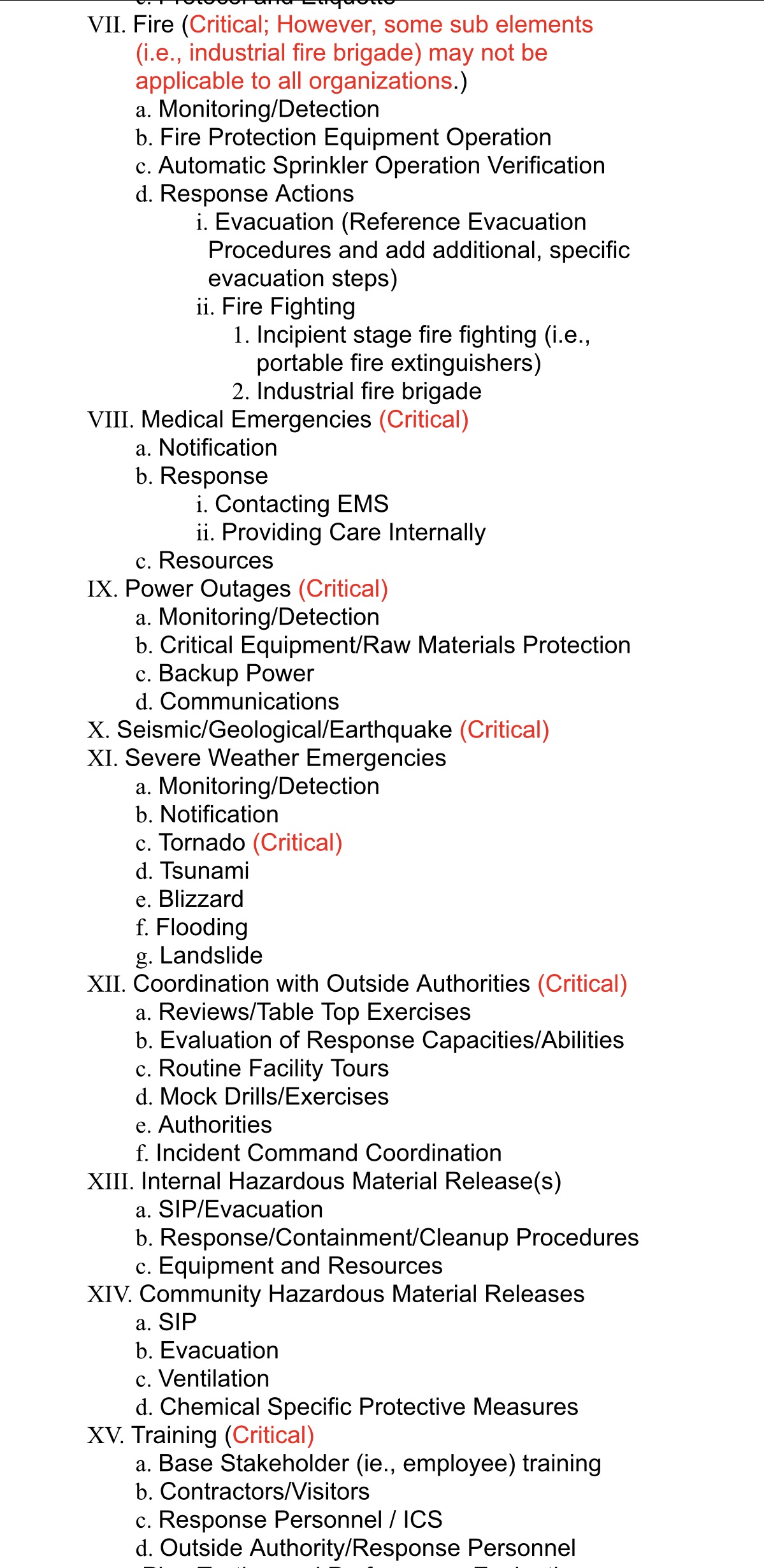
Develop a emergency action plan that includes the following:VII. Fire (Critical; However, some sub elements (i.e., industrial fire brigade) may not be applicable to all organizations.)a. Monitoring/Detectionb. Fire Protection Equipment Operationc. Automatic Sprinkler Operation Verificationd. Response Actionsi. Evacuation (Reference Evacuation Procedures and add additional, specific evacuation steps)ii. Fire Fighting1. Incipient stage fire fighting (i.e., portable fire extinguishers)2. Industrial fire brigadeVIII. Medical Emergencies (Critical)a. Notificationb. Responsei. Contacting EMSii. Providing Care Internallyc. ResourcesIX. Power Outages (Critical)a. Monitoring/Detectionb. Critical Equipment/Raw Materials Protectionc. Backup Powerd. CommunicationsX. Seismic/Geological/Earthquake (Critical)XI. Severe Weather Emergenciesa. Monitoring/Detectionb. Notificationc. Tornado (Critical)d. Tsunamie. Blizzardf. Floodingg. LandslideXII. Coordination with Outside Authorities (Critical)a. Reviews/Table Top Exercisesb. Evaluation of Response Capacities/Abilitiesc. Routine Facility Toursd. Mock Drills/Exercisese. Authoritiesf. Incident Command CoordinationXIII. Internal Hazardous Material Release(s)a. SIP/Evacuationb. Response/Containment/Cleanup Proceduresc. Equipment and ResourcesXIV. Community Hazardous Material Releasesa. SIPb. Evacuationc. Ventilationd. Chemical Specific Protective MeasuresXV. Training (Critical)a. Base Stakeholder (ie., employee) trainingb. Contractors/Visitorsc. Response Personnel / ICSd. Outside Authority/Response PersonnelXVI. Plan Testing and Performance Evaluation (Critical)XVII. Appendices (Critical)a. Checklistsb. Maps/Diagramsc. Critical Phone / Contact Information
c. . W mm -W VII. Fire (Critical; However, some sub elements (i.e., industrial fire brigade) may not be applicable to all organizations.) a. Monitoring/Detection b. Fire Protection Equipment Operation c. Automatic Sprinkler Operation Verification d. Response Actions i. Evacuation (Reference Evacuation Procedures and add additional, specific evacuation steps) ii. Fire Fighting 1. Incipient stage fire fighting (i.e., portable fire extinguishers) 2. Industrial fire brigade VIII. Medical Emergencies (Critical) a. Notification b. Response i. Contacting EMS ii. Providing Care Internally c. Resources IX. Power Outages (Critical) a. Monitoring/Detection b. Critical Equipment/Raw Materials Protection c. Backup Power d. Communications X. Seismic/Geological/Earthquake (Critical) XI. Severe Weather Emergencies a. Monitoring/Detection b. Notification c. Tornado (Critical) d. Tsunami e. Blizzard f. Flooding g.Landste XII. Coordination with Outside Authorities (Critical) a. Reviews/Table Top Exercises b. Evaluation of Response Capacities/Abilities c. Routine Facility Tours d. Mock Drills/Exercises e. Authorities f. Incident Command Coordination XIII. Internal Hazardous Material Release(s) a. SIP/Evacuation b. Response/Comainment/Cleanup Procedures c. Equipment and Resources XIV. Community Hazardous Material Releases a. SIP b. Evacuation c. Ventilation 01. Chemical Specific Protective Measures XV. Training (Critical) a. Base Stakeholder (ie., employee) training b. Contractors/Visitors c. Response Personnel / ICS d. Outside Authority/Response Personnel
Step by Step Solution
There are 3 Steps involved in it

Get step-by-step solutions from verified subject matter experts
 Study Help