







Question: Develop a professional sales training and motivation program for an organization. Ski Butternut is a ski mountain in the Berkshires dedicated to offering a great
Develop a professional sales training and motivation program for an organization.
Ski Butternut is a ski mountain in the Berkshires dedicated to offering a great family ski value. In this video, Matt Sawyer discusses the various ways that Ski Butternut uses pricing to drive new business and local business to the mountain. He also discusses how correct pricing, with input from a seasoned and motivated sales team, can help the next years business model through the development of a professional sales training program.
Address the following questions:
How do the product, place, and promotion elements of Ski Butternuts marketing mix influence the pricing strategy the company has chosen?
Would you expect demand for Ski Butternut lift tickets to be elastic? Why or why not?
What role do the product life cycle, competition, and perceptions of quality play in Ski Butternuts pricing?
Must be 800-1000 words PLEASE MAKE COPY PASTE AVAILABLE
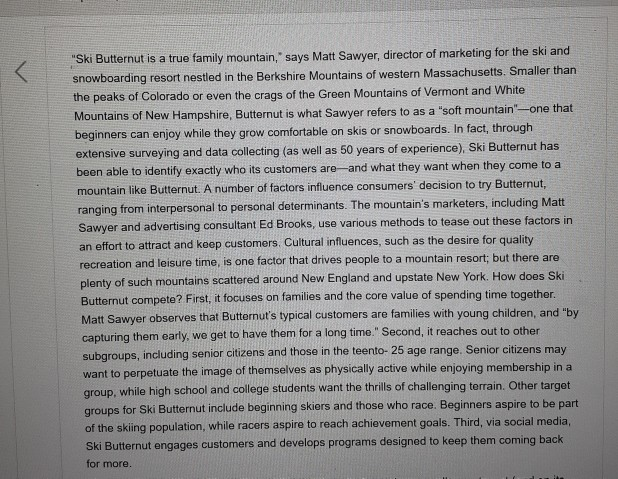
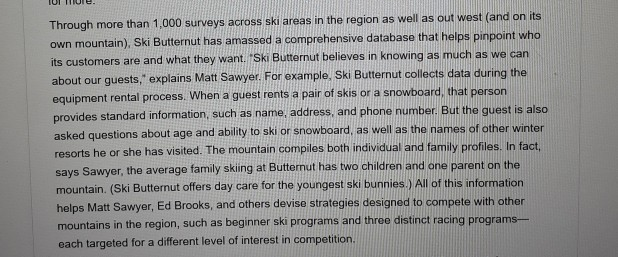
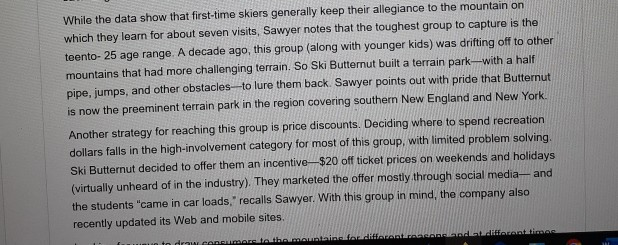

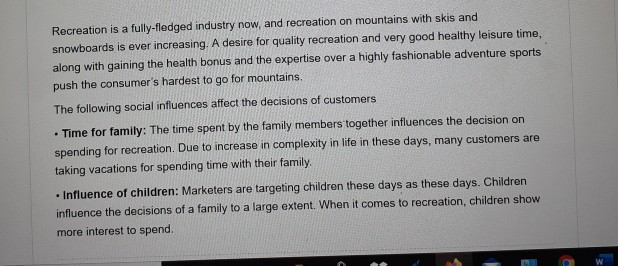
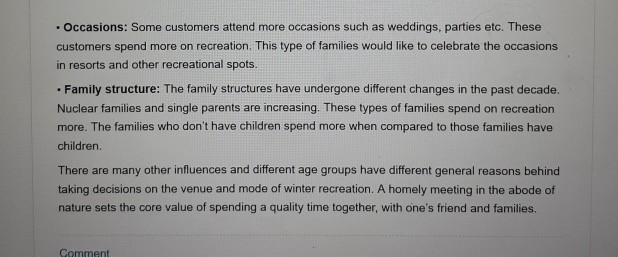
"Ski Butternut is a true family mountain," says Matt Sawyer, director of marketing for the ski and Snowboarding resort nestled in the Berkshire Mountains of western Massachusetts. Smaller than the peaks of Colorado or even the crags of the Green Mountains of Vermont and White Mountains of New Hampshire, Butternut is what Sawyer refers to as a "soft mountain"-one that beginners can enjoy while they grow comfortable on skis or snowboards. In fact, through extensive surveying and data collecting (as well as 50 years of experience), Ski Butternut has been able to identify exactly who its customers are and what they want when they come to a mountain like Butternut. A number of factors influence consumers' decision to try Butternut, ranging from interpersonal to personal determinants. The mountain's marketers, including Matt Sawyer and advertising consultant Ed Brooks, use various methods to tease out these factors in an effort to attract and keep customers, Cultural influences, such as the desire for quality recreation and leisure time, is one factor that drives people to a mountain resort; but there are plenty of such mountains scattered around New England and upstate New York. How does Ski Butternut compete? First, it focuses on families and the core value of spending time together. Matt Sawyer observes that Butternut's typical customers are families with young children, and "by capturing them early, we get to have them for a long time." Second, it reaches out to other subgroups, including senior citizens and those in the teento-25 age range. Senior citizens may want to perpetuate the image of themselves as physically active while enjoying membership in a group, while high school and college students want the thrills of challenging terrain. Other target groups for Ski Butternut include beginning skiers and those who race. Beginners aspire to be part of the skiing population, while racers aspire to reach achievement goals. Third, via social media, Ski Butternut engages customers and develops programs designed to keep them coming back for more Through more than 1,000 surveys across ski areas in the region as well as out west (and on its own mountain), Ski Butternut has amassed a comprehensive database that helps pinpoint who its customers are and what they want. Ski Butternut believes in knowing as much as we can about our guests," explains Matt Sawyer. For example, Ski Butternut collects data during the equipment rental process. When a guest rents a pair of skis or a snowboard, that person provides standard information, such as name, address, and phone number. But the guest is also asked questions about age and ability to ski or snowboard, as well as the names of other winter resorts he or she has visited. The mountain compiles both individual and family profiles. In fact, says Sawyer, the average family skiing at Butternut has two children and one parent on the mountain. (Ski Butternut offers day care for the youngest ski bunnies.) All of this information helps Matt Sawyer, Ed Brooks, and others devise strategies designed to compete with other mountains in the region, such as beginner ski programs and three distinct racing programs- each targeted for a different level of interest in competition. While the data show that first-time skiers generally keep their allegiance to the mountain on which they learn for about seven visits, Sawyer notes that the toughest group to capture is the teento-25 age range. A decade ago, this group (along with younger kids) was drifting off to other mountains that had more challenging terrain. So Ski Butternut built a terrain park-with a half pipe, jumps, and other obstacles--to lure them back. Sawyer points out with pride that Butternut is now the preeminent terrain park in the region covering southern New England and New York. Another strategy for reaching this group is price discounts. Deciding where to spend recreation dollars falls in the high-involvement category for most of this group, with limited problem solving. Ski Butternut decided to offer them an incentive-$20 off ticket prices on weekends and holidays (virtually unheard of in the industry). They marketed the offer mostly through social media and the students came in car loads," recalls Sawyer. With this group in mind, the company also recently updated its Web and mobile sites. dr CADetalhamountains for different realidade orantes Looking for ways to draw consumers to the mountains for different reasons and at different times of the year, Ski Butternut also hosts weddings and banquets during the spring summer, and fall. Thus, the ideal Butternut customers will get married on the mountain in the fall, honeymoon on the slopes during the winter, and return with their children for years after. Quention for Critical Thinking Recreation is a fully-fledged industry now, and recreation on mountains with skis and snowboards is ever increasing. A desire for quality recreation and very good healthy leisure time, along with gaining the health bonus and the expertise over a highly fashionable adventure sports push the consumer's hardest to go for mountains. The following social influences affect the decisions of customers Time for family: The time spent by the family members together influences the decision on spending for recreation. Due to increase in complexity in life in these days, many customers are taking vacations for spending time with their family. Influence of children: Marketers are targeting children these days as these days. Children influence the decisions of a family to a large extent. When it comes to recreation, children show more interest to spend Occasions: Some customers attend more occasions such as weddings, parties etc. These customers spend more on recreation. This type of families would like to celebrate the occasions in resorts and other recreational spots. Family structure: The family structures have undergone different changes in the past decade. Nuclear families and single parents are increasing. These types of families spend on recreation more. The families who don't have children spend more when compared to those families have children. There are many other influences and different age groups have different general reasons behind taking decisions on the venue and mode of winter recreation. A homely meeting in the abode of nature sets the core value of spending a quality time together, with one's friend and families. Comment "Ski Butternut is a true family mountain," says Matt Sawyer, director of marketing for the ski and Snowboarding resort nestled in the Berkshire Mountains of western Massachusetts. Smaller than the peaks of Colorado or even the crags of the Green Mountains of Vermont and White Mountains of New Hampshire, Butternut is what Sawyer refers to as a "soft mountain"-one that beginners can enjoy while they grow comfortable on skis or snowboards. In fact, through extensive surveying and data collecting (as well as 50 years of experience), Ski Butternut has been able to identify exactly who its customers are and what they want when they come to a mountain like Butternut. A number of factors influence consumers' decision to try Butternut, ranging from interpersonal to personal determinants. The mountain's marketers, including Matt Sawyer and advertising consultant Ed Brooks, use various methods to tease out these factors in an effort to attract and keep customers, Cultural influences, such as the desire for quality recreation and leisure time, is one factor that drives people to a mountain resort; but there are plenty of such mountains scattered around New England and upstate New York. How does Ski Butternut compete? First, it focuses on families and the core value of spending time together. Matt Sawyer observes that Butternut's typical customers are families with young children, and "by capturing them early, we get to have them for a long time." Second, it reaches out to other subgroups, including senior citizens and those in the teento-25 age range. Senior citizens may want to perpetuate the image of themselves as physically active while enjoying membership in a group, while high school and college students want the thrills of challenging terrain. Other target groups for Ski Butternut include beginning skiers and those who race. Beginners aspire to be part of the skiing population, while racers aspire to reach achievement goals. Third, via social media, Ski Butternut engages customers and develops programs designed to keep them coming back for more Through more than 1,000 surveys across ski areas in the region as well as out west (and on its own mountain), Ski Butternut has amassed a comprehensive database that helps pinpoint who its customers are and what they want. Ski Butternut believes in knowing as much as we can about our guests," explains Matt Sawyer. For example, Ski Butternut collects data during the equipment rental process. When a guest rents a pair of skis or a snowboard, that person provides standard information, such as name, address, and phone number. But the guest is also asked questions about age and ability to ski or snowboard, as well as the names of other winter resorts he or she has visited. The mountain compiles both individual and family profiles. In fact, says Sawyer, the average family skiing at Butternut has two children and one parent on the mountain. (Ski Butternut offers day care for the youngest ski bunnies.) All of this information helps Matt Sawyer, Ed Brooks, and others devise strategies designed to compete with other mountains in the region, such as beginner ski programs and three distinct racing programs- each targeted for a different level of interest in competition. While the data show that first-time skiers generally keep their allegiance to the mountain on which they learn for about seven visits, Sawyer notes that the toughest group to capture is the teento-25 age range. A decade ago, this group (along with younger kids) was drifting off to other mountains that had more challenging terrain. So Ski Butternut built a terrain park-with a half pipe, jumps, and other obstacles--to lure them back. Sawyer points out with pride that Butternut is now the preeminent terrain park in the region covering southern New England and New York. Another strategy for reaching this group is price discounts. Deciding where to spend recreation dollars falls in the high-involvement category for most of this group, with limited problem solving. Ski Butternut decided to offer them an incentive-$20 off ticket prices on weekends and holidays (virtually unheard of in the industry). They marketed the offer mostly through social media and the students came in car loads," recalls Sawyer. With this group in mind, the company also recently updated its Web and mobile sites. dr CADetalhamountains for different realidade orantes Looking for ways to draw consumers to the mountains for different reasons and at different times of the year, Ski Butternut also hosts weddings and banquets during the spring summer, and fall. Thus, the ideal Butternut customers will get married on the mountain in the fall, honeymoon on the slopes during the winter, and return with their children for years after. Quention for Critical Thinking Recreation is a fully-fledged industry now, and recreation on mountains with skis and snowboards is ever increasing. A desire for quality recreation and very good healthy leisure time, along with gaining the health bonus and the expertise over a highly fashionable adventure sports push the consumer's hardest to go for mountains. The following social influences affect the decisions of customers Time for family: The time spent by the family members together influences the decision on spending for recreation. Due to increase in complexity in life in these days, many customers are taking vacations for spending time with their family. Influence of children: Marketers are targeting children these days as these days. Children influence the decisions of a family to a large extent. When it comes to recreation, children show more interest to spend Occasions: Some customers attend more occasions such as weddings, parties etc. These customers spend more on recreation. This type of families would like to celebrate the occasions in resorts and other recreational spots. Family structure: The family structures have undergone different changes in the past decade. Nuclear families and single parents are increasing. These types of families spend on recreation more. The families who don't have children spend more when compared to those families have children. There are many other influences and different age groups have different general reasons behind taking decisions on the venue and mode of winter recreation. A homely meeting in the abode of nature sets the core value of spending a quality time together, with one's friend and families. Comment
Step by Step Solution
There are 3 Steps involved in it

Get step-by-step solutions from verified subject matter experts
 Study Help