







Question: Develop the learning curve for the concrete operations in terms of both unit cost and production rate. Use the curve to predict the: 1. crane
Develop the learning curve for the concrete operations in terms of both unit cost and production rate. Use the curve to predict the: 1. crane time required for each of the remaining 12 pours 2. total cost for each of the remaining 12 pours 3. unit cost for each of the remaining 12 pours Prepare a memo to Pete Marshall (the PM) that describes your analysis and presents your results in a professional manner. The other attached images gives more detail.
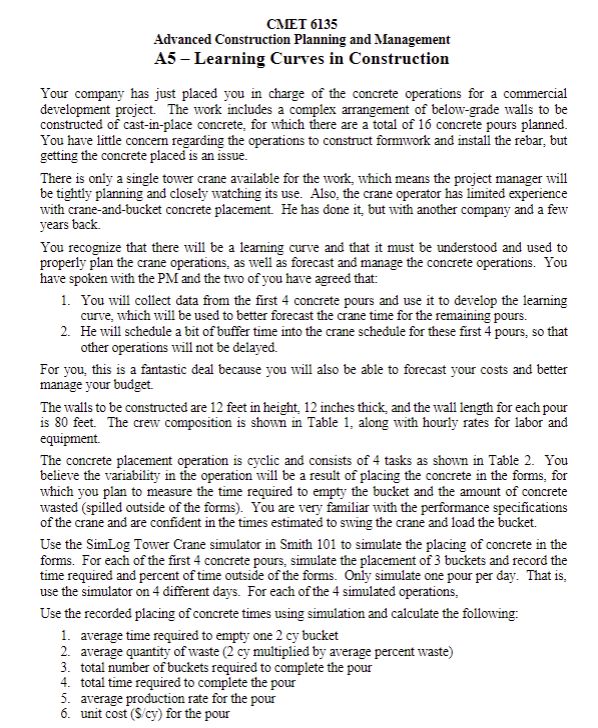
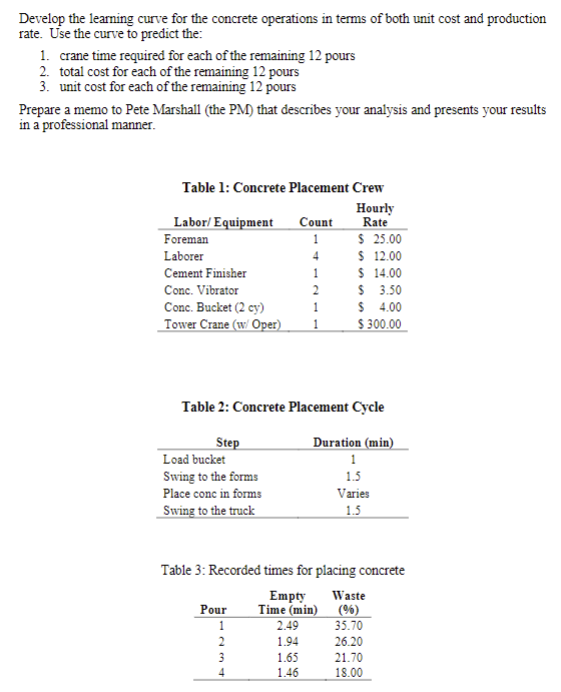
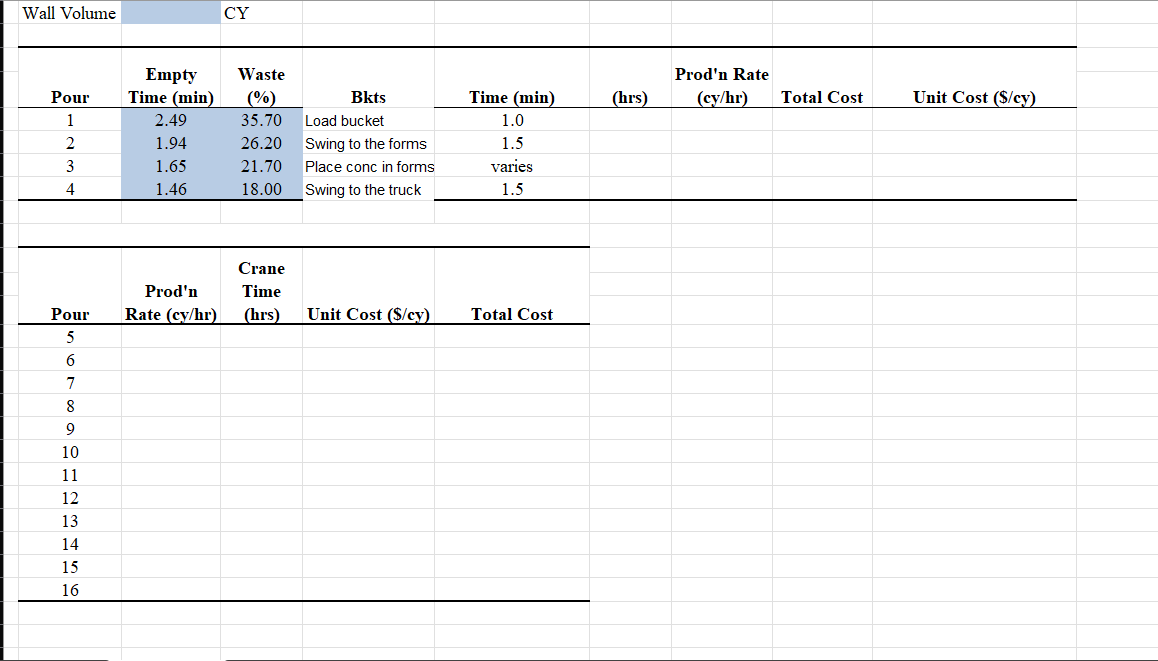
Develop the learning curve for the concrete operations in terms of both unit cost and production rate. Use the curve to predict the: 1. crane time required for each of the remaining 12 pours 2. total cost for each of the remaining 12 pours 3. unit cost for each of the remaining 12 pours Prepare a memo to Pete Marshall (the PM) that describes your analysis and presents your results in a professional manner. Table 2: Concrete Placement Cycle Table 3: Recorded times for placing concrete CAIET 6135 Advanced Construction Planning and Management A5 - Learning Curves in Construction Your company has just placed you in charge of the concrete operations for a commercial development project. The work includes a complex arrangement of below-grade walls to be constructed of cast-in-place concrete, for which there are a total of 16 concrete pours planned. You have little concern regarding the operations to construct formwork and install the rebar, but getting the concrete placed is an issue. There is only a single tower crane available for the work, which means the project manager will be tightly planning and closely watching its use. Also, the crane operator has limited experience with crane-and-bucket concrete placement. He has done it, but with another company and a few years back. You recognize that there will be a learning curve and that it must be understood and used to properly plan the crane operations, as well as forecast and manage the concrete operations. You have spoken with the PM and the two of you have agreed that: 1. You will collect data from the first 4 concrete pours and use it to develop the learning curve, which will be used to better forecast the crane time for the remaining pours. 2. He will schedule a bit of buffer time into the crane schedule for these first 4 pours, so that other operations will not be delayed. For you, this is a fantastic deal because you will also be able to forecast your costs and better manage your budget. The walls to be constructed are 12 feet in height, 12 inches thick, and the wall length for each pour is 80 feet. The crew composition is shown in Table 1 , along with hourly rates for labor and equipment. The concrete placement operation is cyclic and consists of 4 tasks as shown in Table 2. You believe the variability in the operation will be a result of placing the concrete in the forms, for which you plan to measure the time required to empty the bucket and the amount of concrete wasted (spilled outside of the forms). You are very familiar with the performance specifications of the crane and are confident in the times estimated to swing the crane and load the bucket. Use the SimLog Tower Crane simulator in Smith 101 to simulate the placing of concrete in the forms. For each of the first 4 concrete pours, simulate the placement of 3 buckets and record the time required and percent of time outside of the forms. Only simulate one pour per day. That is, use the simulator on 4 different days. For each of the 4 simulated operations, Use the recorded placing of concrete times using simulation and calculate the following: 1. average time required to empty one 2 cy bucket 2. average quantity of waste ( 2 cy multiplied by average percent waste) 3. total number of buckets required to complete the pour 4. total time required to complete the pour 5. average production rate for the pour 6. unit cost ($/cy) for the pour
Step by Step Solution
There are 3 Steps involved in it

Get step-by-step solutions from verified subject matter experts
 Study Help