







Question: different workstations (X, Y, Z) using a small batch process. Batch setup times are negligible. ZMD can make and sell up to the limit of
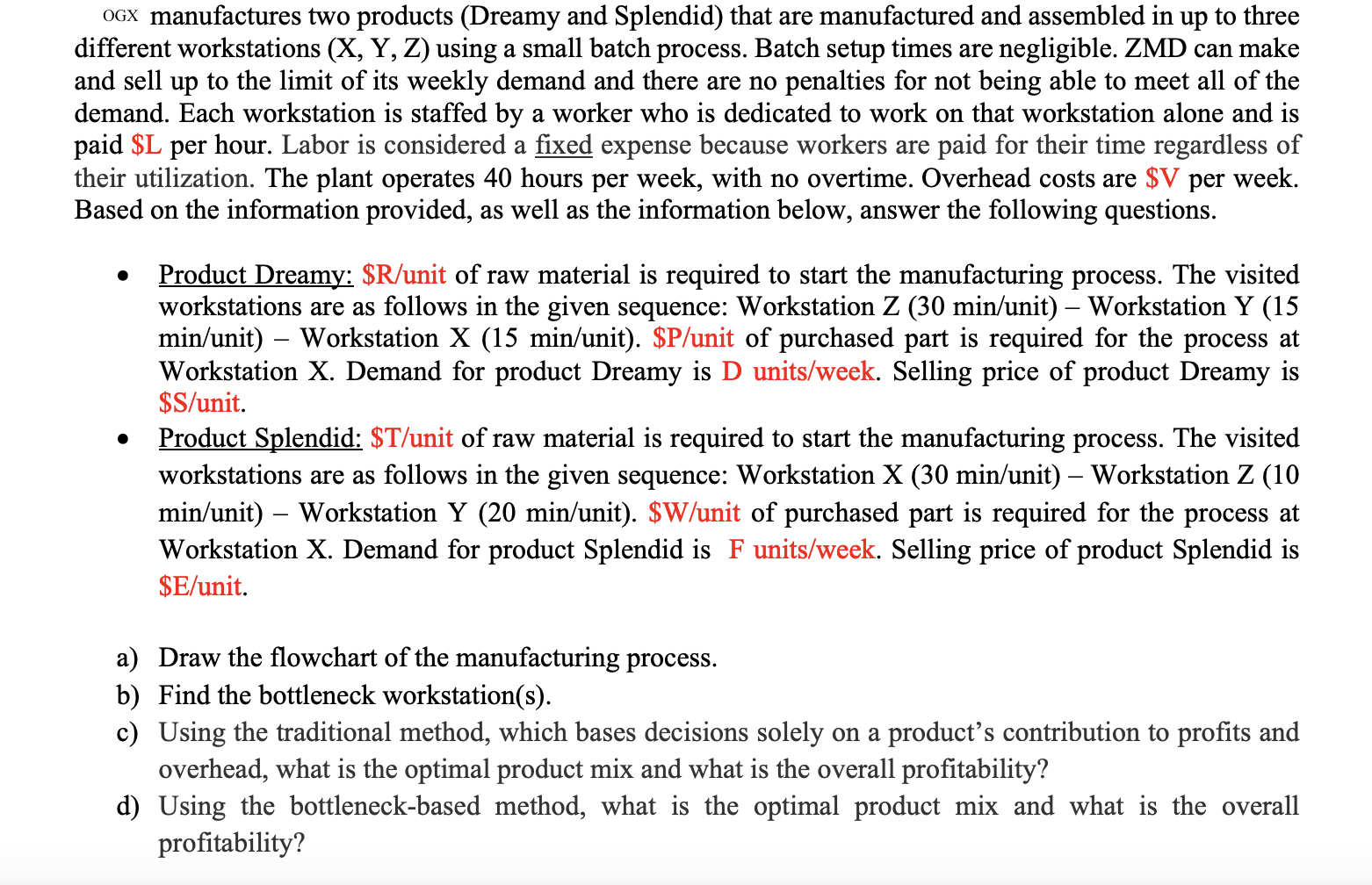
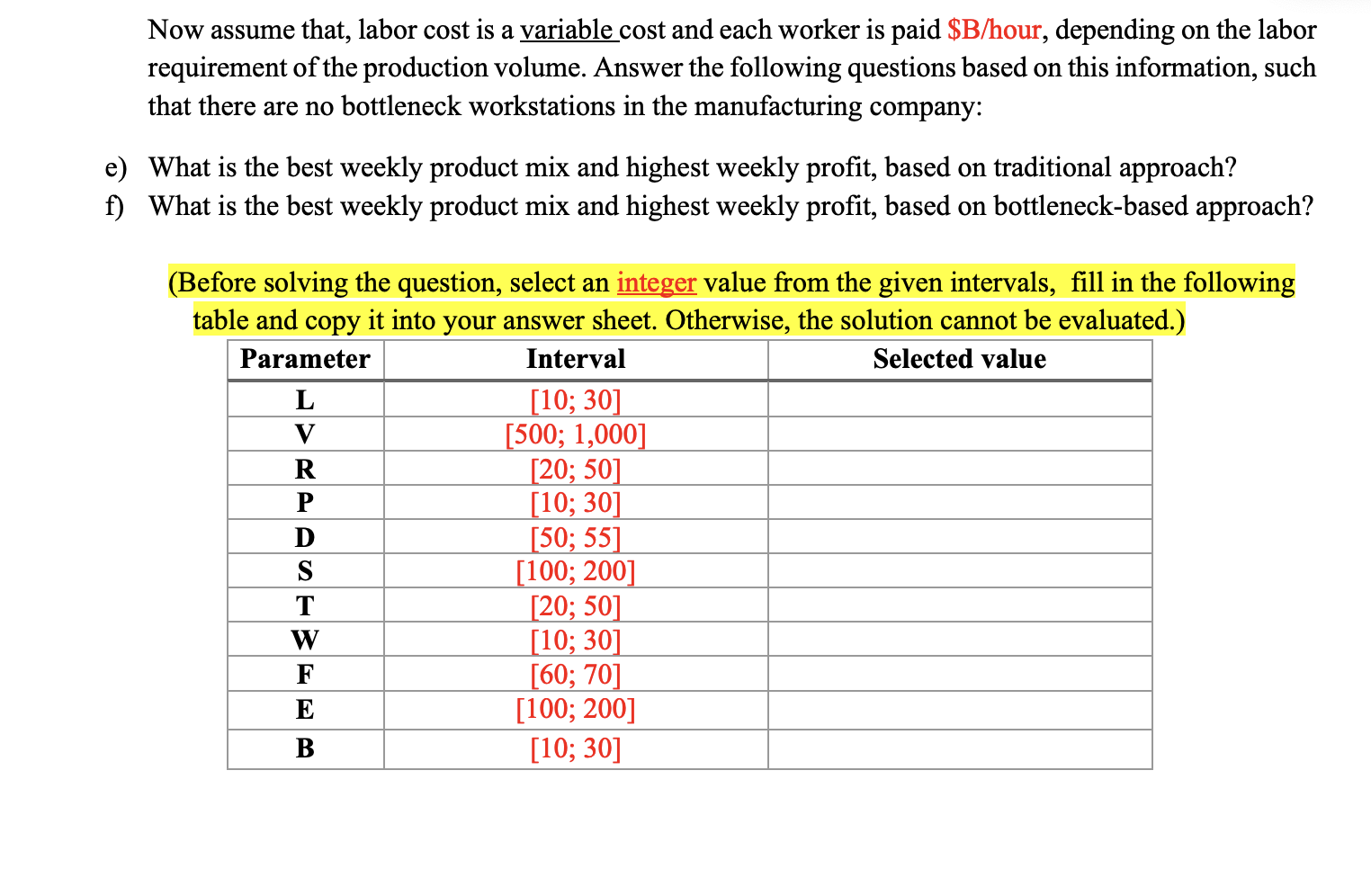
different workstations (X, Y, Z) using a small batch process. Batch setup times are negligible. ZMD can make and sell up to the limit of its weekly demand and there are no penalties for not being able to meet all of the demand. Each workstation is staffed by a worker who is dedicated to work on that workstation alone and is paid \$L per hour. Labor is considered a fixed expense because workers are paid for their time regardless of their utilization. The plant operates 40 hours per week, with no overtime. Overhead costs are $V per week. Based on the information provided, as well as the information below, answer the following questions. - Product Dreamy: $R/unit of raw material is required to start the manufacturing process. The visited workstations are as follows in the given sequence: Workstation Z (30 min/unit) - Workstation Y (15 min/unit) - Workstation X(15min/unit). \$P/unit of purchased part is required for the process at Workstation X. Demand for product Dreamy is D units/week. Selling price of product Dreamy is \$S/unit. - Product Splendid: \$T/unit of raw material is required to start the manufacturing process. The visited workstations are as follows in the given sequence: Workstation X(30min/unit) - Workstation Z(10 min/unit) - Workstation Y (20min/unit). \$W/unit of purchased part is required for the process at Workstation X. Demand for product Splendid is F units/week. Selling price of product Splendid is \$E/unit. a) Draw the flowchart of the manufacturing process. b) Find the bottleneck workstation(s). c) Using the traditional method, which bases decisions solely on a product's contribution to profits and overhead, what is the optimal product mix and what is the overall profitability? d) Using the bottleneck-based method, what is the optimal product mix and what is the overall profitability? Now assume that, labor cost is a variable cost and each worker is paid $B/ hour, depending on the labor requirement of the production volume. Answer the following questions based on this information, such that there are no bottleneck workstations in the manufacturing company: What is the best weekly product mix and highest weekly profit, based on traditional approach? What is the best weekly product mix and highest weekly profit, based on bottleneck-based approach? (Before solving the question, select an integer value from the given intervals, fill in the following table and copy it into your answer sheet. Otherwise, the solution cannot be evaluated.)
Step by Step Solution
There are 3 Steps involved in it

Get step-by-step solutions from verified subject matter experts
 Study Help