







Question: Differentiable Function. If a differentiable function f(x) satisfies f(-1) = f(1) then there exists a c in (-1,1) with Of (c) 0 Of ( c
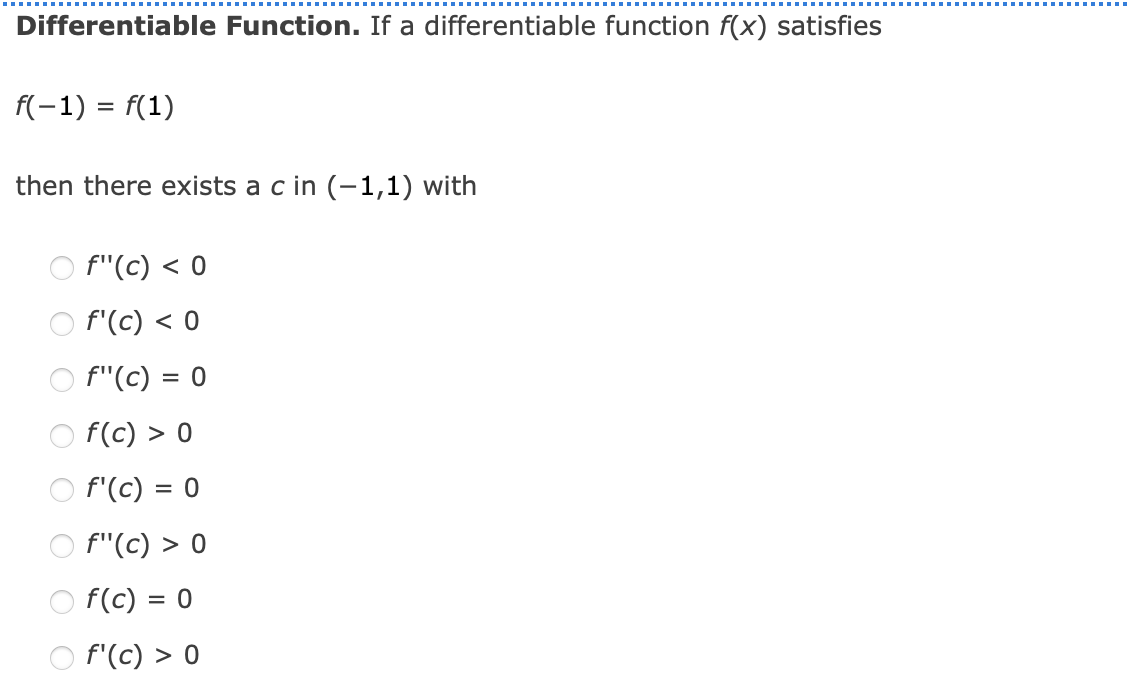

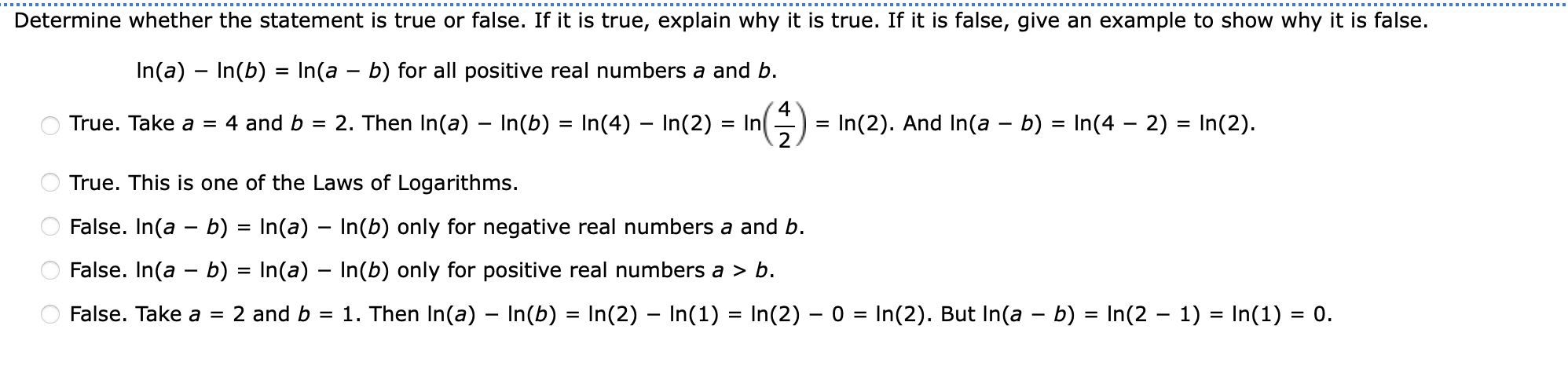
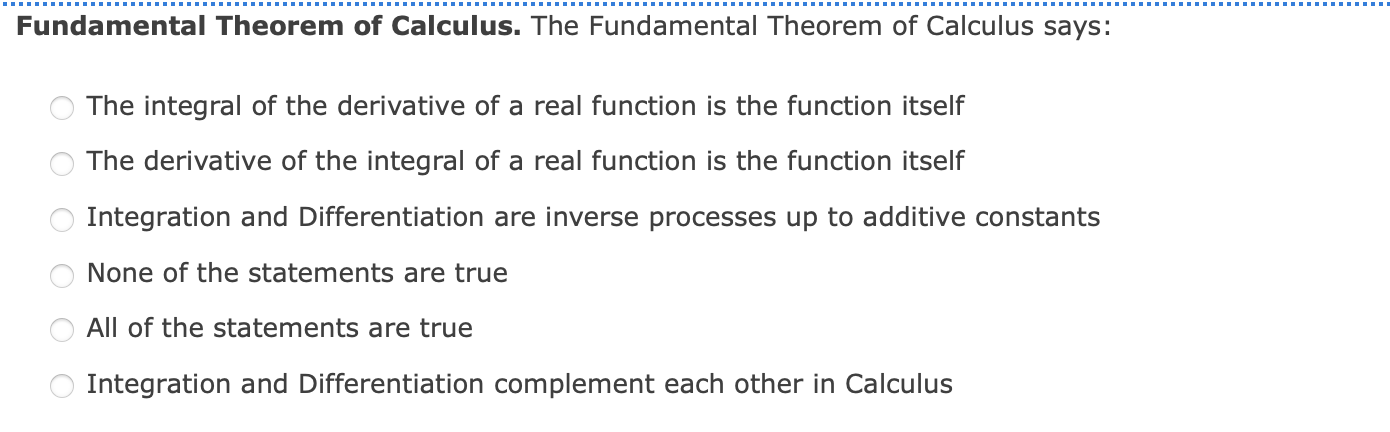
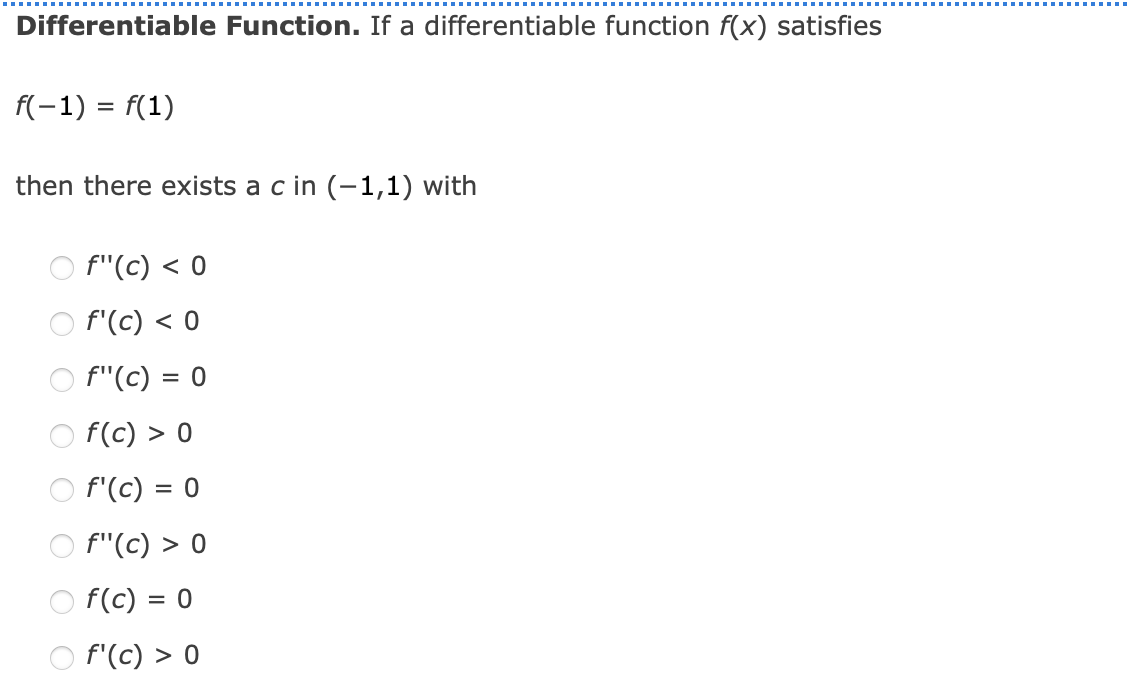

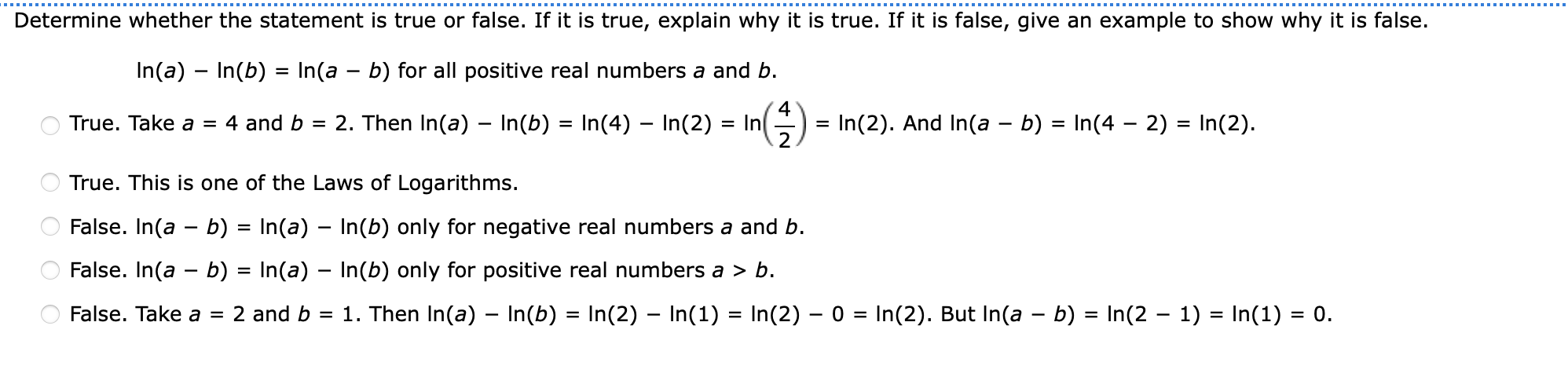
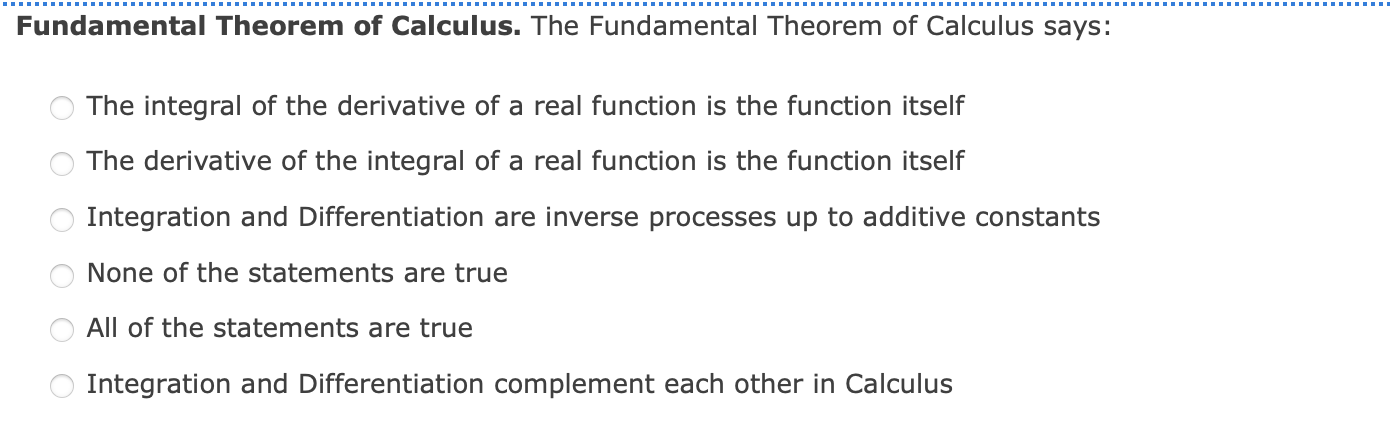
Differentiable Function. If a differentiable function f(x) satisfies f(-1) = f(1) then there exists a c in (-1,1) with Of" (c) 0 Of ( c ) = 0 Of" ( c ) > 0 Of (c) = 0 Of ( c ) > oDetermine whether the following statement is true or false. If f is decreasing on (a, b), then f'(x) b. O False. Take a = 2 and b = 1. Then In(a) - In(b) = In(2) - In(1) = In(2) - 0 = In(2). But In(a - b) = In(2 - 1) = In(1) = 0.Fundamental Theorem of Calculus. The Fundamental Theorem of Calculus says: The integral of the derivative of a real function is the function itself The derivative of the integral of a real function is the function itself Integration and Differentiation are inverse processes up to additive constants None of the statements are true All of the statements are true Integration and Differentiation complement each other in Calculus
Step by Step Solution
There are 3 Steps involved in it

Get step-by-step solutions from verified subject matter experts
 Study Help