







Question: direction: given are the simple cost benefit analysis template, apply the five basic steps to perform a cost benefit analysis. provide the data to complete
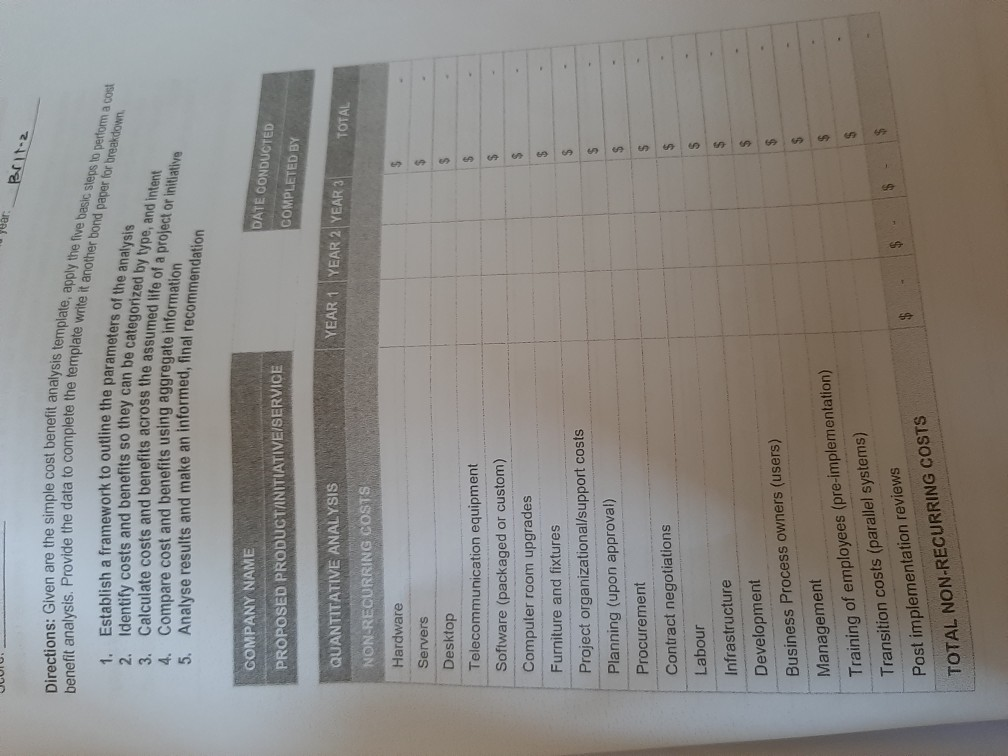
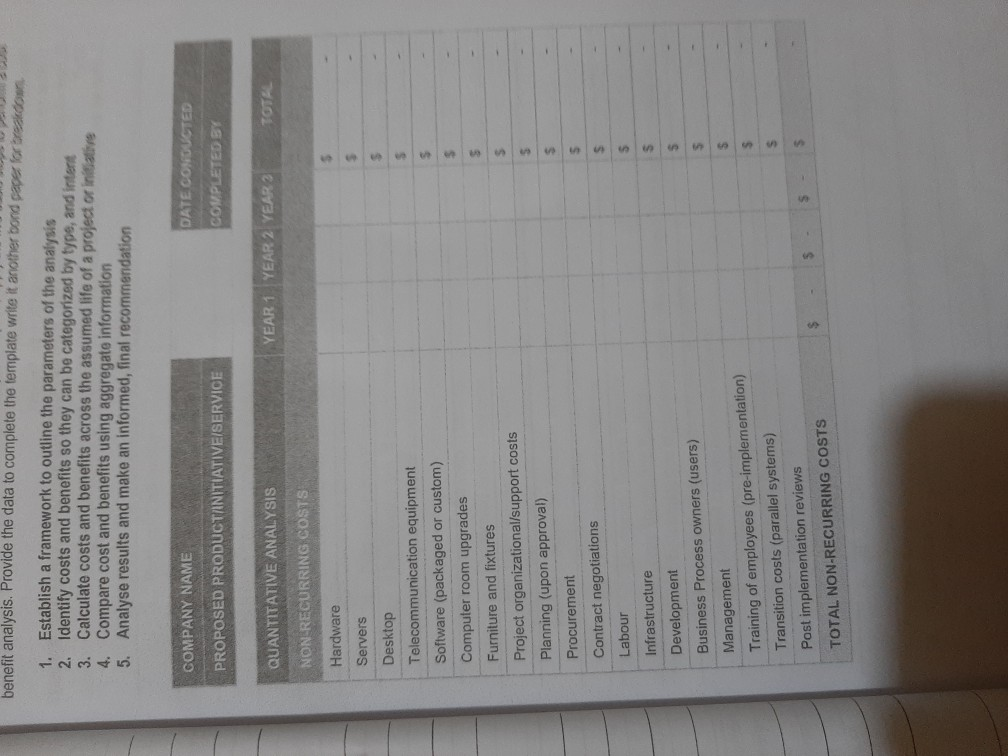
direction: given are the simple cost benefit analysis template, apply the five basic steps to perform a cost benefit analysis. provide the data to complete the template write it another bond paper for breakdown.
thank you
1. Establish a framework to outline the parameters of the analysis benefit analysis . Provide the data to complete the template write it another bond paper for breakdown 2. Identify costs and benefits so they can be categorized by type , and intent 3. Calculate costs and benefits across the assumed life of a project or initiative Directions : Given are the simple cost benefit analysis template , apply the live basic steps to pertom a cost Brit- 4. Compare cost and benefits using aggregate information 5. Analyse results and make an informed, final recommendation COMPANY NAME PROPOSED PRODUCTANITIATIVE/SERVICE DATE CONDUCTED COMPLETED BY QUANTITATIVE ANALYSIS YEAR 1 YEAR 2 YEAR 3 TOTAL NON-RECURRING COSTS Hardware 5 $ $ $ $ $ $ Servers Desktop Telecommunication equipment Software (packaged or custom) Computer room upgrades Furniture and fixtures Project organizational/support costs Planning (upon approval) Procurement Contract negotiations Labour $ $ $ $ $ $ Infrastructure $ $ $ $ Development Business Process owners (users) Management Training of employees (pre-implementation) Transition costs (parallel systems) Post implementation reviews TOTAL NON-RECURRING COSTS 5 $ $ $ $ benefit analysis. Provide the data to complete the template write it another bond paper for breakdown 1. Establish a framework to outline the parameters of the analysis 2. Identify costs and benefits so they can be categorized by type, and intent 3. Calculate costs and benefits across the assumed life of a project or initiative 4. Compare cost and benefits using aggregate information 5. Analyse results and make an informed, final recommendation COMPANY NAME DATE CONDUCTED PROPOSED PRODUCT/NITIATIVE/SERVICE COMPLETED BY QUANTITATIVE ANALYSIS YEAR 1 YEAR 2 YEAR 2 NON-RECURRING COSTS $ $ S $ $ 5 5 Hardware Servers Desktop Telecommunication equipment Software (packaged or custom) Computer room upgrades Furniture and fixtures Project organizational/support costs Planning (upon approval) Procurement Contract negotiations Labour Infrastructure Development Business Process owners (users) Management Training of employees (pre-implementation) Transition costs (parallel systems) Post implementation reviews TOTAL NON-RECURRING COSTS 5 S 5 5 5 5 $ $ $ > 1. Establish a framework to outline the parameters of the analysis benefit analysis . Provide the data to complete the template write it another bond paper for breakdown 2. Identify costs and benefits so they can be categorized by type , and intent 3. Calculate costs and benefits across the assumed life of a project or initiative Directions : Given are the simple cost benefit analysis template , apply the live basic steps to pertom a cost Brit- 4. Compare cost and benefits using aggregate information 5. Analyse results and make an informed, final recommendation COMPANY NAME PROPOSED PRODUCTANITIATIVE/SERVICE DATE CONDUCTED COMPLETED BY QUANTITATIVE ANALYSIS YEAR 1 YEAR 2 YEAR 3 TOTAL NON-RECURRING COSTS Hardware 5 $ $ $ $ $ $ Servers Desktop Telecommunication equipment Software (packaged or custom) Computer room upgrades Furniture and fixtures Project organizational/support costs Planning (upon approval) Procurement Contract negotiations Labour $ $ $ $ $ $ Infrastructure $ $ $ $ Development Business Process owners (users) Management Training of employees (pre-implementation) Transition costs (parallel systems) Post implementation reviews TOTAL NON-RECURRING COSTS 5 $ $ $ $ benefit analysis. Provide the data to complete the template write it another bond paper for breakdown 1. Establish a framework to outline the parameters of the analysis 2. Identify costs and benefits so they can be categorized by type, and intent 3. Calculate costs and benefits across the assumed life of a project or initiative 4. Compare cost and benefits using aggregate information 5. Analyse results and make an informed, final recommendation COMPANY NAME DATE CONDUCTED PROPOSED PRODUCT/NITIATIVE/SERVICE COMPLETED BY QUANTITATIVE ANALYSIS YEAR 1 YEAR 2 YEAR 2 NON-RECURRING COSTS $ $ S $ $ 5 5 Hardware Servers Desktop Telecommunication equipment Software (packaged or custom) Computer room upgrades Furniture and fixtures Project organizational/support costs Planning (upon approval) Procurement Contract negotiations Labour Infrastructure Development Business Process owners (users) Management Training of employees (pre-implementation) Transition costs (parallel systems) Post implementation reviews TOTAL NON-RECURRING COSTS 5 S 5 5 5 5 $ $ $ >
Step by Step Solution
There are 3 Steps involved in it

Get step-by-step solutions from verified subject matter experts
 Study Help