







Question: Discuss the distinction of the case-context (purpose of the study) 1. Exploratory study (Commercial Banks) The 5th International Conference on Management in Emerging Markets Note:
Discuss the distinction of the case-context (purpose of the study)
1. Exploratory study (Commercial Banks)
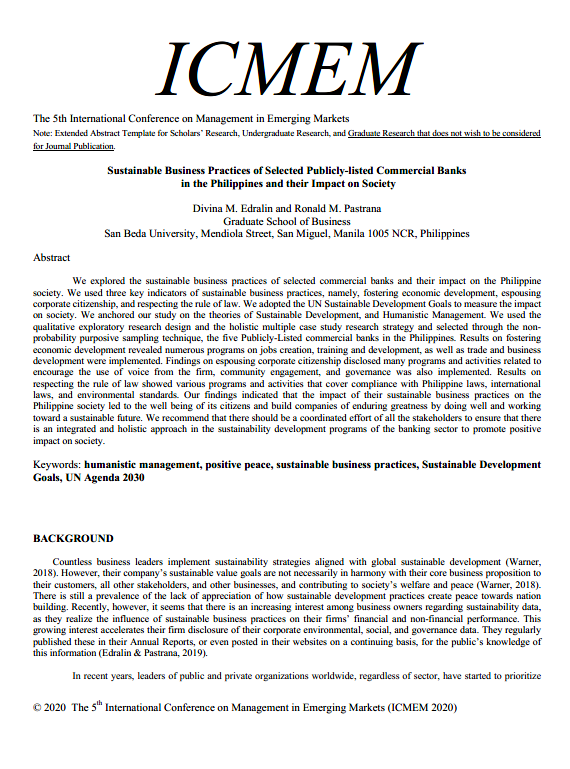
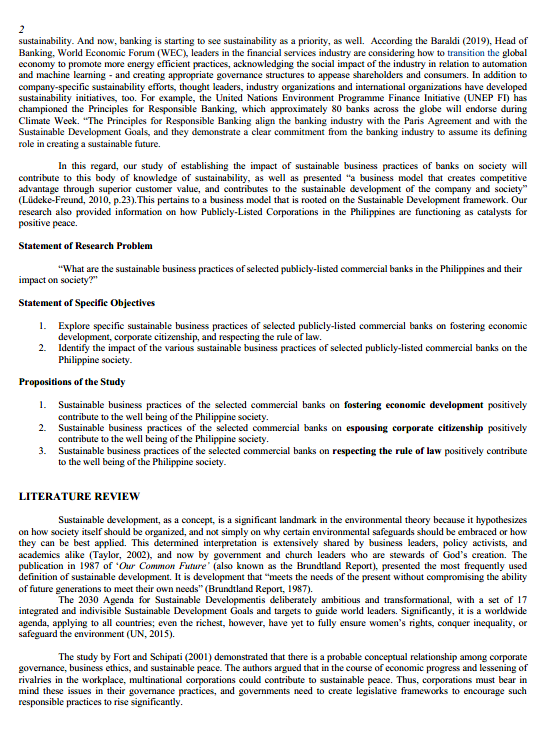
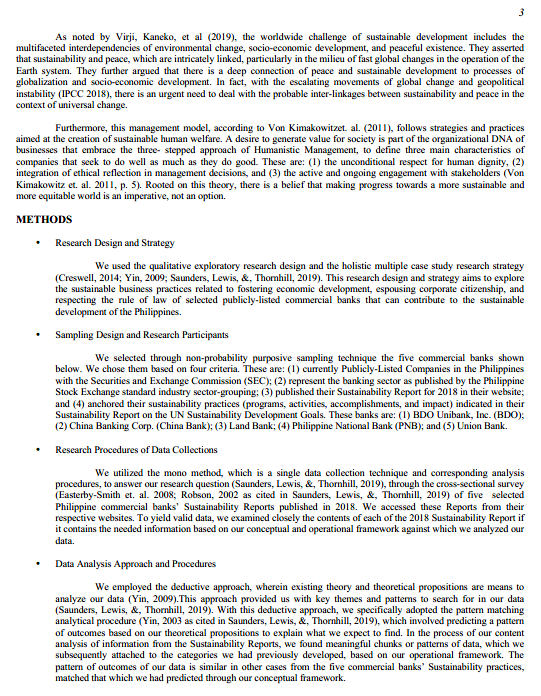
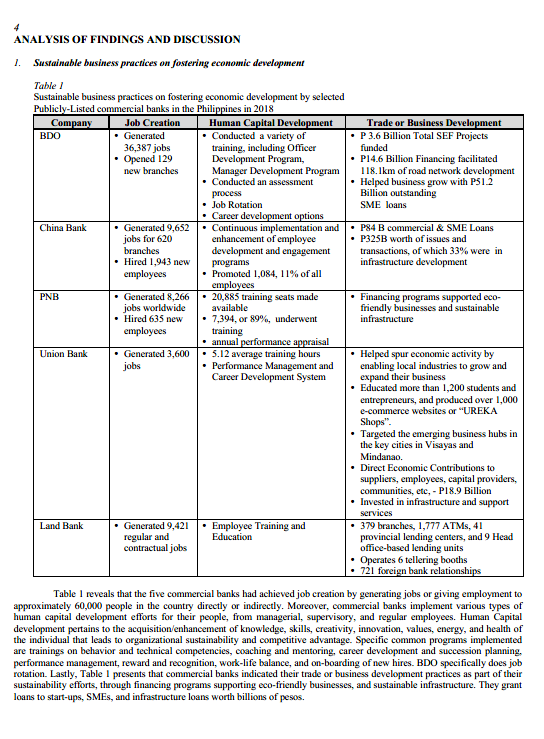
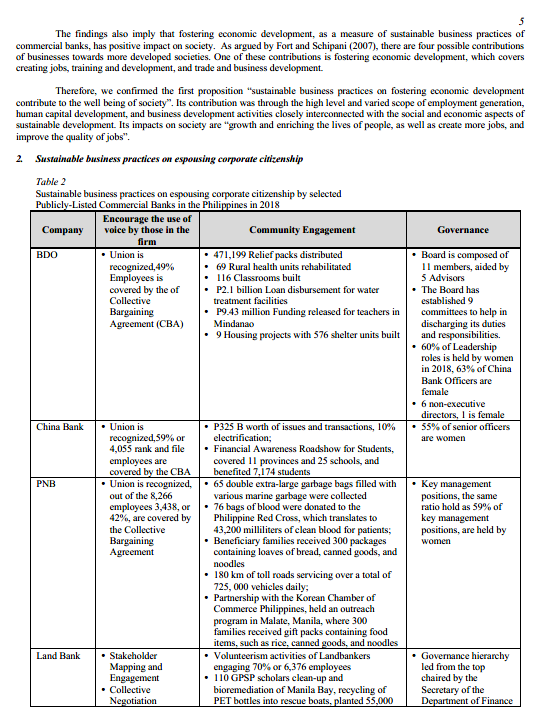
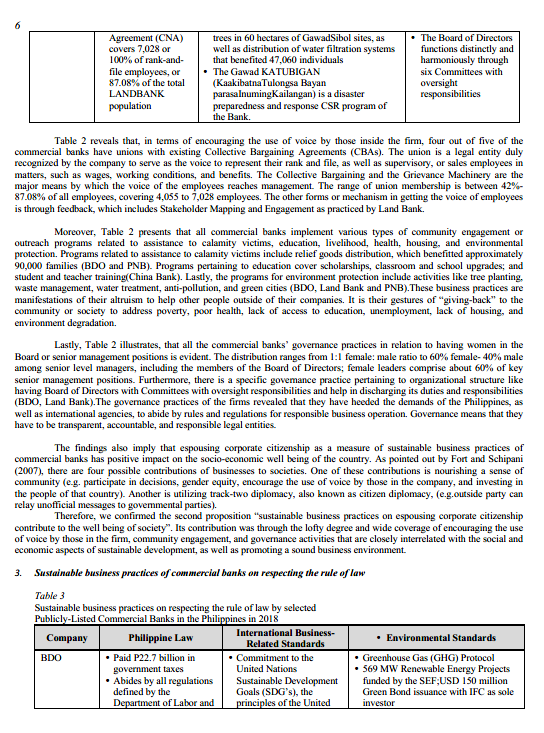
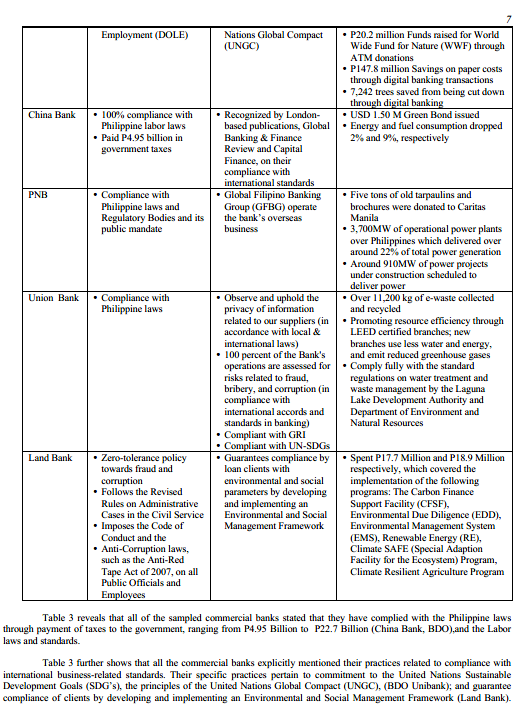
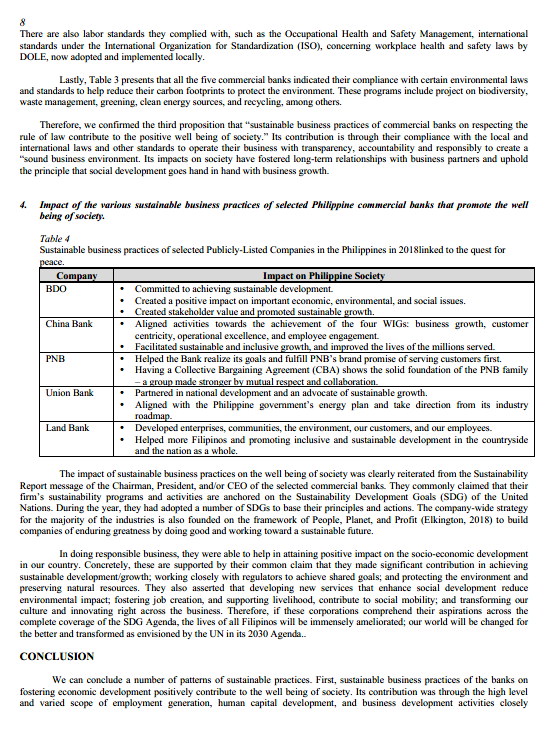
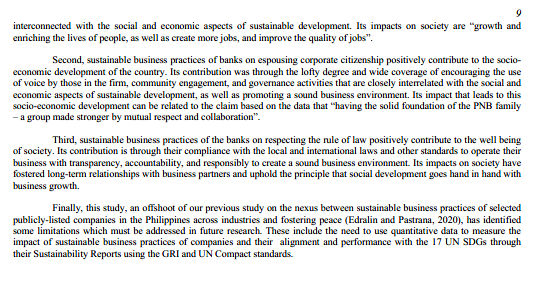
The 5th International Conference on Management in Emerging Markets Note: Extended Abstract Template for Scholars" Research, Undergraduate Research, and Giraduate Research that does not wish to be considered for Joumal Publication. Sustainable Business Practices of Selected Publicly-listed Commercial Banks in the Philippines and their Impact on Society Divina M. Edralin and Ronald M. Pastrana Graduate School of Business San Beda University, Mendiola Street, San Miguel, Manila 1005 NCR, Philippines Abstract We explored the sustainable business practices of selected commercial banks and their impact on the Philippine society. We used three key indicators of sustainable business practices, namely, fostering economic development, espousing corporate citizenship, and respecting the rule of law. We adopted the UN Sustainable Development Goals to measure the impact on society. We anchored our study on the theories of Sustainable Development, and Humanistic Management. We used the qualitative exploratory research design and the holistic multiple case study research strategy and selected through the nonprobability purposive sampling technique, the five Publicly-Listed commercial banks in the Philippines. Results on fostering economic development revealed numerous programs on jobs creation, training and development, as well as trade and business development were implemented. Findings on espousing comorate citizenship disclosed many programs and activities related to encourage the use of voice from the firm, community engagement, and govemance was also implemented. Results on respecting the rule of law showed various programs and activities that cover compliance with Philippine laws, international laws, and environmental standards. Our findings indicated that the impact of their sustainable business practices on the Philippine society led to the well being of its citizens and build companies of enduring greatness by doing well and working toward a sustainable future. We recommend that there should be a coordinated effort of all the stakeholders to ensure that there is an integrated and holistic approach in the sustainability development programs of the banking sector to promote positive impact on society. Keywords: humanistic management, positive peace, sustainable business practices, Sustainable Development Goals, UN Agenda 2030 BACKGROUND Countless business leaders implement sustainability strategies aligned with global sustainable development (Warner, 2018). However, their company's sustainable value goals are not necessarily in harmony with their core business proposition to their customers, all other stakeholders, and other businesses, and contributing to society's welfare and peace (Warner, 2018). There is still a prevalence of the lack of appreciation of how sustainable development practices create peace towards nation building. Recently, bowever, it seems that there is an increasing interest among business owners regarding sustainability data, as they realize the influence of sustainable business practices on their fims' financial and non-financial performance. This growing interest accelerates their firm disclosure of their corporate environmental, social, and governance data. They regularly published these in their Annual Reports, or even posted in their websites on a continuing basis, for the public's knowledge of this information (Edralin \& Pastrana, 2019). In recent years, leaders of public and private organizations worldwide, regardless of sector, have started to prioritize 0 2020 The 5th International Conference on Management in Emerging Markets (ICMEM 2020) 2 sustainability. And now, banking is starting to see sustainability as a priority, as well. According the Baraldi (2019), Head of Banking. World Economic Forum (WEC), leaders in the financial services industry are considering how to transition the global economy to promote more energy efficient practices, acknowledging the social impact of the industry in relation to automation and machine learning - and creating appropriate governance structures to appease shareholders and consumers. In addition to company-specific sustainability efforts, thought leaders, industry organizations and international organizations have developed sustainability initiatives, too. For example, the United Nations Environment Programme Finance Initiative (UNEP FI) has championed the Principles for Responsible Banking, which approximately 80 banks across the globe will endorse during Climate Week. "The Principles for Responsible Banking align the banking industry with the Paris Agreement and with the Sustainable Development Goals, and they demonstrate a clear commitment from the banking industry to assume its defining role in creating a sustainable future. In this regard, our study of establishing the impact of sustainable business practices of banks on society will contribute to this body of knowledge of sustainability, as well as presented "a business model that creates competitive advantage through superior customer value, and contributes to the sustainable development of the company and society" (Lideke-Freund, 2010, p.23). This pertains to a business model that is rooted on the Sustainable Development framework. Our research also provided information on how Publicly-Listed Corporations in the Philippines are functioning as catalysts for positive peace. Statement of Research Problem "What are the sustainable business practices of selected publicly-listed commercial banks in the Philippines and their impact on society?" Statement of Specific Objectives 1. Explore specific sustainable business practices of selected publicly-listed commercial banks on fostering economic development, corporate citizenship, and respecting the rule of law. 2. Identify the impact of the various sustainable business practices of selected publicly-listed commercial banks on the Philippine society. Propositions of the Study 1. Sustainable business practices of the selected commercial banks on fostering economic development positively contribute to the well being of the Philippine society. 2. Sustainable business practices of the selected commercial banks on espousing corporate citizenship positively contribute to the well being of the Philippine society. 3. Sustainable business practices of the selected commercial banks on respecting the rule of law positively contribute to the well being of the Philippine society. LITERATURE REVIEW Sustainable development, as a concept, is a significant landmark in the environmental theory because it hypothesizes on how society itself should be organized, and not simply on why certain environmental safeguards should be embraced or how they can be best applied. This determined interpretation is extensively shared by business leaders, policy activists, and academics alike (Taylor, 2002), and now by government and church leaders who are stewards of God's creation. The publication in 1987 of "Our Common Future" (also known as the Brundtland Report), presented the most frequently used definition of sustainable development. It is development that "meets the needs of the present without compromising the ability of future generations to meet their own needs" (Brundtland Report, 1987). The 2030 Agenda foe Sustainable Developmentis deliberately ambitious and transformational, with a set of 17 integrated and indivisible Sustainable Development Goals and targets to guide world leaders. Significantly, it is a worldwide agenda, applying to all countries; even the richest, however, have yet to fully ensure women's rights, conquer inequality, or safeguard the environment (UN, 2015). The study by Fort and Schipati (2001) demonstrated that there is a probable conceptual relationship among corporate governance, business ethics, and sustainable peace. The authors argued that in the course of coonomic progress and lessening of rivalries in the workplace, multinational corporations could contribute to sustainable peace. Thus, corporations must bear in mind these issues in their govemance practices, and governments need to create legislative frameworks to encourage such responsible practices to rise significantly. 3 As noted by Virji, Kaneko, et al (2019), the worldwide challenge of sustainable development includes the multifaceted interdependencies of environmental change, socio-economic development, and peaceful existence. They asserted that sustainability and peace, which are intricately linked, particularly in the milieu of fast global changes in the operation of the Earth system. They further argued that there is a deep connection of peace and sustainable development to processes of globalization and socio-economic development. In fact, with the escalating movements of global change and geopolitical instability (IPCC 2018), there is an urgent need to deal with the probable inter-linkages between sustainability and peace in the context of universal change. Furthermore, this management model, aceording to Von Kimakowitzet. al. (2011), follows strategies and practices aimed at the creation of sustainable human welfare. A desire to generate value for society is part of the organizational DNA of businesses that embrace the three- stepped approach of Humanistic Management, to define three main characteristics of companies that seek to do well as much as they do good. These are: (1) the unconditional respect for human dignity, (2) integration of ethical reflection in management decisions, and (3) the active and ongoing engagement with stakebolders (Von Kimakowitz et. al. 2011, p. 5). Rooted on this theory, there is a belief that making peogress towards a more sustainable and more equitable world is an imperative, not an option. METHODS - Research Design and Strategy We used the qualitative exploratory research design and the holistic multiple case study research strategy (Creswell, 2014; Yin, 2009; Saunders, Lewis, \&. Thomhill, 2019). This research design and strategy aims to explore the sustainable business practices related to fostering economic development, espousing corporate citizenship, and respecting the rule of law of selected publicly-listed commercial banks that can contribute to the sustainable development of the Philippines. - Sampling Design and Research Participants We selected through non-probability purposive sampling technique the five commercial banks shown below. We chose them based on four criteria. These are: (1) currently Publicly-Listed Companies in the Philippines with the Securities and Exchange Commission (SEC); (2) represent the banking sector as published by the Philippine Stock Exchange standard industry sector-grouping; (3) published their Sustainability Report for 2018 in their website; and (4) anchored their sustainability practices (programs, activities, accomplishments, and impact) indicated in their Sustainability Report on the UN Sustainability Development Goals. These banks are: (1) BDO Unibank, Inc. (BDO); (2) China Banking Corp. (China Bank); (3) Land Bank; (4) Philippine National Bank (PNB); and (5) Union Bank. - Research Procedures of Data Collections We utilized the mono method, which is a single data collection technique and corresponding analysis procedures, to answer our research question (Saunders, Lewis, \&, Thornhill, 2019), through the cross-sectional survey (Easterby-Smith et. al. 2008; Robson, 2002 as cited in Saunders, Lewis, \&, Thornhill, 2019) of five selected Philippine commercial banks' Sustainability Reports published in 2018. We aocessed these Reports from their respective websites. To yield valid data, we examined closely the contents of each of the 2018 Sustainability Report if it contains the needed information based on our conceptual and operational framework against which we analyzed our data. - Data Analysis Approach and Procedures We employed the deductive approach, wherein existing theory and theoretical propositions are means to analyze our data (Yin, 2009). This approach provided us with key themes and pattems to search for in our data (Saunders, Lewis, \&, Thornhill, 2019). With this deductive approach, we specifically adopted the pattem matching analytical procedure (Yin, 2003 as cited in Saunders, Lewis, \&, Thornhill, 2019), which involved predicting a pattern of outcomes based on our theoretical propositions to explain what we expect to find. In the process of our content analysis of information from the Sustainability Reports, we found meaningful chunks or patterns of data, which we subsequently attached to the categories we had previously developed, based on our operational framework. The pattern of outcomes of our data is similar in other cases from the five commercial banks' Sustainability practices, matched that which we had predicted through our conceptual framework. 1. Sustainable business practices on fostering economic development Table ] Sustainable business nractices on fostering economic develonment by selected Table 1 reveals that the five commercial banks had achieved job creation by generating jobs or giving employment to approximately 60,000 people in the country directly or indirectly. Moreover, commercial banks implement various types of human capital development efforts for their people, from managerial, supervisory, and regular employees. Human Capital development pertains to the acquisition/enhancement of knowledge, skills, creativity, innovation, values, energy, and health of the individual that leads to organizational sustainability and competitive advantage. Specific common programs implemented are trainings on behavior and technical competencies, coaching and mentoring, career development and succession planning. performance management, reward and recognition, work-life balance, and on-boarding of new hires. BDO specifically does job rotation. Lastly, Table I presents that commercial banks indicated their trade or business developenent practices as part of their sustainability efforts, through financing programs supporting eco-friendly businesses, and sustainable infrastructure. They grant loans to start-ups, SMEs, and infrastructure loans worth billions of pesos. The findings also imply that fostering economic development, as a measure of sustainable business practices of commercial banks, has positive impact on society. As argued by Fort and Schipani (2007), there are four possible contributions of businesses towards more developed societies. One of these contributions is fostering economic development, which covers creating jobs, training and development, and trade and business development. Therefore, we confirmed the first proposition "sustainable business practices on fostering eoonomic development contribute to the well being of society". Its contribution was through the high level and varied scope of employment generation, human capital development, and business development activities closely interconnected with the social and economic aspects of sustainable development. Its impacts on society are "growth and enriching the lives of people, as well as create more jobs, and improve the quality of jobs". 2. Sustainable business practices on espousing corporate citizenship Table 2 reveals that, in terms of encouraging the use of voice by those inside the firm, four out of five of the commercial banks have unions with existing Collective Bargaining Agreements (CBAs). The union is a legal entity duly recognized by the company to serve as the voice to represent their rank and file, as well as supervisory, or sales employees in matters, such as wages, working conditions, and benefits. The Collective Bargaining and the Grievance Machinery are the major means by which the voice of the employees reaches management. The range of union membership is between 42% 87.08% of all employees, covering 4,055 to 7,028 employees. The other forms or mechanism in getting the voice of employees is through feedback, which includes Stakeholder Mapping and Engagement as practiced by Land Bank. Moreover, Table 2 presents that all commercial banks implement various types of community engagement or outreach programs related to assistance to calamity victims, education, livelihood, health, housing, and environmental protection. Programs related to assistance to calamity victims include relief goods distribution, which benefitted approximately 90,000 families (BDO and PNB). Programs pertaining to education cover scholarships, classroom and school upgrades; and student and teacher training(China Bank). Lastly, the programs for environment protection include activities like tree planting. waste management, water treatment, anti-pollution, and green cities (BDO, Land Bank and PNB).These business practices are manifestations of their altruism to help other people outside of their companies. It is their gestures of "giving-back" to the community or society to address poverty, poor health, lack of access to education, unemployment, lack of housing, and environment degradation. Lastly, Table 2 illustrates, that all the commercial banks' govemance practices in relation to having women in the Board or senior management positions is evident. The distribution ranges from 1:1 female: male ratio to 60% female- 40% male among senior level managers, including the members of the Board of Directors; female leaders comprise about 60% of key senior management positions. Furthermore, there is a specific govemance practice pertaining to organizational structure like having Board of Directors with Committees with oversight responsibilities and help in discharging its duties and responsibilities (BDO, Land Bank). The govemance practices of the firms revealed that they have heeded the demands of the Philippines, as well as intemational agencies, to abide by rules and regulations for responsible business operation. Governance means that they have to be transparent, accountable, and responsible legal entities. The findings also imply that espousing corporate citizenship as a measure of sustainable business practices of commercial banks has positive impact on the socio-economic well being of the country. As pointed out by Fort and Schipani (2007), there are four possible contributions of businesses to societies. One of these contributions is nourishing a sense of community (e.g. participate in decisions, gender equity, encourage the use of voice by those in the company, and investing in the people of that country). Another is utilizing track-two diplomacy, also known as citizen diplomacy, (e.g.outside party can relay unofficial messages to govemmental parties). Therefore, we confirmed the second proposition "sustainable business practices on espousing corporate citizenship contribute to the well being of society". Its contribution was through the lofty degree and wide coverage of encouraging the use of voice by those in the firm, community engagement, and governance activities that are closely interrelated with the social and economic aspects of sustainable development, as well as promoting a sound business environment. 3. Sustainable business practices of commercial banks on respecting the rule of law Table 3 Sustainable business practices on respecting the rule of law by selected Publicly-Listed Commercial Banks in the Philippines in 2018 througn payment of taxes to the govemment, ranging Irom r4.yS buuon to r2L./ Bumon (Lhua bank, BLU),and the Labor laws and standards. Table 3 further shows that all the commercial banks explicitly mentioned their practices related to compliance with international business-related standards. Their specific practices pertain to commitment to the United Nations Sustainable Development Goals (SDG's), the principles of the United Nations Global Compact (UNGC), (BDO Unibank); and guarantee compliance of clients by developing and implementing an Environmental and Social Management Framework (Land Bank). 8 There are also labor standards they complied with, such as the Occupational Health and Safety Management, international standards under the International Organization for Standardization (ISO), concerning workplace bealth and safety laws by DOLE, now adopted and implemented locally. Lastly, Table 3 presents that all the five commercial banks indicated their compliance with certain environmental laws and standards to help reduce their carbon footprints to protect the environment. These programs include project on biodiversity, waste management, greening, clean energy sources, and recycling, among others. Therefore, we confirmed the third proposition that "sustainable business practices of commercial banks on respecting the rule of law contribute to the positive well being of society." Its contribution is through their compliance with the local and international laws and other standards to operate their business with transparency, accountability and responsibly to create a "sound business environment. Its impacts on society have fostered long-term relationships with business partners and uphold the principle that social development goes hand in hand with business growth. 4. Impact of the various sustainable business practices of selected Philippine commercial banks that promote the well being of society. Table 4 Sustainable business practices of selected Publicly-Listed Companies in the Philippines in 2018 linked to the quest for neare The impact of sustainable business practices on the well being of society was clearly reiterated from the Sustainability Report message of the Chairman, President, and/or CEO of the selected commercial banks. They commonly claimed that their firm's sustainability programs and activities are anchored on the Sustainability Development Goals (SDG) of the United Nations. During the year, they had adopted a number of SDGs to base their principles and actions. The company-wide strategy for the majority of the industries is also founded on the framework of People, Planet, and Profit (Elkington, 2018) to build companies of enduring greatness by doing good and working toward a sustainable future. In doing responsible business, they were able to help in attaining positive impact on the socio-economic development in our country. Concretely, these are supported by their common claim that they made significant contribution in achieving sustainable development/growth; working closely with regulators to achieve shared goals; and protecting the environment and preserving natural resources. They also asserted that developing new services that enhance social development reduce environmental impact; fostering job creation, and supporting livelihood, contribute to social mobility; and transforming our culture and innovating right across the business. Therefore, if these corporations comprehend their aspirations across the complete coverage of the SDG Agenda, the lives of all Filipinos will be immensely ameliorated; our world will be changed for the better and transformed as envisioned by the UN in its 2030 Agenda.. CONCLUSION We can conclude a number of patterns of sustainable practices. First, sustainable business practices of the banks on fostering economic development positively contribute to the well being of society. Its contribution was through the high level and varied scope of employment generation, human capital development, and business development activities closely interconnected with the social and economic aspects of sustainable development. Its impacts on society are "growth and enriching the lives of people, as well as create more jobs, and improve the quality of jobs". Second, sustainable business practioes of banks on espousing corporate citizenship positively contribute to the socioeconomic development of the country. Its contribution was through the lofty degree and wide coverage of encouraging the use of voice by those in the firm, community engagement, and governance activities that are closely interrelated with the social and economic aspects of sustainable development, as well as promoting a sound business environment. Its impact that leads to this socio-economic development can be related to the claim based on the data that "having the solid foundation of the PNB family - a group made stronger by mutual respect and collaboration". Third, sustainable business practices of the banks on respecting the rule of law positively contribute to the well being of society. Its contribution is through their compliance with the local and intemational laws and other standards to operate their business with transparency, accountability, and responsibly to create a sound business environment. Its impacts on society bave fostered long-term relationships with business partners and uphold the principle that social development goes hand in hand with business growth. Finally, this study, an offshoot of our previous study on the nexus between sustainable business practices of selected publicly-listed companies in the Philippines across industries and fostering peace (Edralin and Pastrana, 2020), has identified some limitations which must be addressed in future research. These include the need to use quantitative data to measure the impact of sustainable business practices of companies and their alignment and performance with the 17 UN SDGs through their Sustainability Reports using the GRI and UN Compact standards
Step by Step Solution
There are 3 Steps involved in it

Get step-by-step solutions from verified subject matter experts
 Study Help