Question: Discussion #6v Read and evaluate the given article about the gender gap within higher education (https://www.pnas.org/content/117/25/14073). You can state your opinion on the matter/how it
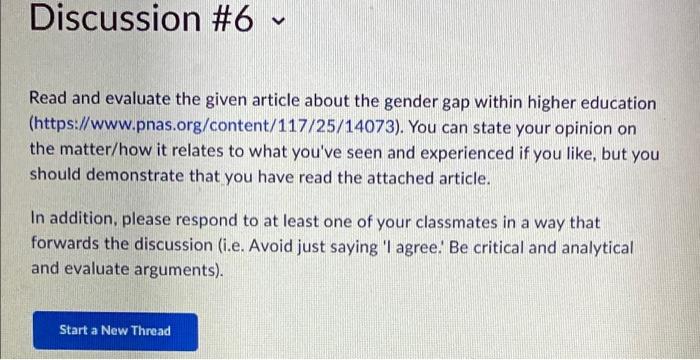
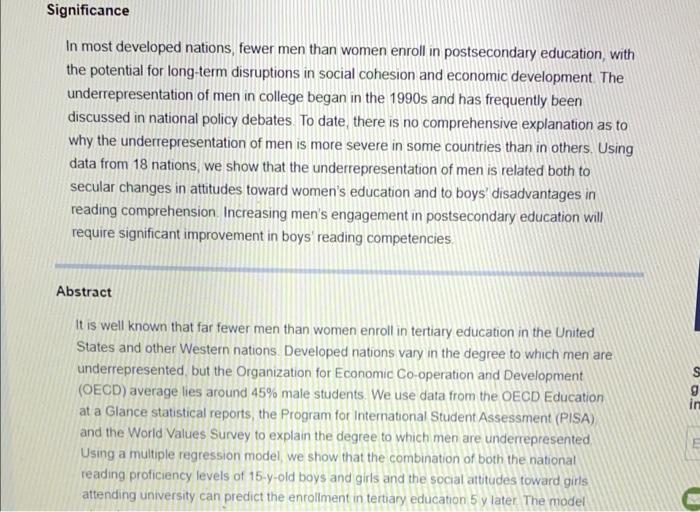
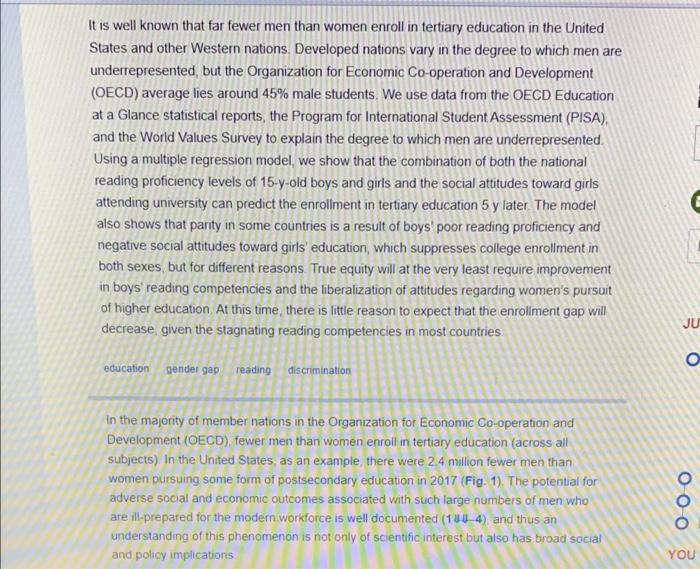
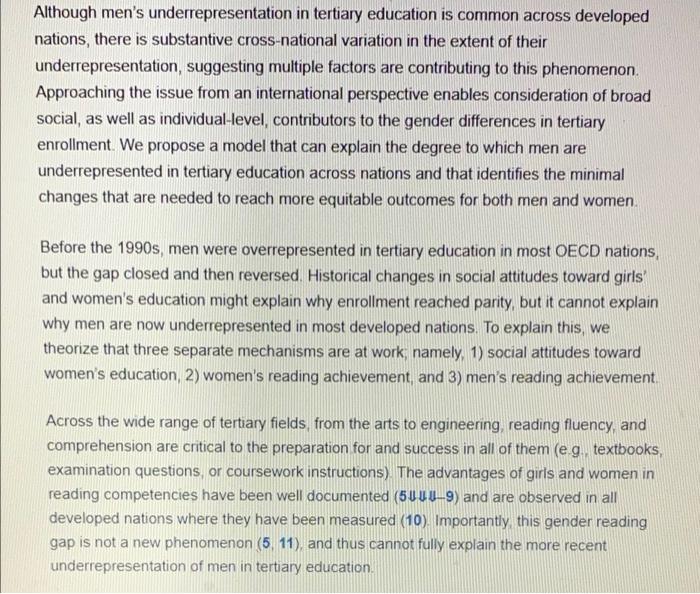
Discussion #6v Read and evaluate the given article about the gender gap within higher education (https://www.pnas.org/content/117/25/14073). You can state your opinion on the matter/how it relates to what you've seen and experienced if you like, but you should demonstrate that you have read the attached article. In addition, please respond to at least one of your classmates in a way that forwards the discussion (i.e. Avoid just saying 'I agree. Be critical and analytical and evaluate arguments). Start a New Thread Significance In most developed nations, fewer men than women enroll in postsecondary education, with the potential for long-term disruptions in social cohesion and economic development. The underrepresentation of men in college began in the 1990s and has frequently been discussed in national policy debates. To date, there is no comprehensive explanation as to why the underrepresentation of men is more severe in some countries than in others. Using data from 18 nations, we show that the underrepresentation of men is related both to secular changes in attitudes toward women's education and to boys' disadvantages in reading comprehension Increasing men's engagement in postsecondary education will require significant improvement in boys reading competencies Abstract U OL It is well known that far fewer men than women enroll in tertiary education in the United States and other Western nations Developed nations vary in the degree to which men are underrepresented but the Organization for Economic Co-operation and Development (OECD) average lies around 45% male students. We use data from the OECD Education at a Glance statistical reports, the Program for International Student Assessment (PISA) and the World Values Survey to explain the degree to which men are underrepresented Using a multiple regression model, we show that the combination of both the national reading proficiency levels of 15-y-old boys and girls and the social attitudes toward girls attending university can predict the enrollment in tertiary education 5 y later. The model It is well known that far fewer men than women enroll in tertiary education in the United States and other Western nations Developed nations vary in the degree to which men are underrepresented, but the Organization for Economic Co-operation and Development (OECD) average lies around 45% male students. We use data from the OECD Education at a Glance statistical reports, the Program for International Student Assessment (PISA), and the World Values Survey to explain the degree to which men are underrepresented Using a multiple regression model, we show that the combination of both the national reading proficiency levels of 15-y-old boys and girls and the social attitudes toward girls attending university can predict the enrollment in tertiary education 5 y later. The model also shows that party in some countries is a result of boys poor reading proficiency and negative social attitudes toward girls' education, which suppresses college enrollment in both sexes but for different reasons True equity will at the very least require improvement in boys' reading competencies and the liberalization of attitudes regarding women's pursuit of higher education. At this time, there is little reason to expect that the enrollment gap will decrease given the stagnating reading competencies in most countries JU education gender gap reading discrimination In the majority of member nations in the Organization for Economic Co-operation and Development (OECD), fewer men than women enroll in tertiary education (across all subjects). In the United States as an example, there were 2.4 million fewer men than women pursuing some form of postsecondary education in 2017 (Fig. 1). The potential for adverse social and economic outcomes associated with such large numbers of men who are il prepared for the modem workforce is well documented (100_4), and thus an understanding of this phenomenon is not only of scientific interest but also has broad social and policy implications 0-0-0 YOU Although men's underrepresentation in tertiary education is common across developed nations, there is substantive cross-national variation in the extent of their underrepresentation, suggesting multiple factors are contributing to this phenomenon. Approaching the issue from an international perspective enables consideration of broad social, as well as individual-level, contributors to the gender differences in tertiary enrollment. We propose a model that can explain the degree to which men are underrepresented in tertiary education across nations and that identifies the minimal changes that are needed to reach more equitable outcomes for both men and women Before the 1990s, men were overrepresented in tertiary education in most OECD nations, but the gap closed and then reversed Historical changes in social attitudes toward girls and women's education might explain why enrollment reached parity, but it cannot explain why men are now underrepresented in most developed nations. To explain this, we theorize that three separate mechanisms are at work, namely, 1) social attitudes toward women's education, 2) women's reading achievement, and 3) men's reading achievement Across the wide range of tertiary fields from the arts to engineering, reading fluency, and comprehension are critical to the preparation for and success in all of them (eg, textbooks, examination questions or coursework instructions) The advantages of girls and women in reading competencies have been well documented (50UU-9) and are observed in all developed nations where they have been measured (10). Importantly, this gender reading gap is not a new phenomenon (5. 11), and thus cannot fully explain the more recent underrepresentation of men in tertiary education Discussion #6v Read and evaluate the given article about the gender gap within higher education (https://www.pnas.org/content/117/25/14073). You can state your opinion on the matter/how it relates to what you've seen and experienced if you like, but you should demonstrate that you have read the attached article. In addition, please respond to at least one of your classmates in a way that forwards the discussion (i.e. Avoid just saying 'I agree. Be critical and analytical and evaluate arguments). Start a New Thread Significance In most developed nations, fewer men than women enroll in postsecondary education, with the potential for long-term disruptions in social cohesion and economic development. The underrepresentation of men in college began in the 1990s and has frequently been discussed in national policy debates. To date, there is no comprehensive explanation as to why the underrepresentation of men is more severe in some countries than in others. Using data from 18 nations, we show that the underrepresentation of men is related both to secular changes in attitudes toward women's education and to boys' disadvantages in reading comprehension Increasing men's engagement in postsecondary education will require significant improvement in boys reading competencies Abstract U OL It is well known that far fewer men than women enroll in tertiary education in the United States and other Western nations Developed nations vary in the degree to which men are underrepresented but the Organization for Economic Co-operation and Development (OECD) average lies around 45% male students. We use data from the OECD Education at a Glance statistical reports, the Program for International Student Assessment (PISA) and the World Values Survey to explain the degree to which men are underrepresented Using a multiple regression model, we show that the combination of both the national reading proficiency levels of 15-y-old boys and girls and the social attitudes toward girls attending university can predict the enrollment in tertiary education 5 y later. The model It is well known that far fewer men than women enroll in tertiary education in the United States and other Western nations Developed nations vary in the degree to which men are underrepresented, but the Organization for Economic Co-operation and Development (OECD) average lies around 45% male students. We use data from the OECD Education at a Glance statistical reports, the Program for International Student Assessment (PISA), and the World Values Survey to explain the degree to which men are underrepresented Using a multiple regression model, we show that the combination of both the national reading proficiency levels of 15-y-old boys and girls and the social attitudes toward girls attending university can predict the enrollment in tertiary education 5 y later. The model also shows that party in some countries is a result of boys poor reading proficiency and negative social attitudes toward girls' education, which suppresses college enrollment in both sexes but for different reasons True equity will at the very least require improvement in boys' reading competencies and the liberalization of attitudes regarding women's pursuit of higher education. At this time, there is little reason to expect that the enrollment gap will decrease given the stagnating reading competencies in most countries JU education gender gap reading discrimination In the majority of member nations in the Organization for Economic Co-operation and Development (OECD), fewer men than women enroll in tertiary education (across all subjects). In the United States as an example, there were 2.4 million fewer men than women pursuing some form of postsecondary education in 2017 (Fig. 1). The potential for adverse social and economic outcomes associated with such large numbers of men who are il prepared for the modem workforce is well documented (100_4), and thus an understanding of this phenomenon is not only of scientific interest but also has broad social and policy implications 0-0-0 YOU Although men's underrepresentation in tertiary education is common across developed nations, there is substantive cross-national variation in the extent of their underrepresentation, suggesting multiple factors are contributing to this phenomenon. Approaching the issue from an international perspective enables consideration of broad social, as well as individual-level, contributors to the gender differences in tertiary enrollment. We propose a model that can explain the degree to which men are underrepresented in tertiary education across nations and that identifies the minimal changes that are needed to reach more equitable outcomes for both men and women Before the 1990s, men were overrepresented in tertiary education in most OECD nations, but the gap closed and then reversed Historical changes in social attitudes toward girls and women's education might explain why enrollment reached parity, but it cannot explain why men are now underrepresented in most developed nations. To explain this, we theorize that three separate mechanisms are at work, namely, 1) social attitudes toward women's education, 2) women's reading achievement, and 3) men's reading achievement Across the wide range of tertiary fields from the arts to engineering, reading fluency, and comprehension are critical to the preparation for and success in all of them (eg, textbooks, examination questions or coursework instructions) The advantages of girls and women in reading competencies have been well documented (50UU-9) and are observed in all developed nations where they have been measured (10). Importantly, this gender reading gap is not a new phenomenon (5. 11), and thus cannot fully explain the more recent underrepresentation of men in tertiary education









 Study Help