Question: Discussion case study must include: the title of the case, a three to four paragraph summary/outline of the important facts in the case, and your
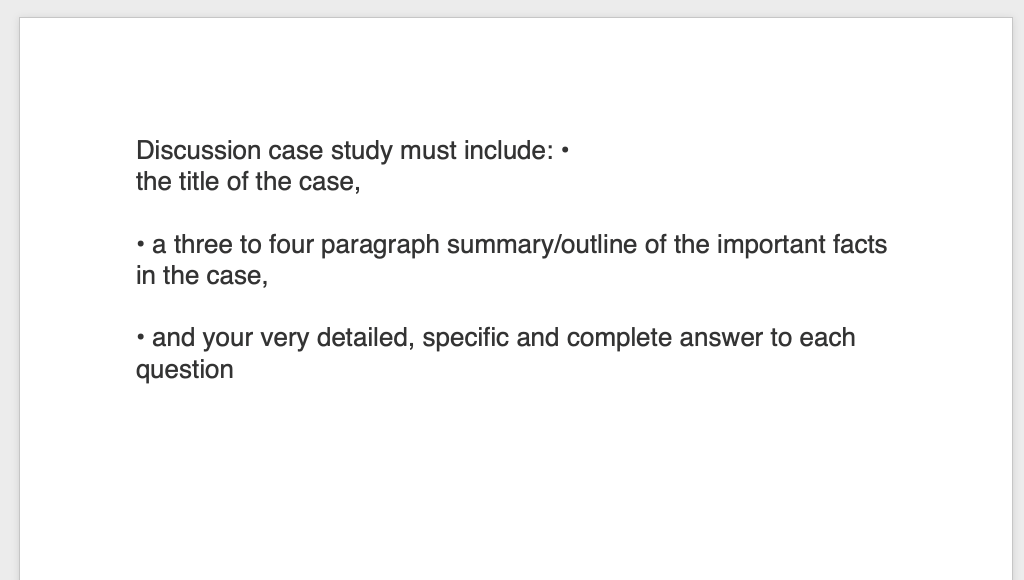
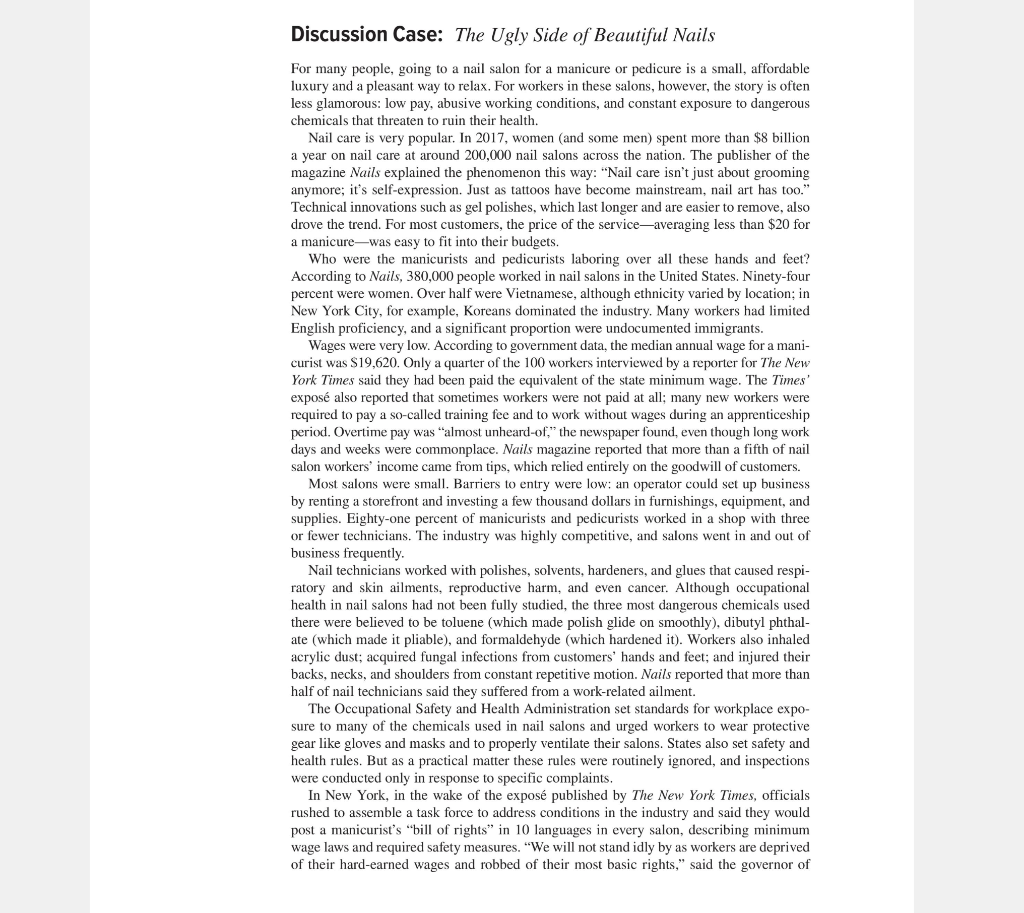
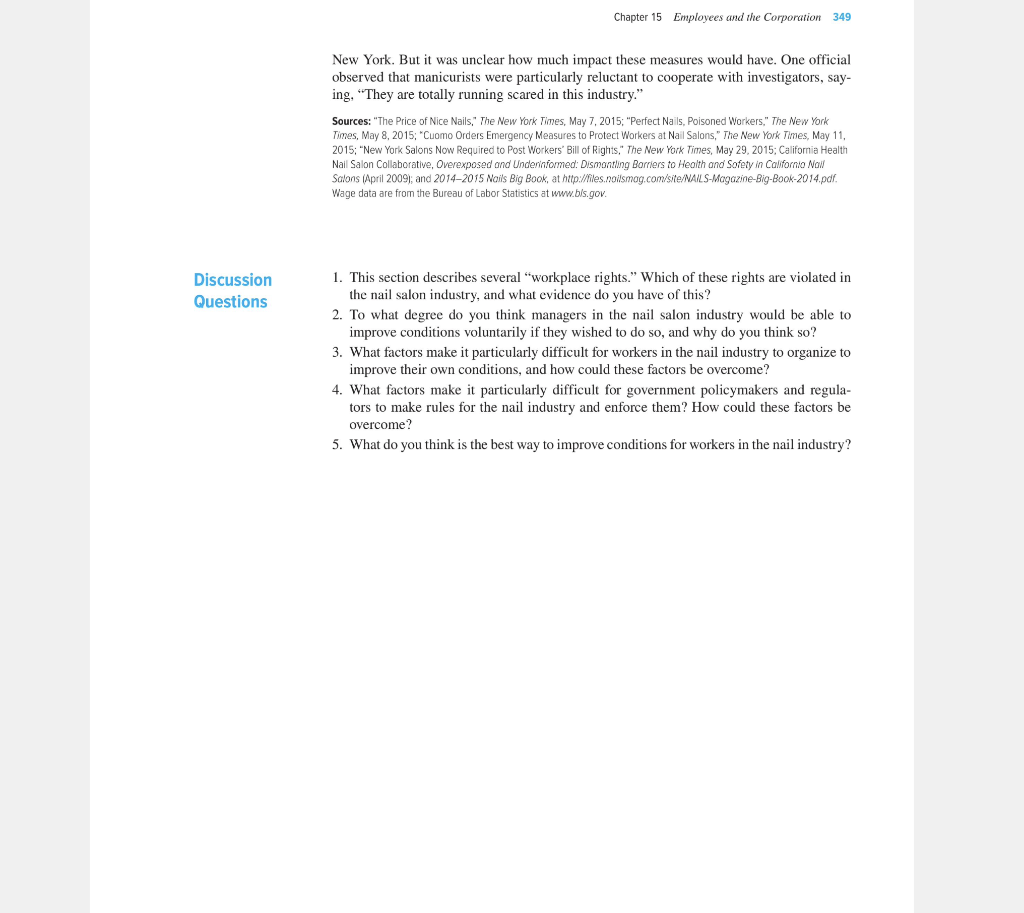
Discussion case study must include: the title of the case, a three to four paragraph summary/outline of the important facts in the case, and your very detailed, specific and complete answer to each question Discussion Case: The Ugly Side of Beautiful Nails For many people, going to a nail salon for a manicure or pedicure is a small, affordable luxury and a pleasant way to relax. For workers in these salons, however, the story is often less glamorous: low pay, abusive working conditions, and constant exposure to dangerous chemicals that threaten to ruin their health. Nail care is very popular. In 2017, women and some men) spent more than $8 billion a year on nail care at around 200,000 nail salons across the nation. The publisher of the magazine Nails explained the phenomenon this way: "Nail care isn't just about grooming anymore; it's self-expression. Just as tattoos have become mainstream, nail art has too." Technical innovations such as gel polishes, which last longer and are easier to remove, also drove the trend. For most customers, the price of the service-averaging less than $20 for a manicurewas easy to fit into their budgets. Who were the manicurists and pedicurists laboring over all these hands and feet? According to Nails, 380,000 people worked in nail salons in the United States. Ninety-four percent were women. Over half were Vietnamese, although ethnicity varied by location: in New York City, for example, Koreans dominated the industry. Many workers had limited English proficiency, and a significant proportion were undocumented immigrants. Wages were very low. According to government data, the median annual wage for a mani- curist was $19,620. Only a quarter of the 100 workers interviewed by a reporter for The New York Times said they had been paid the equivalent of the state minimum wage. The Times' expos also reported that sometimes workers were not paid at all; many new workers were required to pay a so-called training fee and to work without wages during an apprenticeship period. Overtime pay was almost unheard-of," the newspaper found, even though long work days and weeks were commonplace. Nails magazine reported that more than a fifth nail salon workers' income came from tips, which relied entirely on the goodwill of customers. Most salons were small. Barriers to entry were low: an operator could set up business by renting a storefront and investing a few thousand dollars in furnishings, equipment, and supplies. Eighty-one percent of manicurists and pedicurists worked in a shop with three or fewer technicians. The industry was highly competitive, and salons went in and out of business frequently Nail technicians worked with polishes, solvents, hardeners, and glues that caused respi- ratory and skin ailments, reproductive harm, and even cancer. Although occupational health in nail salons had not been fully studied, the three most dangerous chemicals used there were believed to be toluene (which made polish glide on smoothly), dibutyl phthal- ate (which made it pliable), and formaldehyde (which hardened it). Workers also inhaled acrylic dust; acquired fungal infections from customers' hands and feet; and injured their backs, necks, and shoulders from constant repetitive motion. Nails reported that more than half of nail technicians said they suffered from a work-related ailment. The Occupational Safety and Health Administration set standards for workplace expo- sure to many of the chemicals used in nail salons and urged workers to wear protective gear like gloves and masks and to properly ventilate their salons. States also set safety and health rules. But as a practical matter these rules were routinely ignored, and inspections were conducted only in response to specific complaints. In New York, in the wake of the expos published by The New York Times, officials rushed to assemble a task force to address conditions in the industry and said they would post a manicurist's "bill of rights in 10 languages in every salon, describing minimum wage laws and required safety measures. We will not stand idly by as workers are deprived of their hard-earned wages and robbed of their most basic rights," said the governor of Chapter 15 Employees and the Corporation 349 New York. But it was unclear how much impact these measures would have. One official observed that manicurists were particularly reluctant to cooperate with investigators, say- ing, They are totally running scared in this industry." Sources: "The Price of Nice Nails," The New York Times, May 7, 2015; "Perfect Nails, Poisoned Workers." The New York Times, May 8, 2015; "Cuomo Orders Emergency Measures to Protect Workers at Nail Salons," The New York Times, May 11, 2015; "New York Salons Now Required to Post Workers' Bill of Rights." The New York Times, May 29,2015: California Health Nail Salon Collaborative, Overexposed and Underinformed: Dismantling Barriers to Health and Sofety in California Now Salons (April 2009); and 2014-2015 Nails Big Book, at http://files.noilsmag.com/site/NAIL S-Magazine-Big-Book-2014.pdf. Wage data are from the Bureau of Labor Statistics at www.bls.gov. Discussion Questions 1. This section describes several "workplace rights." Which of these rights are violated in the nail salon industry, and what evidence do you have of this? 2. To what degree do you think managers in the nail salon industry would be able to improve conditions voluntarily if they wished to do so, and why do you think so? 3. What factors make it particularly difficult for workers in the nail industry to organize to improve their own conditions, and how could these factors be overcome? 4. What factors make it particularly difficult for government policymakers and regula- tors to make rules for the nail industry and enforce them? How could these factors be overcome? 5. What do you think is the best way to improve conditions for workers in the nail industry




