







Question: Discussion Question 3: Using Table B When selecting a sample, randomness in your selection process is essential to help avoid bias. If we all used
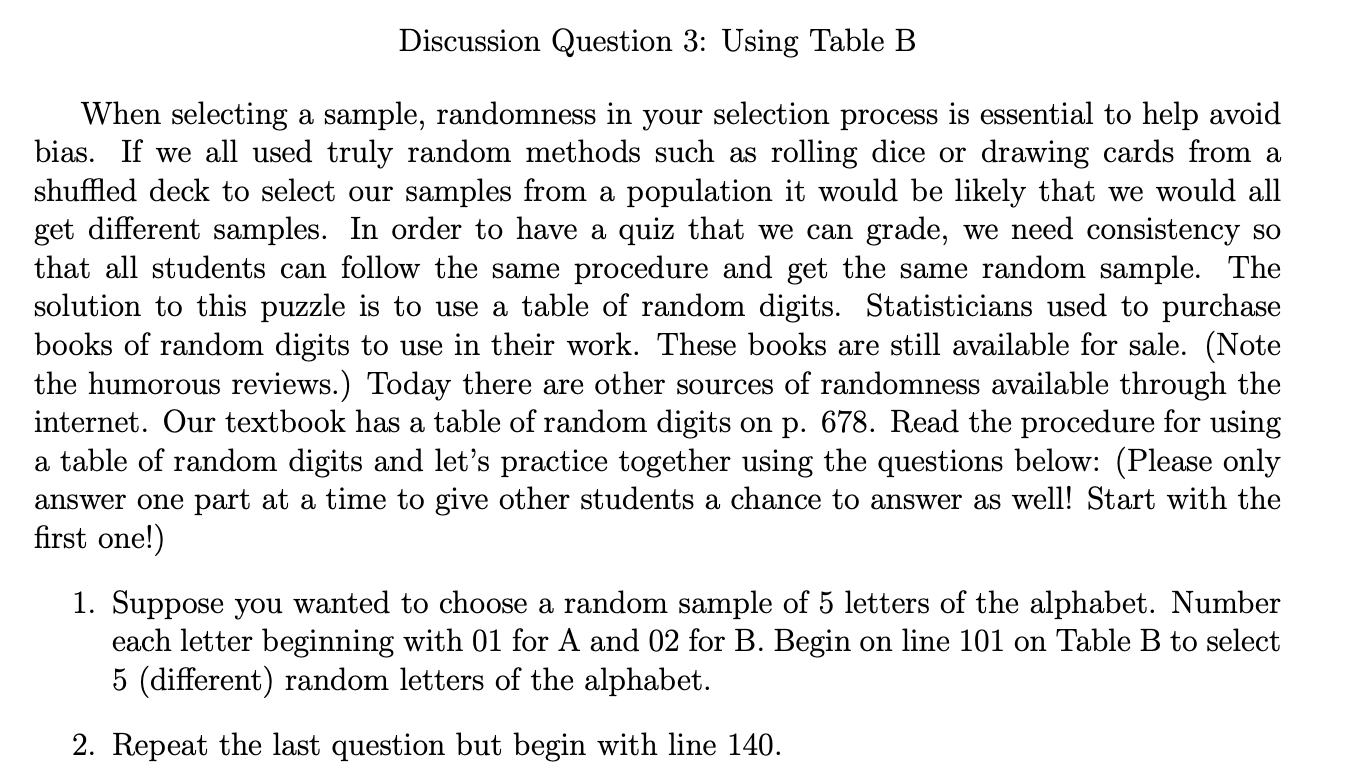
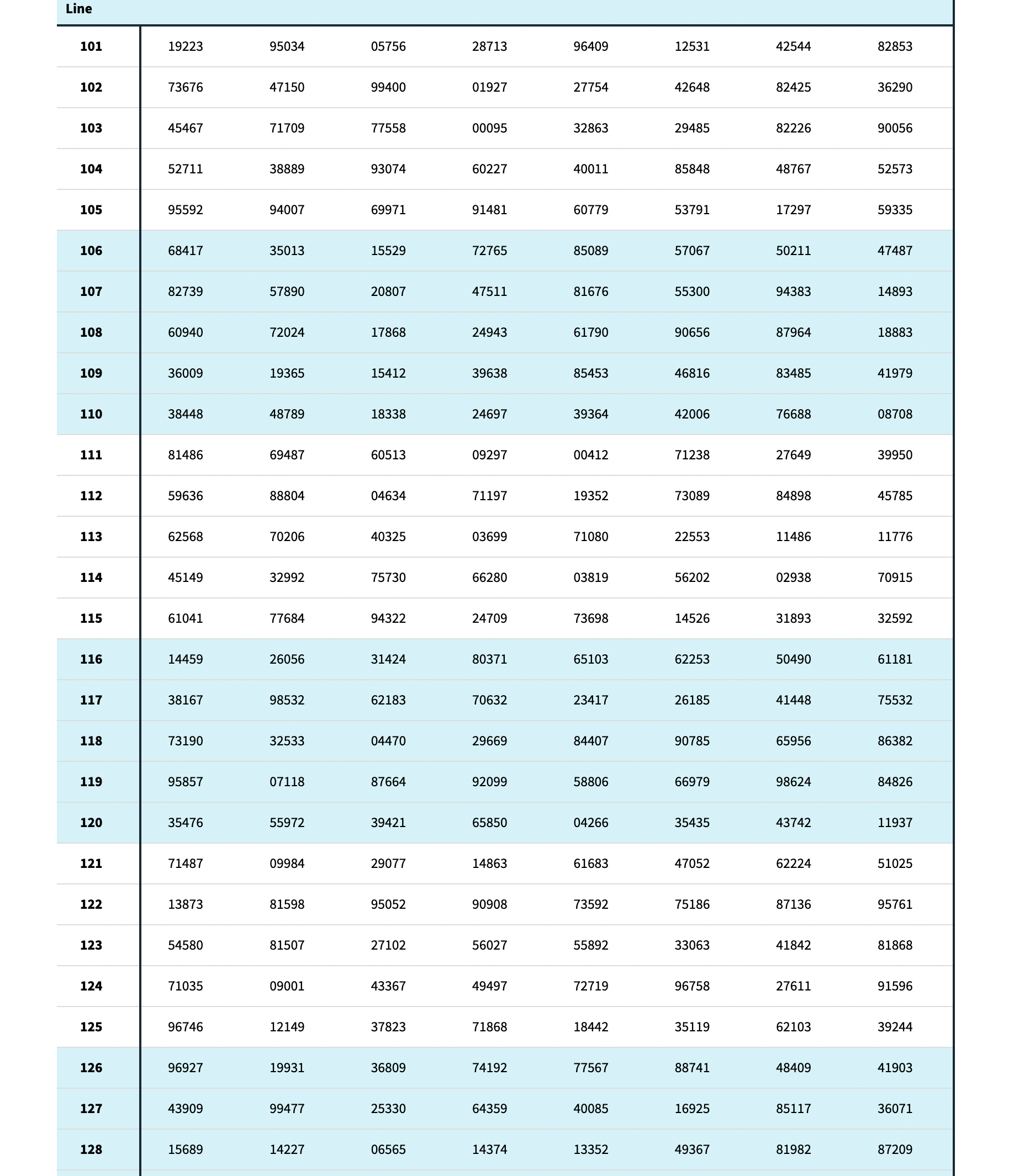
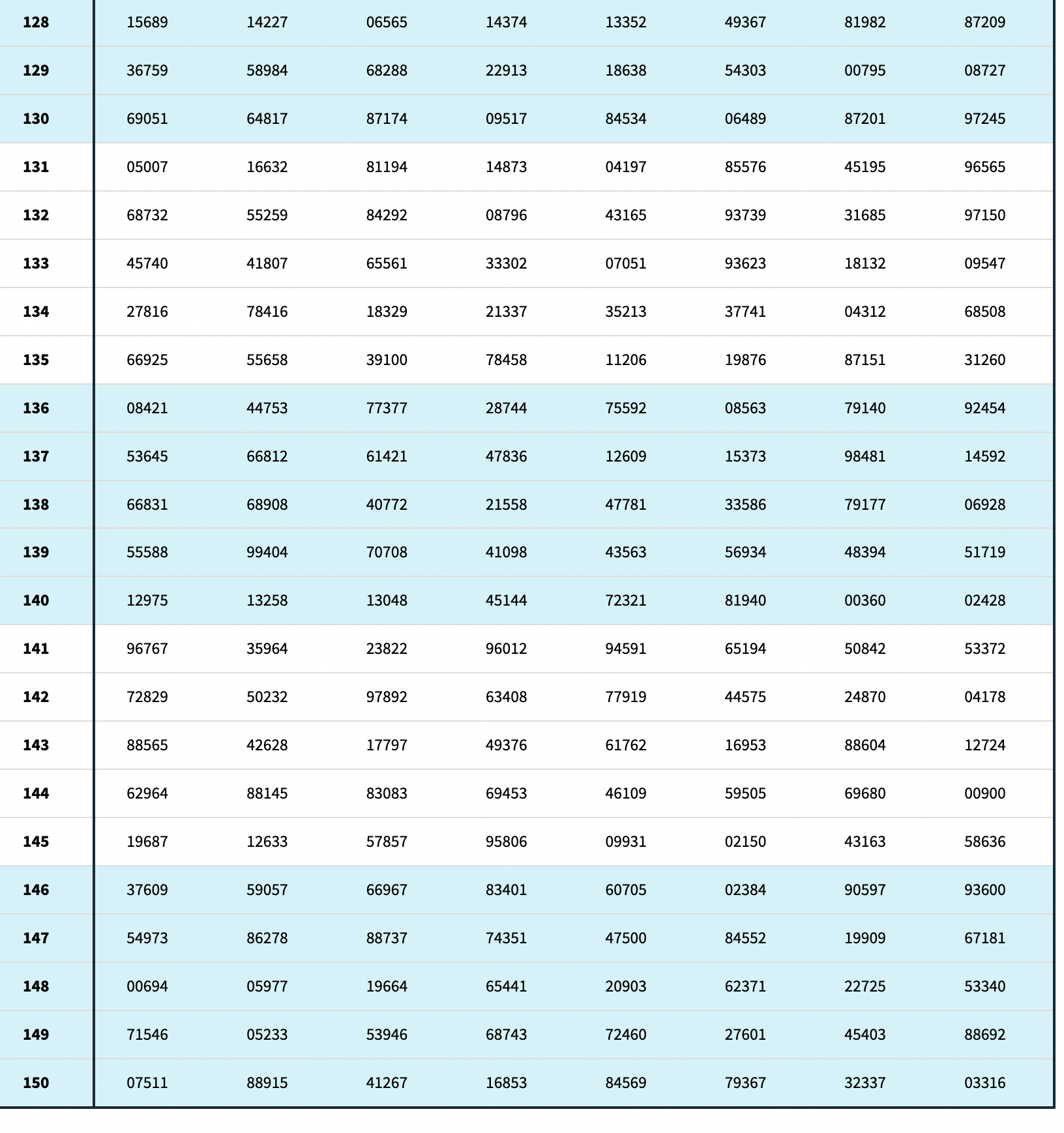
Discussion Question 3: Using Table B When selecting a sample, randomness in your selection process is essential to help avoid bias. If we all used truly random methods such as rolling dice or drawing cards from a shuffled deck to select our samples from a population it would be likely that we would all get different samples. In order to have a quiz that we can grade, we need consistency so that all students can follow the same procedure and get the same random sample. The solution to this puzzle is to use a table of random digits. Statisticians used to purchase books of random digits to use in their work. These books are still available for sale. (Note the humorous reviews.) Today there are other sources of randomness available through the internet. Our textbook has a table of random digits on p. 678. Read the procedure for using a table of random digits and let's practice together using the questions below: (Please only answer one part at a time to give other students a chance to answer as well! Start with the rst one!) 1. Suppose you wanted to choose a random sample of 5 letters of the alphabet. Number each letter beginning with 01 for A and 02 for B. Begin on line 101 on Table B to select 5 (different) random letters of the alphabet. 2. Repeat the last question but begin with line 140.
Step by Step Solution
There are 3 Steps involved in it

Get step-by-step solutions from verified subject matter experts
 Study Help