Question: Discussion Topic Read the case study, Redeveloping Mission and the 'Driveway Tax' Controversy. In the Discussion, your initial post should address the following questions. Compare
Discussion Topic
Read the case study, Redeveloping Mission and the 'Driveway Tax' Controversy". In the Discussion, your initial post should address the following questions.
- Compare the differences between adaptive challenges and technical fix interpretations in the case study. Critique the interventions used and ways it changed or could have changed the outcome in the case study.
- Examine the challenges that arose between leadership vs authority in the case study.
- Relate ways the four competencies were used or could have been used to change the outcome in the case study.
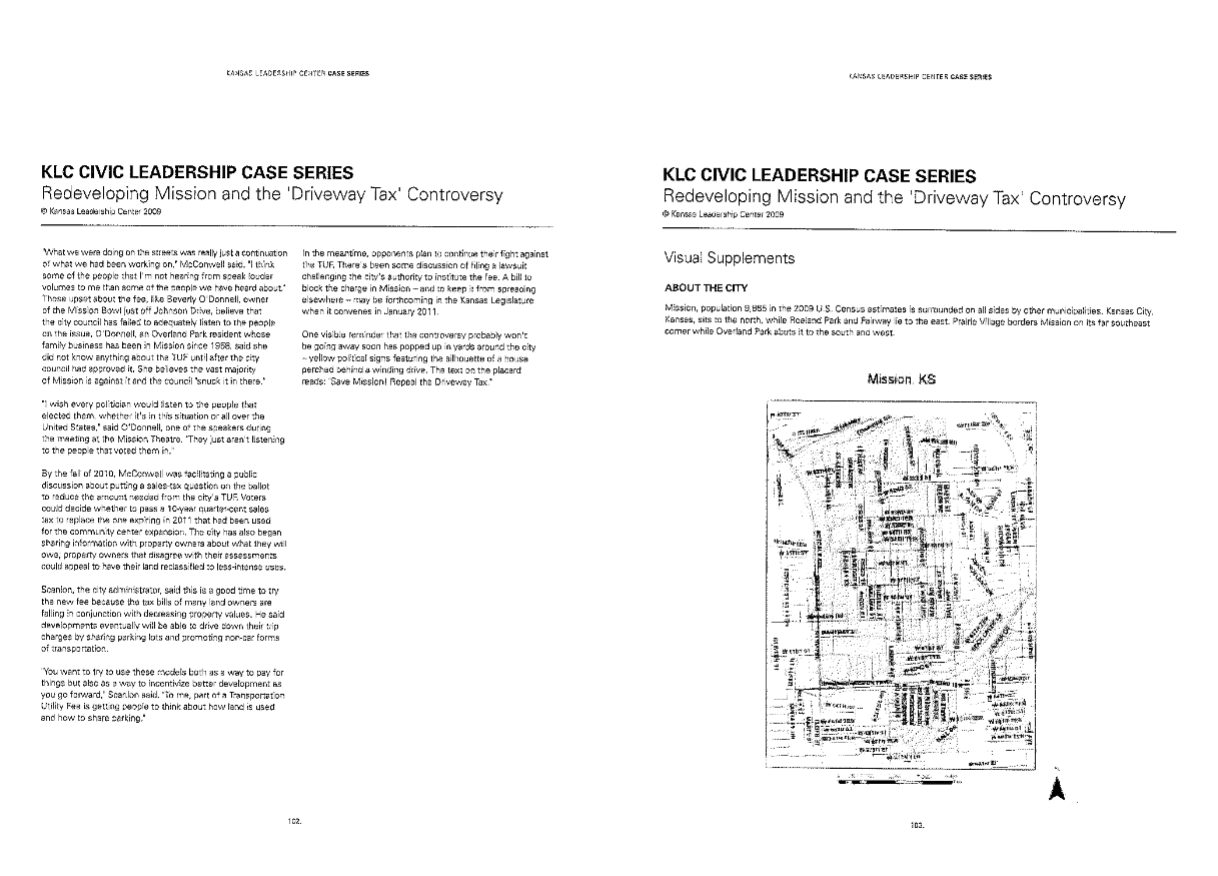
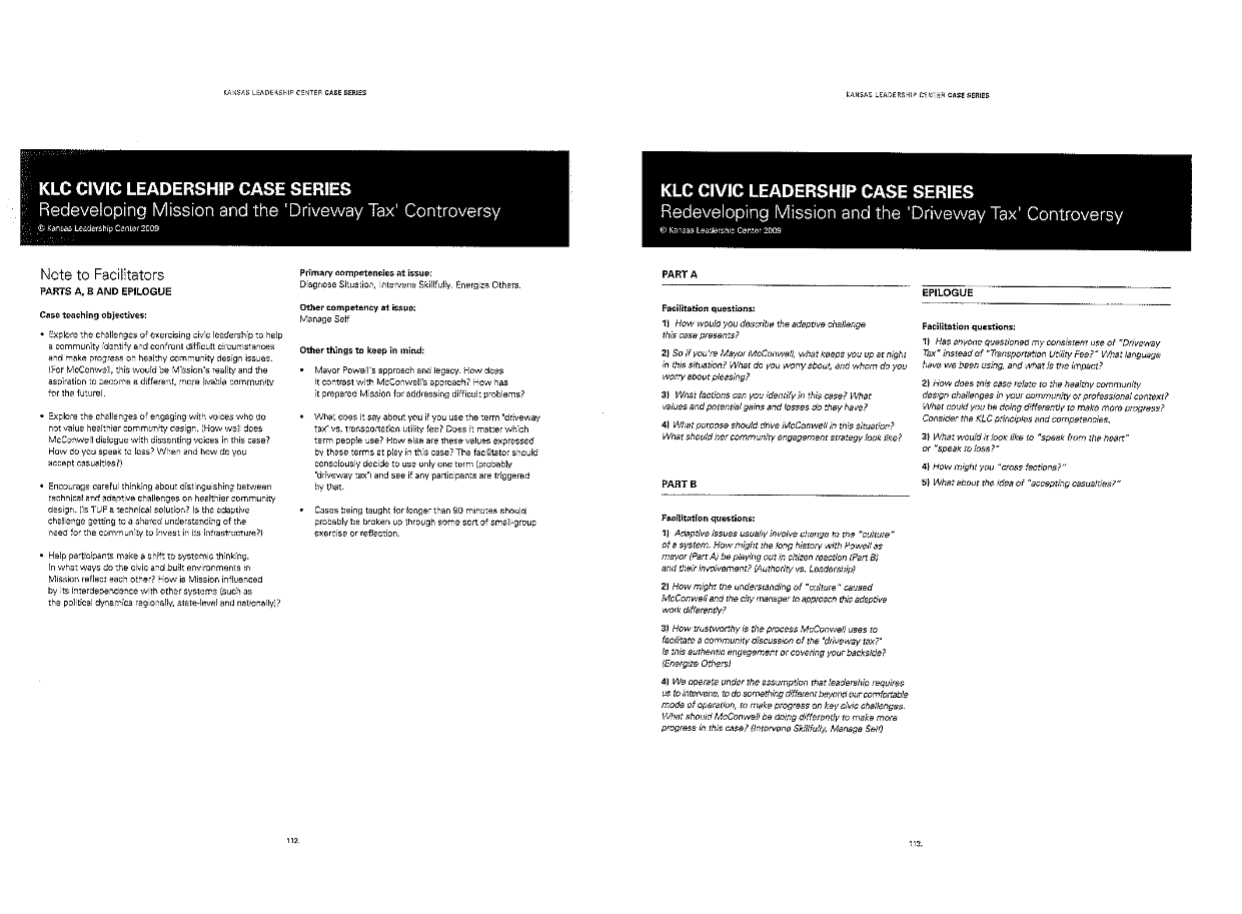
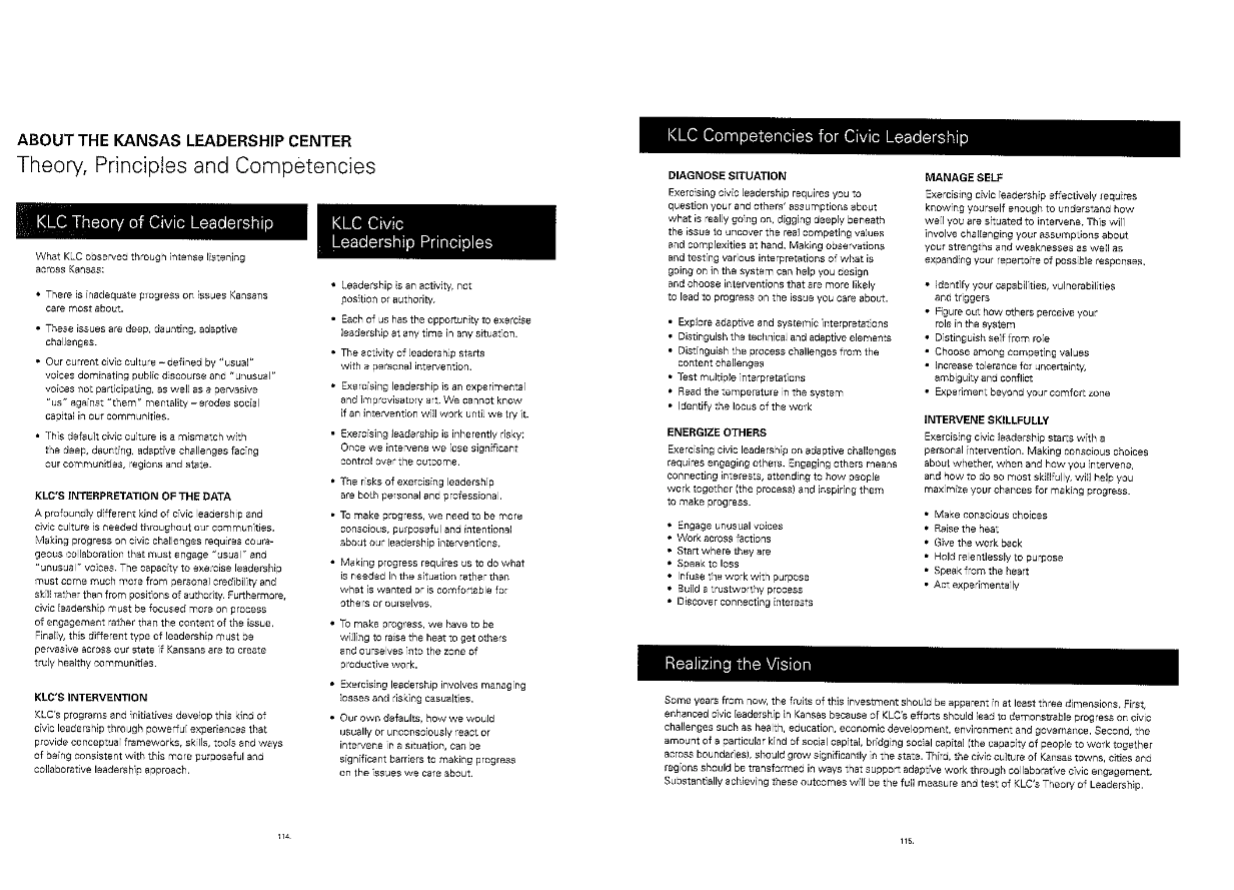
KLC CIVIC LEADERSHIP CASE SERIES Redeveloping Mission and the 'Driveway Tax' Controversy Kansas Leadership Center 2009 PART A The first e-mails from residents fearing a driveway tax began popping up on Laura McConwell's iPhone in late May 2010 The term was new to McConwell, the elected mayor of Mission, a first-tier Johnson County suburb of nearly 10,000. Despite that, the 47-year-old attorney, quickly realized what concerned her constituents. Working from her family's one-story law office, a side street away from Johnson Drive, Mission's main thoroughfare. McConwell's e-mails intormed her the issue had hit talk radio, too. Shows on several Kansas City area stations had been talking about the fee, and it was being critcized on the air as an example of government excess. "Talk radio picked it up and within a day or two and started calling it a 'driveway tax," McConwell said. "They started talking about how people would be charged to have driveways in the City of Mission, which was completely not true, Mission city officials had spent a year discussing a Transportation Utility Fee (TUR) that would charge all owners of developed land in Mission for use of the city's streets. The city's 3,278 properties would be assessed a fee based on the estimated number of vehicle trips a piece of land produced each day. The charges would range from 572 a year for a single-family home to less than $1,000 a year for most commercial properties However, big-box stores, fast-food restaurants and other high- traffic destinations would face far larger bills. McConwell, who had won a new four-year term that spring, had deep roots in the area. A sandy-haired mother and stepmother, she had joined the City Council in 2000 and was elected council presicient a year later. She won is when the mayor, Sylvester Powell Jr., broke a 4-4 tie between her and Councilman John Weber by flipping a coin. When Powell diled in March 2002. McConwell was next in the line for the agenda-setting post, which could break ties or veto action by the eight-member council. The toe's proceeds would help Mission acidress its deteriorating, potholed streets. For years, Mission lacked any comprehensive maintanence plan, the effects of which were becoming clear. A street inventory taken in 2008 revealed that 58 percent of Mission's streets had a pavement condition index below 8D, meaning they were in less than 'very good shape. Several were failing and in need of major rehabilitation The council McConwell inherited had been divided over the hands-on Powell, who had run the city since 1977. His legacy lived on in the form of the large, striking community center that he had championed. The building bearing his name had been expanded through a quarter-cent sales tax, set to expire in 2011, and depends on a subsidy of $850,000 each year from the city's general fund to operate. With a struggling economy and declining property values threatening to crimp the city's traditional revenue sources, sales and property taxes, City Administrator Mike Scanlon brought a TUF to the council for further study. It would generate a chunk of the 31.5 million a year the city would need for a 10-year program to upgrade and extend the lifespan of Mission's streets. A portion of the revenue would also be used to invest in bus transit and urban trails infrastructure, As the new mayor, McConwell led a community visioning effort. She believed it was important because Mission was an 'old community. Surrounded on all sides by other cities and fully built out over its 2,7 square miles. A historic stopping point for wagons on the Santa Fe Trail, Mission grew from a small town after World War II, when young families flocked to the area. Modest ranch and split-level homes lined the city's tree-canopied blocks. Mission's population included a sizable contingent of senior citizens, some whom had lived there for decades, as well as younger professionals drawn to its affordable housing. Although it had been used in other states, the charge would be the first of its kind in Kansas and the car-oriented suburbs of Kansas City. The novelty of the concept had prompted a front-page story in The Kansas City Star newspaper only a few days earlier. In explaining the idea, the reporter suggested that readers, 'imagine paying for the number of times you're expected to pull out of your driveway." PAULAS LEADERSCHTER CASES ANGAS LEADSHIP CENTER CASE SENES KLC CIVIC LEADERSHIP CASE SERIES Redeveloping Mission and the 'Driveway Tax' Controversy Karses Leaders Cartie 2009 KLC CIVIC LEADERSHIP CASE SERIES Redeveloping Mission and the 'Driveway Tax' Controversy Konses Lessership Center 2000 Home to tiger stores such as Target cluster esmal The vast majority of people, they come to the subts businesses inngunan Johnson Drive gave the suburb because they want and space'sid Schwanger maior city fool. A largo Vacant lots on the city's en "They'in pushing the high density edige near Jonson Drive, Roe Avenus and Shawnee Partray. The Mission Center Metta od thereuteng Me Cowell believed improving the city's napertion Ter 2008 Amoduse deve girent satid to include an infrastructure would be creial for redeveloping Mission 19.arium, lesai shops and condos was supposed replace it. She asofatlice the count should considera TUF woon But a dificult economy had stalled The Gateway to the 2011 budget some up for approval in August. The city in a ser preinven: Mission's commercial district. already be a couple of public meetings on the proposal in the coming months. However, now that MoComwell said many people living, working wing the driveway x' was shot topic in around Mission business or shopping in Mission envisioned it becoming MeConwlowed to ride how she would bestilte a more walcabe candy, with greater connectivity a community dialogue about the prescaal betan neighborhoods and the son Drive USB district. They alsot more on co to break up Exposes of pavement and to repair ters, which CITATIONS halong token a back seat to other priorites. Reedents The terms may has been also wanted a thumbprint on the city's future ook rather Histoide of the brain anchoringa metropolitan bu than the haphazard growth of yours past. she said. is orng of doing suits and areas. One of the big things ct consensus was that we didn't want The city does rots to be acts affic counts on individ devem to an in ure way that development percute the efforts ad." McCarve said Cor Vision would se des compiled by the of assortie es in the Generasional It be the serve pulsion developers use toote That vision pui officials on a path to promoting higher density development in Mesin Yut someons and smal Ehting Woments dontgeronto es Save: City of Miss Sport Utility Fre: Free Businesswers, many of who lived rear but not in Aged Que Mission were not on board. They tended to be particularly upset about the rebulong of portion of Johnson Drive Cooper, Ord. "Mission considerado at would be trend result of a project to remove 567 million in propory set. The City Sur May 20, 2010 for a floodple Aquartermilo stretch of the fourtane Povilo served as aversion 1955 and as road was changed to the lares with conter lunare. taforsking a 12 por vacation. Our: The Kaur City Star The intent was to saler conditions for pedestrian onima e des Syster Poel dit helpes. and traffic, but business worried it would impediatrie fow. Marsh 7. 2012 Sirebonfigurations were sisted for all and Roe annuns The city had al banyarunning through the heart of the city along Rock Creek. Sometrics, liee Weber, a retired Bite electrica che saw the city's efforts as watelor frivolous, Steve Schwangerdt, the owner of a remodeling business who had concly left his sound cone' members were good people but out of touch with the community's wishes PART B Tere were one or two deplo that didn't want us to fix the streets but that was tervell said. "Nobody elsewald McCorvalosponged to the concerned maland don't heads. Even those people who told us not to assures chons they d be kepth the loop. However, with Fix the roads. traust ustioned the time of it." the controversy over the riveway tax heating upon radio, Mortefelt more and to be done. She decided to alter the format of the city's public meetings on the The mayor and city stall then set up the crew mesti in August, aw days before the city westo non dari Bulat bringing transportation to pur dabasa. proposec 2011 budget. This forums would allow city officials she first wted to see whether residents really desired to outline strepo funding options for the publice to fis Mission's Sn, the worked with Scanion the and discuss. The mayor publlsized the session in a special city distrator, tout up a part of two-hour community Botion of her slette meetings in June and spread the word about to homewhere And merchant groups. En prinn Needs Forum About 8 peole showed up for each station funding drow about 70 to the community Center Forumut the community cents. Upon arrival, parlants were divided into a halldoren smal grous to complete At the meetings, McConivalplared that well maintained ple were a group was given a kit containing several streets we just one of many importantes competing sle slides that represered Sunding manis valable for city resources Other needs included storm water the by Amember and were infrastructure, the community Center and other arts. assigned to ich table to help anive questions ning and expanding trail systems, the city's outdoor swimming pool lunching a downtown farmer's market To furda sret rept program over 10 years, Mission needed and ging hydinio molence with the Americans to generato $15 ton anyent from mostly local revenu with Disabilities Act sources. The clad to receive about $250,000 each year from the rate and higway funding. Participants wo.de wanted them to understand all of the issues were dealing discuss the station and decide when the remaining $1.25 with and I want to find out whether or not pockeraly milion would come from an annual basis. Their chos wanted us to work on the McCorwe said in od: (1) 2 propery ves: torsporten "Because they don't want to work on the words, if they utitty fas: 14 pacients ofrectly to properly con't want us to work on the infrastructure and if they don't wabuting a street and (5) sety Services want us to do this and that, then we don't need to have the temptings Each roup's referred combinations are significantly Most bored obraining about to one-third The sity also released a survey alewing stakeholders to wait of the aid for street pairs from soos Sone wanted Then the community's needs and street maintenso, McConwell as much as half of the money to come from a Tancrortation said the consoring incut wanted to repair the stus Utlity Foo others less than 10 pers. One grous the and believed to improvements would help along their goal to reach tyconsensus at all ol Sering Mission redevelop However, when the city is aged all the dies, they suggested a street program with one thic of the money from a recent sales to a third from a TUF third from combination of art, the city general fund and 18 and highway funcs. KANSAS LEADERSHID CESTER CASE SERES CANGAS LEADERSHIP CENTER CASE SERES KLC CIVIC LEADERSHIP CASE SERIES Redeveloping Mission and the 'Driveway Tax' Controversy KLC CIVIC LEADERSHIP CASE SERIES Redeveloping Mission and the 'Driveway Tax Controversy ranses Leadership Centar 2009 Koos Loadershio Contar 2000 u Ella Heye, a 20-year-old resident who attanded a forum About a week later, the Mission City Council tack up an said her group of three-which includede mid-aged man crdinance authorzing a transportation utility fee to colect up and an elderly gentlemen moothly reached a consensus 10 5833.000 for 2011. This sitzens, including Nichols, spoke on their tabe's ple, A management and budget analyst in the cut against the fee. The mayor and cthers on the council- county manager'a office, Hove also sasved on the songown argubo that it was a necessary source of road sinterance visioning committee. She thought a transportadon utility tunaing. Unleas the city did something now, improvements fee was an intriguing icca going in and felt she gained from would be more cont in the huture Mecnwol said. hearing the other perspectives at the meeting, won it is The council voted 7-1 to approve the TUF with Councinen wasn't a huge crowd Weber casting the lona'no' voce. Nichols was shocked by the council's action on the TUF und fat the earlier public The Tufpraved a pealeg to hor groue, she said. Decoudoit meeting he had attended hin't allected the bus would bo a dedicated source for transportation infrastructure mprowerteries. It would also be less burdensome or businesses In cey opinion, it was a dana dinal" Nichols said than ro'sing funds from property taxes, since of properties - Troluding churches, schools and government-would pay the The rext morning, McCorwell woke up at 5 am to a phone 190, she said. There was also excitement that. In conjunction call. A folk radio show warded to record an interview with her with road itxovomonts, Mission could be made more friendly in 20 minutes about the councils passage of the oriveway to walking and biking, particularly around Johnson Drive. ux.' McConnellized that it would probably be far from the last media request she would be receiving in the days ahead. 'They didn't limit it to filling potholes.' Hoyosaid of city officials. "They recognized that transportator dousn't just ceourna CTATIONS Minutes of the Mission City Council. Aug. 2016 However, another parton, Bill Nichols, was not impressed by the process. The 20-year-old retired photographer active in the area Toc Party movement had born stated at the same tabla as the mayor city administrator, a council member and a couple of other c tizens. He felt that his group hadn't come to a consensus but one member, a honetail business owner. reported otherwise to the full group, something Nichols brought up atter the meeting Nichols disliked the idea of TUF, Mheity was going do anything he felt it should ask voters to pass a sales tex for the roads, asoolt like the city was spending money on unnecessary infrastructure changes - Ike ice paths and reducing some street anes - when it should be tightening its betina bad economy Epilogue The exchanges didn't seem to be changing ton mary minds in the room but McConwall held steady. Since the councils Several doren people, mosty business owners, gathered Case of the TU. She has served as the city's chief inside the dimly lit historic Mission Theatreon Johnson Drive representative in rosgonding to public concerns about the to express their anger and frustration. One by one, they tosk driveway tox. The new fee receiveo widespread newsper, radio and television coverage across the Kansas City matra the microphone from Nice Scanion, the thy administrator are pointsly Questioned the council's decision to institute area and wo critical analyzed by conservative bloooors a Transportation Utilizy fee. and on Fox Bus News, The National Federation of Independent Business' Kansas Chapter, a small business It was Aug 31, 2010. The City of Vision was conducting group, issued a statement contending that tho TUF was the first of two public meetings to provide informaat bout the kind of polky that would further state and crush thn TUF how it was cale leted and to explain how it would economic growth in Kansas. be used to pay for street improvements. For those on hard, however, it was also a chance to confrontity officials over McConwell said she could not have anticipated the sheer the decision that had been made amount of attention the council's action on the TUF would Orive, particularly from outsiders, Some in attendance questioned the process to city council had used to as too. A fons they hadn't know about 'lade't understand that in addition to working to educate it until after it was posted: hors were upset that there was the Secple that lived in Mission, owned property in Monton not a way fork to be brought to vote. They also questioned or had businesses in Mission-wp would have to bolonte The city's spending decisions, such as the nating of streets the rest of the metropolitan trea, the rest of the state and and bulong of wider sidewalks, and charasterized them potentially the rest of the country." McComwell as as bac or wasteful. They argued that the Tur would hurt Mission's econy in a reacy tough times and dive the city However, the muyor boloves much of the fuss spring from nts turthe economic decline. One mentioned the agentot the nation's current political climato, in which many Americans whoro The Mission Center Malused to be as evidence that ao gravely concerned about warnment taxation and spending the city's overall vision for redevelopment was going nowhere in the allerriath of the nation's weest recession in utilisentury, the ensuing taxsayer funded bollouts and federal etimulus. McConwel stood at the front of the room, sponding to From her perspective, much of the anger erupting has very ther questions, concerns and complaints in a calm bus direct little to do with Mission instituting a new fee to fix ita streets. tranner. She explained that the TUF woo supply a transparent docicated stream of revenue for repairing Mission's seus "What we're getting now is more of a reaction of what's going and would be spread more evenly than a large property tax at the soul or the state level of other personal issues going increase. She polnced out how the city could move forward or in people's lives." McConwell said. "I find that out a lot. For with discussing a sales tax question to reduce the size of the people that are unhappy about something. I'm a safe person TUF, an idea that had sprung from discussions with the puble to come and yell at. " She shoemphasized that most of the residents and business owners who had attended the public forums wanted the Furthermore, McCorwell said many of the cividuals most city to focus on its rires nature needs. She also said that vocally upset about the TUF are the same ceople who have Mission's redevelopment plan was taking shape and The been angered by previous city decisions, such as disffected Gotowy would happen. business owners on Johnson Drive. Other critics in the community are simply arrbarrassed by the negative station that Mission had been receiving Some in Mission with not oppose the TUF have remained uit because they do not want torsk theire of those who oppose it, she said. It's just a mystery to me," Nichols said. "I con't understand how these people think. 100 KANSAS LEADERSHICHTEN CASE SERIES SAS LEADERSHIP CENTER CARS SERIES KLC CIVIC LEADERSHIP CASE SERIES Redeveloping Mission and the 'Driveway Tax' Controversy KLC CIVIC LEADERSHIP CASE SERIES Redeveloping Mission and the 'Driveway Tax' Controversy Kenses Leadership Dentsi 2009 Kansas Leaksha Carter 2009 Visual Supplements In the meartime, opponents plan cantica therfight against the TUF. There's been score discussion of filing lawsuit chelanging the city's thority to instituse the le. A bill to block the charge in Mission-and to keep it from spreasing elsewhurt my be forthcoming in the Kansas Legislature when it corvenes in January 2011 ABOUT THE CITY Mission, population 9.555 in the 2009 US Consus estimates is surrounded on all sides by cther municipalities, Kansas City Kanses, sits to the north, while Pceland Park and Fairway to the east. Prairie Vilage borders Mission on its tar southeast comer while Overtand Park abuts it to the south and west One vis blu ferminder that the controversy probably won't be going away soon has popped up in yards around the city -Yellow political signs featuring the silhouette of a nosa perched Benind a winding drive. Thate on the placard rends: Save Mission Repeal the Divewey Tax Mission KS What we were doing on to stres was really lusta continuaton of what we had been working on McConwell stic. "taink some of the people that I'm not hearing from speak louder volumes to me than acme at the sample we have heard about These upset about the fooiko Beverly O Donnell, owner of the Mission Bowl just off Johnson Drive, believe that the city council has failed to detaly listen to the people on the issue, Donell, an Overland Park resident whose family business has been in Mission since 1958, said she cid not know anything about the US until after the city courcil had approved it. She beloves the vast majority of Mission is against it and the council'snuck it in thers. ! "wish every potiaian would listen to the people the elected them whether it's in this situation or all over the United States," said O'Donnell, one of the saeakers during the rating at the Mission Theatro. They just aren't listening to the people that voted them in By the fall of 2010, McCorwall was facilitating a public discussion about putting a sales tax Question on the ballot To raduor the entrance from the city'a TU Vocers could decide whether to pass a 10 ya quarter.cent salos 3x to replace the expring in 2011 that had been used for the community Cente" expansion. The city has also began sharing information with property owners about what they ntl owe, property owners that disagree wth their assessments could appeal to have their land reclassitled: less-intenso usts. IS Scanlon, the city administrator, said this is a good time to try the new fee because the tax bills of many land owners are Falling in conjunction with decreasing troparty values. He said developments eventually will be able to drive down their trip charges by sharing parking lots and promoting ror-car forms of transportation Web RO You went to try to use these dels both as a way to pay for things but also as a way to incentivize better development you go forward, Scarlon wald. "to, part of a Transportation Utility F# is getting people to think about how and is used and how to share sarking 4 . wat Muhy 102. KANSAS LEADERSHIP CENTEF CASE SERIES KANSAS LEADERSHIP CERCASE SERIES KLC CIVIC LEADERSHIP CASE SERIES Redeveloping Mission and the 'Driveway Tax' Controversy Kansas Leadership Center 2009 KLC CIVIC LEADERSHIP CASE SERIES Redeveloping Mission and the 'Driveway Tax' Controversy Kangas Leadershie Carter 2008 Primary competencies at issue: Diagnose Situation, intervena Skillfully, Energies Others. Intetana . . Other competency at issue Manage Sort Note to Facilitators PARTS A, B AND EPILOGUE Case touching objectives: : Explore the challenges of exercising civic leadership to help a community Plantity and confrontalfelttercumstances and make progress on healthy community design issues For McConwl, this would be Mission's reality and the aspiration to become a different, mere liva:la community a for the futurel. Explore the challenges of engaging with voces who do not value hoolthier community cosign. How wel does McComwell diulugue with dissenting voices in this case? How do you speak to loss? When and low do you te ? achat Casualties Encourage careful thinking about cistinguishing between Technical and date challenges on healthier community design. I' TUF a technical solution is the adoptive chologo getting to a shared understanding of the Need for the community to invest in its indrastructure Other things to keep in mind: Mayor Powal's approach and legacy. How do it contrast with McConwell's sporcach? How has it prepares Mission to addressing difficult problems? . What coes it say about you if you use the term driveway to vs. Transportation utility fee? Does it matter which term people use? How ola are these values expressed by these terms at play in this case? The factator should conselously decide to use only one torm (probably driveway as and see it any partic pants are triggered by that PARTA EPILOGUE Facilitation questions 1) How woulo you describe the adapovahallange Facilitation questions: this case presents? 1) Has anyone questioned my consistent use of "Driveway 21 So if you're Mayor Moonwe!, what keeps you up at nigha Tax instead of Transportation Utility Foo?" Vat language in this situation? What do you wony sbout, and who do you have we boon using, and what is the import? wary about pleasing? 21 How does mis caseroute to the healey cornmunity 31 What factions can you identify in this case? Whar design challenges in your community of professional context? values and poreiguins and tossos do they have? Wher could you be doing differently to make more expess? Concer the KLC principles and competencer, 4) Wat outcase should strive MoConwell in this situation? Whar should her community engagement strategy fokke? 3) What would it look ike to punk hom the hoart" or "speak to foss? 4) How might you "cross factions" PART B 5) What abour the dor of accepting casualties? . Casas being taught for longer than 90 minutes should probably be broken up through some sort of smel.group exercise or reflection .Halp partialpants make and to systemic thinking In what ways do the chic and built environments in Mission reflect each other? How is Mission influenced by its interdependence with other systems such as the political dynamics ragionally, state-level and nationally? Facilitation questions: 1) Acapaivoisses usvaly involve change to the culture of a system. How might she long history with Powel as mayor Pert A be playing out in chien ronction (Part BJ and their involvement Authority vs. Lasdors 21 How might the understanding of culture caused McCowel and the cay manager to approach to aceptive work cfferently 31 How trustworthy is the process McConve! Uses to fecitate a community discussion of the drivpway fax?" Is this authentic engegement or covering your backside? Energize Others) 4) We operate under the assumption that leadershic requires to interveno, to do something different beyond our comfortable mode of operation, to make progress on key alvic challenges Wust show Moonwel be doing differently to make more progress in this case stopne Story Manage Ser 112 113 KLC Competencies for Civic Leadership ABOUT THE KANSAS LEADERSHIP CENTER Theory, Principles and Competencies KLC Theory of Civic Leadership KLC Civic Leadership Principles What KLCC Solved through intense listening across Kansas: MANAGE SELF Exercising civle leadership effectively requires knowing yourself enough to understand how Well you are situated to intervene. This will involve challenging your assumptions about your strengths and weaknesses as well as expanding your repertoire of poss ble responses Identify your capabilities, vulnerabilities , are triggers . Foure out how others perceive your rols in the system Distinguish self from role . Choose among competing values Increase tolerance for uncertainty ambiguity and conflict Experiment beyond your comfort zone There is inadequate progress or issues Kansans care most about. . These issues are doop, daunting, adaptive DIAGNOSE SITUATION Exercising civic leadership requires you to question your and others' 859 umptions about what is really going on, digging deeply beneath the issue to uncover the real competing values and complexities at hand. Making observations and testing various interpretations of what is going on in the system can help you design and choose interventions that are more likely to lead to progress on the issue you care about Explore adaptive and systemic interpretations Distinguish the technical and adaptive elements Distinguish the process challenges from the content challenges Test multiple interpretations . Read the comperature in the system Identify the locus of the work challenges. . Our current civic culture - defined by "usual" voices dominating public discourse one "unusual" voices not participating, as well as a pervasivo "us* against them" mentality - Orodes social capital in our communities. . . This delault civic culture is a mismatch with the deep, daunting, adaptive challenges facing our communities, regions and state. KLC'S INTERPRETATION OF THE DATA A profoundly different kind of civic eadership and civic culture is needed throughout our communities. Making progress on civic chalenges requires coura- geous colaboration that must engage usual and "unusual voices. The capacity to exercise leadership must come much more from personal credibility and skill rather than trom positions of authority. Furthermore, civic leadership must be focused more on process of engagement rather than the content of the issue. Finally, this different type of leadership must be pervasive across our state 7 Kansans are to create truly healthy communities. Leadership is an activity, not , position of authority . Each of us has the cpportunity to exercise leadership at any time in any situation. The activity of leadership starts with a personal intervention. Exercising leadership is an experimental and improvisatory ws. We cannot know if an intervention will work until we try it. . Exercising leadership is inherently risky: Once we inte vene we lose significant control over the cutome. The risks of exercising leadership are both personal and professional To make progress, we need to be more conscious, purposeful and intentional about our leadership Interventions. Making progress requires us to do what is needed in the situation rather than what is wanted - is comfomable for others or ourselves To make progress, we have to be willing to raise the heat to get others and ourselves into the zone of productive work. Exercising leadership involves managing losses and risking casualties. . Our own defaults, how we would usually or unconsciously reactor into vere in a situation, can be significent barriers to making progress on the issues we care about. . ENERGIZE OTHERS Exercising civic leadership on adaptive challenges requires engaging others. Encaging others manns connecting interests, attending to how people work together the procesa) and inspiring them to make progress. Engage unusual voices Work across actions Start where they are Speak to loss Infuse to work with purpose Build a trustworthy process Discover connecting internats INTERVENE SKILLFULLY Exercising civic leadership starts with a personal intervention. Making conscious choices about whether, when and how you interveno, and how to do so most skilfully, will help you maximize your charces for making progress. Make conscious choices . Raise the hea: . Give the work back . Hold relentlessly to purpose . Speak from the heart . Ant experimentally Realizing the Vision KLC'S INTERVENTION KL.C's programs and initiatives develop this kind of civic leadership through powerful experiences that provide conceptual frameworks, skills, tools and weys of being consistent with this more purposeful and collaborative leadership approach. Some years from now, the fruits of this investment should be apparent in at least three dimensions. First erhanced civic leadership in Kansas because of KLC's efforts should lead to demonstrable progress or civic challerges such as heath, education, economic development, environment and governance. Second, the amount of a particular kind of social capital, bridging social capital the capacity of people to work together across boundaries, should grow significantly in the state. Third, the civic culture of Kansas towns, cities and regions should be transformed in ways that support adaptive work through collaborative civic engagement. Substantially achieving these outcomes will be the full measure and test of KLC's Theory of Leadership, 114 115. KLC CIVIC LEADERSHIP CASE SERIES Redeveloping Mission and the 'Driveway Tax' Controversy Kansas Leadership Center 2009 PART A The first e-mails from residents fearing a driveway tax began popping up on Laura McConwell's iPhone in late May 2010 The term was new to McConwell, the elected mayor of Mission, a first-tier Johnson County suburb of nearly 10,000. Despite that, the 47-year-old attorney, quickly realized what concerned her constituents. Working from her family's one-story law office, a side street away from Johnson Drive, Mission's main thoroughfare. McConwell's e-mails intormed her the issue had hit talk radio, too. Shows on several Kansas City area stations had been talking about the fee, and it was being critcized on the air as an example of government excess. "Talk radio picked it up and within a day or two and started calling it a 'driveway tax," McConwell said. "They started talking about how people would be charged to have driveways in the City of Mission, which was completely not true, Mission city officials had spent a year discussing a Transportation Utility Fee (TUR) that would charge all owners of developed land in Mission for use of the city's streets. The city's 3,278 properties would be assessed a fee based on the estimated number of vehicle trips a piece of land produced each day. The charges would range from 572 a year for a single-family home to less than $1,000 a year for most commercial properties However, big-box stores, fast-food restaurants and other high- traffic destinations would face far larger bills. McConwell, who had won a new four-year term that spring, had deep roots in the area. A sandy-haired mother and stepmother, she had joined the City Council in 2000 and was elected council presicient a year later. She won is when the mayor, Sylvester Powell Jr., broke a 4-4 tie between her and Councilman John Weber by flipping a coin. When Powell diled in March 2002. McConwell was next in the line for the agenda-setting post, which could break ties or veto action by the eight-member council. The toe's proceeds would help Mission acidress its deteriorating, potholed streets. For years, Mission lacked any comprehensive maintanence plan, the effects of which were becoming clear. A street inventory taken in 2008 revealed that 58 percent of Mission's streets had a pavement condition index below 8D, meaning they were in less than 'very good shape. Several were failing and in need of major rehabilitation The council McConwell inherited had been divided over the hands-on Powell, who had run the city since 1977. His legacy lived on in the form of the large, striking community center that he had championed. The building bearing his name had been expanded through a quarter-cent sales tax, set to expire in 2011, and depends on a subsidy of $850,000 each year from the city's general fund to operate. With a struggling economy and declining property values threatening to crimp the city's traditional revenue sources, sales and property taxes, City Administrator Mike Scanlon brought a TUF to the council for further study. It would generate a chunk of the 31.5 million a year the city would need for a 10-year program to upgrade and extend the lifespan of Mission's streets. A portion of the revenue would also be used to invest in bus transit and urban trails infrastructure, As the new mayor, McConwell led a community visioning effort. She believed it was important because Mission was an 'old community. Surrounded on all sides by other cities and fully built out over its 2,7 square miles. A historic stopping point for wagons on the Santa Fe Trail, Mission grew from a small town after World War II, when young families flocked to the area. Modest ranch and split-level homes lined the city's tree-canopied blocks. Mission's population included a sizable contingent of senior citizens, some whom had lived there for decades, as well as younger professionals drawn to its affordable housing. Although it had been used in other states, the charge would be the first of its kind in Kansas and the car-oriented suburbs of Kansas City. The novelty of the concept had prompted a front-page story in The Kansas City Star newspaper only a few days earlier. In explaining the idea, the reporter suggested that readers, 'imagine paying for the number of times you're expected to pull out of your driveway." PAULAS LEADERSCHTER CASES ANGAS LEADSHIP CENTER CASE SENES KLC CIVIC LEADERSHIP CASE SERIES Redeveloping Mission and the 'Driveway Tax' Controversy Karses Leaders Cartie 2009 KLC CIVIC LEADERSHIP CASE SERIES Redeveloping Mission and the 'Driveway Tax' Controversy Konses Lessership Center 2000 Home to tiger stores such as Target cluster esmal The vast majority of people, they come to the subts businesses inngunan Johnson Drive gave the suburb because they want and space'sid Schwanger maior city fool. A largo Vacant lots on the city's en "They'in pushing the high density edige near Jonson Drive, Roe Avenus and Shawnee Partray. The Mission Center Metta od thereuteng Me Cowell believed improving the city's napertion Ter 2008 Amoduse deve girent satid to include an infrastructure would be creial for redeveloping Mission 19.arium, lesai shops and condos was supposed replace it. She asofatlice the count should considera TUF woon But a dificult economy had stalled The Gateway to the 2011 budget some up for approval in August. The city in a ser preinven: Mission's commercial district. already be a couple of public meetings on the proposal in the coming months. However, now that MoComwell said many people living, working wing the driveway x' was shot topic in around Mission business or shopping in Mission envisioned it becoming MeConwlowed to ride how she would bestilte a more walcabe candy, with greater connectivity a community dialogue about the prescaal betan neighborhoods and the son Drive USB district. They alsot more on co to break up Exposes of pavement and to repair ters, which CITATIONS halong token a back seat to other priorites. Reedents The terms may has been also wanted a thumbprint on the city's future ook rather Histoide of the brain anchoringa metropolitan bu than the haphazard growth of yours past. she said. is orng of doing suits and areas. One of the big things ct consensus was that we didn't want The city does rots to be acts affic counts on individ devem to an in ure way that development percute the efforts ad." McCarve said Cor Vision would se des compiled by the of assortie es in the Generasional It be the serve pulsion developers use toote That vision pui officials on a path to promoting higher density development in Mesin Yut someons and smal Ehting Woments dontgeronto es Save: City of Miss Sport Utility Fre: Free Businesswers, many of who lived rear but not in Aged Que Mission were not on board. They tended to be particularly upset about the rebulong of portion of Johnson Drive Cooper, Ord. "Mission considerado at would be trend result of a project to remove 567 million in propory set. The City Sur May 20, 2010 for a floodple Aquartermilo stretch of the fourtane Povilo served as aversion 1955 and as road was changed to the lares with conter lunare. taforsking a 12 por vacation. Our: The Kaur City Star The intent was to saler conditions for pedestrian onima e des Syster Poel dit helpes. and traffic, but business worried it would impediatrie fow. Marsh 7. 2012 Sirebonfigurations were sisted for all and Roe annuns The city had al banyarunning through the heart of the city along Rock Creek. Sometrics, liee Weber, a retired Bite electrica che saw the city's efforts as watelor frivolous, Steve Schwangerdt, the owner of a remodeling business who had concly left his sound cone' members were good people but out of touch with the community's wishes PART B Tere were one or two deplo that didn't want us to fix the streets but that was tervell said. "Nobody elsewald McCorvalosponged to the concerned maland don't heads. Even those people who told us not to assures chons they d be kepth the loop. However, with Fix the roads. traust ustioned the time of it." the controversy over the riveway tax heating upon radio, Mortefelt more and to be done. She decided to alter the format of the city's public meetings on the The mayor and city stall then set up the crew mesti in August, aw days before the city westo non dari Bulat bringing transportation to pur dabasa. proposec 2011 budget. This forums would allow city officials she first wted to see whether residents really desired to outline strepo funding options for the publice to fis Mission's Sn, the worked with Scanion the and discuss. The mayor publlsized the session in a special city distrator, tout up a part of two-hour community Botion of her slette meetings in June and spread the word about to homewhere And merchant groups. En prinn Needs Forum About 8 peole showed up for each station funding drow about 70 to the community Center Forumut the community cents. Upon arrival, parlants were divided into a halldoren smal grous to complete At the meetings, McConivalplared that well maintained ple were a group was given a kit containing several streets we just one of many importantes competing sle slides that represered Sunding manis valable for city resources Other needs included storm water the by Amember and were infrastructure, the community Center and other arts. assigned to ich table to help anive questions ning and expanding trail systems, the city's outdoor swimming pool lunching a downtown farmer's market To furda sret rept program over 10 years, Mission needed and ging hydinio molence with the Americans to generato $15 ton anyent from mostly local revenu with Disabilities Act sources. The clad to receive about $250,000 each year from the rate and higway funding. Participants wo.de wanted them to understand all of the issues were dealing discuss the station and decide when the remaining $1.25 with and I want to find out whether or not pockeraly milion would come from an annual basis. Their chos wanted us to work on the McCorwe said in od: (1) 2 propery ves: torsporten "Because they don't want to work on the words, if they utitty fas: 14 pacients ofrectly to properly con't want us to work on the infrastructure and if they don't wabuting a street and (5) sety Services want us to do this and that, then we don't need to have the temptings Each roup's referred combinations are significantly Most bored obraining about to one-third The sity also released a survey alewing stakeholders to wait of the aid for street pairs from soos Sone wanted Then the community's needs and street maintenso, McConwell as much as half of the money to come from a Tancrortation said the consoring incut wanted to repair the stus Utlity Foo others less than 10 pers. One grous the and believed to improvements would help along their goal to reach tyconsensus at all ol Sering Mission redevelop However, when the city is aged all the dies, they suggested a street program with one thic of the money from a recent sales to a third from a TUF third from combination of art, the city general fund and 18 and highway funcs. KANSAS LEADERSHID CESTER CASE SERES CANGAS LEADERSHIP CENTER CASE SERES KLC CIVIC LEADERSHIP CASE SERIES Redeveloping Mission and the 'Driveway Tax' Controversy KLC CIVIC LEADERSHIP CASE SERIES Redeveloping Mission and the 'Driveway Tax Controversy ranses Leadership Centar 2009 Koos Loadershio Contar 2000 u Ella Heye, a 20-year-old resident who attanded a forum About a week later, the Mission City Council tack up an said her group of three-which includede mid-aged man crdinance authorzing a transportation utility fee to colect up and an elderly gentlemen moothly reached a consensus 10 5833.000 for 2011. This sitzens, including Nichols, spoke on their tabe's ple, A management and budget analyst in the cut against the fee. The mayor and cthers on the council- county manager'a office, Hove also sasved on the songown argubo that it was a necessary source of road sinterance visioning committee. She thought a transportadon utility tunaing. Unleas the city did something now, improvements fee was an intriguing icca going in and felt she gained from would be more cont in the huture Mecnwol said. hearing the other perspectives at the meeting, won it is The council voted 7-1 to approve the TUF with Councinen wasn't a huge crowd Weber casting the lona'no' voce. Nichols was shocked by the council's action on the TUF und fat the earlier public The Tufpraved a pealeg to hor groue, she said. Decoudoit meeting he had attended hin't allected the bus would bo a dedicated source for transportation infrastructure mprowerteries. It would also be less burdensome or businesses In cey opinion, it was a dana dinal" Nichols said than ro'sing funds from property taxes, since of properties - Troluding churches, schools and government-would pay the The rext morning, McCorwell woke up at 5 am to a phone 190, she said. There was also excitement that. In conjunction call. A folk radio show warded to record an interview with her with road itxovomonts, Mission could be made more friendly in 20 minutes about the councils passage of the oriveway to walking and biking, particularly around Johnson Drive. ux.' McConnellized that it would probably be far from the last media request she would be receiving in the days ahead. 'They didn't limit it to filling potholes.' Hoyosaid of city officials. "They recognized that transportator dousn't just ceourna CTATIONS Minutes of the Mission City Council. Aug. 2016 However, another parton, Bill Nichols, was not impressed by the process. The 20-year-old retired photographer active in the area Toc Party movement had born stated at the same tabla as the mayor city administrator, a council member and a couple of other c tizens. He felt that his group hadn't come to a consensus but one member, a honetail business owner. reported otherwise to the full group, something Nichols brought up atter the meeting Nichols disliked the idea of TUF, Mheity was going do anything he felt it should ask voters to pass a sales tex for the roads, asoolt like the city was spending money on unnecessary infrastructure changes - Ike ice paths and reducing some street anes - when it should be tightening its betina bad economy Epilogue The exchanges didn't seem to be changing ton mary minds in the room but McConwall held steady. Since the councils Several doren people, mosty business owners, gathered Case of the TU. She has served as the city's chief inside the dimly lit historic Mission Theatreon Johnson Drive representative in rosgonding to public concerns about the to express their anger and frustration. One by one, they tosk driveway tox. The new fee receiveo widespread newsper, radio and television coverage across the Kansas City matra the microphone from Nice Scanion, the thy administrator are pointsly Questioned the council's decision to institute area and wo critical analyzed by conservative bloooors a Transportation Utilizy fee. and on Fox Bus News, The National Federation of Independent Business' Kansas Chapter, a small business It was Aug 31, 2010. The City of Vision was conducting group, issued a statement contending that tho TUF was the first of two public meetings to provide informaat bout the kind of polky that would further state and crush thn TUF how it was cale leted and to explain how it would economic growth in Kansas. be used to pay for street improvements. For those on hard, however, it was also a chance to confrontity officials over McConwell said she could not have anticipated the sheer the decision that had been made amount of attention the council's action on the TUF would Orive, particularly from outsiders, Some in attendance questioned the process to city council had used to as too. A fons they hadn't know about 'lade't understand that in addition to working to educate it until after it was posted: hors were upset that there was the Secple that lived in Mission, owned property in Monton not a way fork to be brought to vote. They also questioned or had businesses in Mission-wp would have to bolonte The city's spending decisions, such as the nating of streets the rest of the metropolitan trea, the rest of the state and and bulong of wider sidewalks, and charasterized them potentially the rest of the country." McComwell as as bac or wasteful. They argued that the Tur would hurt Mission's econy in a reacy tough times and dive the city However, the muyor boloves much of the fuss spring from nts turthe economic decline. One mentioned the agentot the nation's current political climato, in which many Americans whoro The Mission Center Malused to be as evidence that ao gravely concerned about warnment taxation and spending the city's overall vision for redevelopment was going nowhere in the allerriath of the nation's weest recession in utilisentury, the ensuing taxsayer funded bollouts and federal etimulus. McConwel stood at the front of the room, sponding to From her perspective, much of the anger erupting has very ther questions, concerns and complaints in a calm bus direct little to do with Mission instituting a new fee to fix ita streets. tranner. She explained that the TUF woo supply a transparent docicated stream of revenue for repairing Mission's seus "What we're getting now is more of a reaction of what's going and would be spread more evenly than a large property tax at the soul or the state level of other personal issues going increase. She polnced out how the city could move forward or in people's lives." McConwell said. "I find that out a lot. For with discussing a sales tax question to reduce the size of the people that are unhappy about something. I'm a safe person TUF, an idea that had sprung from discussions with the puble to come and yell at. " She shoemphasized that most of the residents and business owners who had attended the public forums wanted the Furthermore, McCorwell said many of the cividuals most city to focus on its rires nature needs. She also said that vocally upset about the TUF are the same ceople who have Mission's redevelopment plan was taking shape and The been angered by previous city decisions, such as disffected Gotowy would happen. business owners on Johnson Drive. Other critics in the community are simply arrbarrassed by the negative station that Mission had been receiving Some in Mission with not oppose the TUF have remained uit because they do not want torsk theire of those who oppose it, she said. It's just a mystery to me," Nichols said. "I con't understand how these people think. 100 KANSAS LEADERSHICHTEN CASE SERIES SAS LEADERSHIP CENTER CARS SERIES KLC CIVIC LEADERSHIP CASE SERIES Redeveloping Mission and the 'Driveway Tax' Controversy KLC CIVIC LEADERSHIP CASE SERIES Redeveloping Mission and the 'Driveway Tax' Controversy Kenses Leadership Dentsi 2009 Kansas Leaksha Carter 2009 Visual Supplements In the meartime, opponents plan cantica therfight against the TUF. There's been score discussion of filing lawsuit chelanging the city's thority to instituse the le. A bill to block the charge in Mission-and to keep it from spreasing elsewhurt my be forthcoming in the Kansas Legislature when it corvenes in January 2011 ABOUT THE CITY Mission, population 9.555 in the 2009 US Consus estimates is surrounded on all sides by cther municipalities, Kansas City Kanses, sits to the north, while Pceland Park and Fairway to the east. Prairie Vilage borders Mission on its tar southeast comer while Overtand Park abuts it to the south and west One vis blu ferminder that the controversy probably won't be going away soon has popped up in yards around the city -Yellow political signs featuring the silhouette of a nosa perched Benind a winding drive. Thate on the placard rends: Save Mission Repeal the Divewey Tax Mission KS What we were doing on to stres was really lusta continuaton of what we had been working on McConwell stic. "taink some of the people that I'm not hearing from speak louder volumes to me than acme at the sample we have heard about These upset about the fooiko Beverly O Donnell, owner of the Mission Bowl just off Johnson Drive, believe that the city council has failed to detaly listen to the people on the issue, Donell, an Overland Park resident whose family business has been in Mission since 1958, said she cid not know anything about the US until after the city courcil had approved it. She beloves the vast majority of Mission is against it and the council'snuck it in thers. ! "wish every potiaian would listen to the people the elected them whether it's in this situation or all over the United States," said O'Donnell, one of the saeakers during the rating at the Mission Theatro. They just aren't listening to the people that voted them in By the fall of 2010, McCorwall was facilitating a public discussion about putting a sales tax Question on the ballot To raduor the entrance from the city'a TU Vocers could decide whether to pass a 10 ya quarter.cent salos 3x to replace the expring in 2011 that had been used for the community Cente" expansion. The city has also began sharing information with property owners about what they ntl owe, property owners that disagree wth their assessments could appeal to have their land reclassitled: less-intenso usts. IS Scanlon, the city administrator, said this is a good time to try the new fee because the tax bills of many land owners are Falling in conjunction with decreasing troparty values. He said developments eventually will be able to drive down their trip charges by sharing parking lots and promoting ror-car forms of transportation Web RO You went to try to use these dels both as a way to pay for things but also as a way to incentivize better development you go forward, Scarlon wald. "to, part of a Transportation Utility F# is getting people to think about how and is used and how to share sarking 4 . wat Muhy 102. KANSAS LEADERSHIP CENTEF CASE SERIES KANSAS LEADERSHIP CERCASE SERIES KLC CIVIC LEADERSHIP CASE SERIES Redeveloping Mission and the 'Driveway Tax' Controversy Kansas Leadership Center 2009 KLC CIVIC LEADERSHIP CASE SERIES Redeveloping Mission and the 'Driveway Tax' Controversy Kangas Leadershie Carter 2008 Primary competencies at issue: Diagnose Situation, intervena Skillfully, Energies Others. Intetana . . Other competency at issue Manage Sort Note to Facilitators PARTS A, B AND EPILOGUE Case touching objectives: : Explore the challenges of exercising civic leadership to help a community Plantity and confrontalfelttercumstances and make progress on healthy community design issues For McConwl, this would be Mission's reality and the aspiration to become a different, mere liva:la community a for the futurel. Explore the challenges of engaging with voces who do not value hoolthier community cosign. How wel does McComwell diulugue with dissenting voices in this case? How do you speak to loss? When and low do you te ? achat Casualties Encourage careful thinking about cistinguishing between Technical and date challenges on healthier community design. I' TUF a technical solution is the adoptive chologo getting to a shared understanding of the Need for the community to invest in its indrastructure Other things to keep in mind: Mayor Powal's approach and legacy. How do it contrast with McConwell's sporcach? How has it prepares Mission to addressing difficult problems? . What coes it say about you if you use the term driveway to vs. Transportation utility fee? Does it matter which term people use? How ola are these values expressed by these terms at play in this case? The factator should conselously decide to use only one torm (probably driveway as and see it any partic pants are triggered by that PARTA EPILOGUE Facilitation questions 1) How woulo you describe the adapovahallange Facilitation questions: this case presents? 1) Has anyone questioned my consistent use of "Driveway 21 So if you're Mayor Moonwe!, what keeps you up at nigha Tax instead of Transportation Utility Foo?" Vat language in this situation? What do you wony sbout, and who do you have we boon using, and what is the import? wary about pleasing? 21 How does mis caseroute to the healey cornmunity 31 What factions can you identify in this case? Whar design challenges in your community of professional context? values and poreiguins and tossos do they have? Wher could you be doing differently to make more expess? Concer the KLC principles and competencer, 4) Wat outcase should strive MoConwell in this situation? Whar should her community engagement strategy fokke? 3) What would it look ike to punk hom the hoart" or "speak to foss? 4) How might you "cross factions" PART B 5) What abour the dor of accepting casualties? . Casas being taught for longer than 90 minutes should probably be broken up through some sort of smel.group exercise or reflection .Halp partialpants make and to systemic thinking In what ways do the chic and built environments in Mission reflect each other? How is Mission influenced by its interdependence with other systems such as the political dynamics ragionally, state-level and nationally? Facilitation questions: 1) Acapaivoisses usvaly involve change to the culture of a system. How might she long history with Powel as mayor Pert A be playing out in chien ronction (Part BJ and their involvement Authority vs. Lasdors 21 How might the understanding of culture caused McCowel and the cay manager to approach to aceptive work cfferently 31 How trustworthy is the process McConve! Uses to fecitate a community discussion of the drivpway fax?" Is this authentic engegement or covering your backside? Energize Others) 4) We operate under the assumption that leadershic requires to interveno, to do something different beyond our comfortable mode of operation, to make progress on key alvic challenges Wust show Moonwel be doing differently to make more progress in this case stopne Story Manage Ser 112 113 KLC Competencies for Civic Leadership ABOUT THE KANSAS LEADERSHIP CENTER Theory, Principles and Competencies KLC Theory of Civic Leadership KLC Civic Leadership Principles What KLCC Solved through intense listening across Kansas: MANAGE SELF Exercising civle leadership effectively requires knowing yourself enough to understand how Well you are situated to intervene. This will involve challenging your assumptions about your strengths and weaknesses as well as expanding your repertoire of poss ble responses Identify your capabilities, vulnerabilities , are triggers . Foure out how others perceive your rols in the system Distinguish self from role . Choose among competing values Increase tolerance for uncertainty ambiguity and conflict Experiment beyond your comfort zone There is inadequate progress or issues Kansans care most about. . These issues are doop, daunting, adaptive DIAGNOSE SITUATION Exercising civic leadership requires you to question your and others' 859 umptions about what is really going on, digging deeply beneath the issue to uncover the real competing values and complexities at hand. Making observations and testing various interpretations of what is going on in the system can help you design and choose interventions that are more likely to lead to progress on the issue you care about Explore adaptive and systemic interpretations Distinguish the technical and adaptive elements Distinguish the process challenges from the content challenges Test multiple interpretations . Read the comperature in the system Identify the locus of the work challenges. . Our current civic culture - defined by "usual" voices dominating public discourse one "unusual" voices not participating, as well as a pervasivo "us* against them" mentality - Orodes social capital in our communities. . . This delault civic culture is a mismatch with the deep, daunting, adaptive challenges facing our communities, regions and state. KLC'S INTERPRETATION OF THE DATA A profoundly different kind of civic eadership and civic culture is needed throughout our communities. Making progress on civic chalenges requires coura- geous colaboration that must engage usual and "unusual voices. The capacity to exercise leadership must come much more from personal credibility and skill rather than trom positions of authority. Furthermore, civic leadership must be focused more on process of engagement rather than the content of the issue. Finally, this different type of leadership must be pervasive across our state 7 Kansans are to create truly healthy communities. Leadership is an activity, not , position of authority . Each of us has the cpportunity to exercise leadership at any time in any situation. The activity of leadership starts with a personal intervention. Exercising leadership is an experimental and improvisatory ws. We cannot know if an intervention will work until we try it. . Exercising leadership is inherently risky: Once we inte vene we lose significant control over the cutome. The risks of exercising leadership are both personal and professional To make progress, we need to be more conscious, purposeful and intentional about our leadership Interventions. Making progress requires us to do what is needed in the situation rather than what is wanted - is comfomable for others or ourselves To make progress, we have to be willing to raise the heat to get others and ourselves into the zone of productive work. Exercising leadership involves managing losses and risking casualties. . Our own defaults, how we would usually or unconsciously reactor into vere in a situation, can be significent barriers to making progress on the issues we care about. . ENERGIZE OTHERS Exercising civic leadership on adaptive challenges requires engaging others. Encaging others manns connecting interests, attending to how people work together the procesa) and inspiring them to make progress. Engage unusual voices Work across actions Start where they are Speak to loss Infuse to work with purpose Build a trustworthy process Discover connecting internats INTERVENE SKILLFULLY Exercising civic leadership starts with a personal intervention. Making conscious choices about whether, when and how you interveno, and how to do so most skilfully, will help you maximize your charces for making progress. Make conscious choices . Raise the hea: . Give the work back . Hold relentlessly to purpose . Speak from the heart . Ant experimentally Realizing the Vision KLC'S INTERVENTION KL.C's programs and initiatives develop this kind of civic leadership through powerful experiences that provide conceptual frameworks, skills, tools and weys of being consistent with this more purposeful and collaborative leadership approach. Some years from now, the fruits of this investment should be apparent in at least three dimensions. First erhanced civic leadership in Kansas because of KLC's efforts should lead to demonstrable progress or civic challerges such as heath, education, economic development, environment and governance. Second, the amount of a particular kind of social capital, bridging social capital the capacity of people to work together across boundaries, should grow significantly in the state. Third, the civic culture of Kansas towns, cities and regions should be transformed in ways that support adaptive work through collaborative civic engagement. Substantially achieving these outcomes will be the full measure and test of KLC's Theory of Leadership, 114 115









 Study Help