







Question: Distributed Algorithm Problem Problem 1.1 Asynchronous and Synchronous Message Passing (3 points) The send, receive, and reply operations may be synchrono onous or asynchronous. A
 Distributed Algorithm Problem
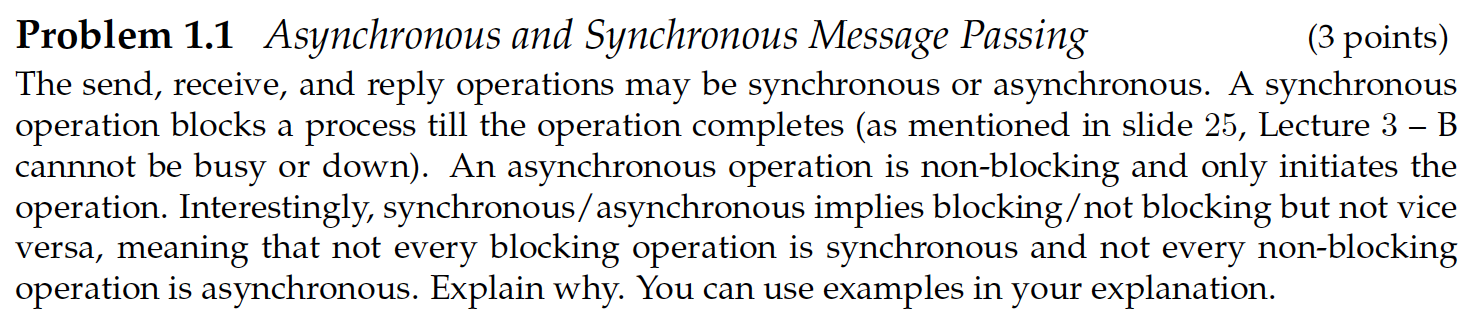
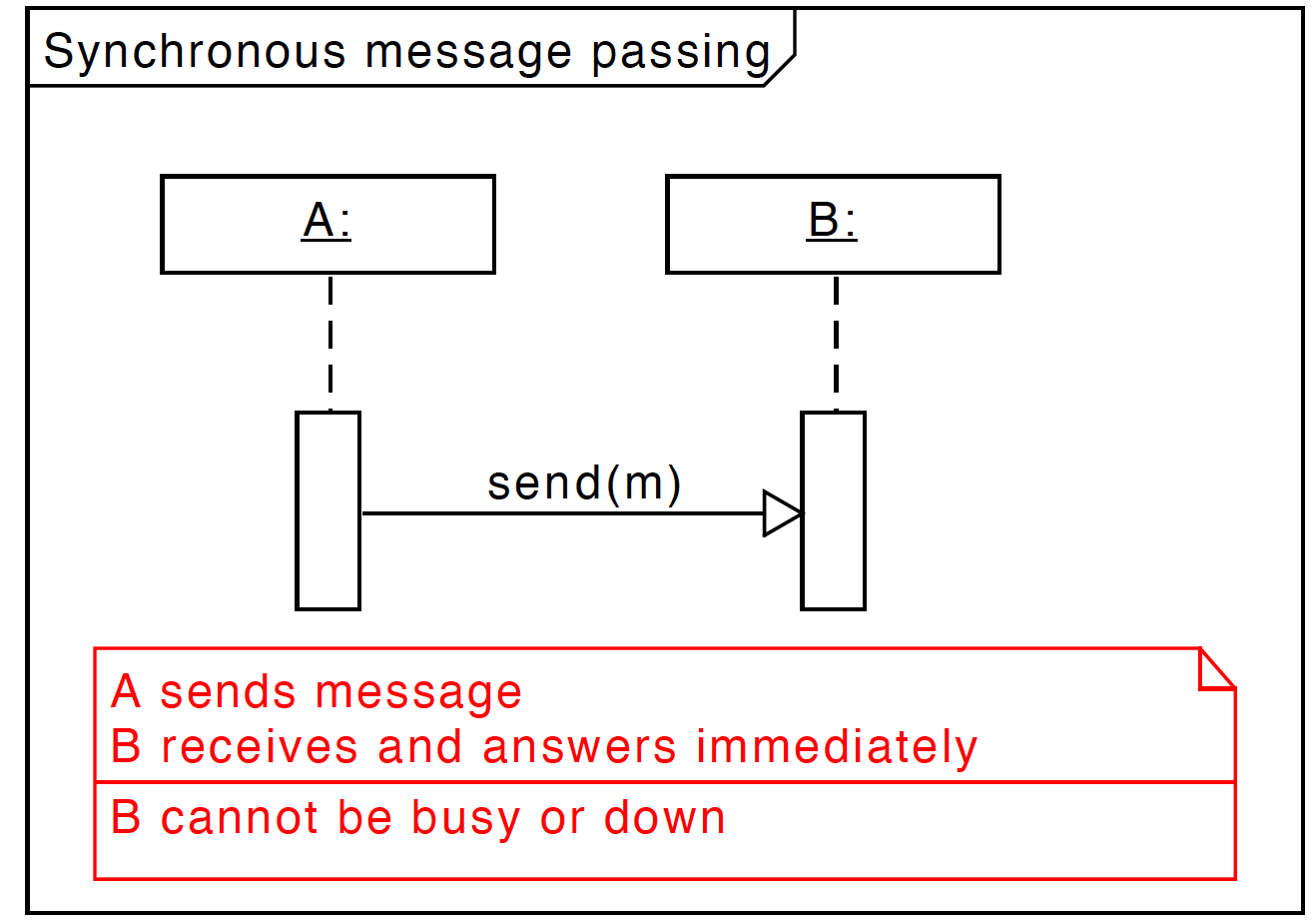
Problem 1.1 Asynchronous and Synchronous Message Passing (3 points) The send, receive, and reply operations may be synchrono onous or asynchronous. A synchronous operation blocks a process till the operation completes (as mentioned in slide 25, Lecture 3 - B cannnot be busy or down). An asynchronous operation is non-blocking and only initiates the operation. Interestingly, synchronous/asynchronous implies blockingot blocking but not vice versa, meaning that not every blocking operation is synchronous and not every non-blocking operation is asynchronous. Explain why. You can use examples in your explanation. Synchronous message passing A: B: 1 send(m) A sends message B receives and answers immediately B cannot be busy or down Problem 1.1 Asynchronous and Synchronous Message Passing (3 points) The send, receive, and reply operations may be synchrono onous or asynchronous. A synchronous operation blocks a process till the operation completes (as mentioned in slide 25, Lecture 3 - B cannnot be busy or down). An asynchronous operation is non-blocking and only initiates the operation. Interestingly, synchronous/asynchronous implies blockingot blocking but not vice versa, meaning that not every blocking operation is synchronous and not every non-blocking operation is asynchronous. Explain why. You can use examples in your explanation. Synchronous message passing A: B: 1 send(m) A sends message B receives and answers immediately B cannot be busy or down
Step by Step Solution
There are 3 Steps involved in it

Get step-by-step solutions from verified subject matter experts
 Study Help