







Question: Division N has decided to develop its budget based upon projected sales of 43,000 lamps at $46.00 per lamp The company has requested that you
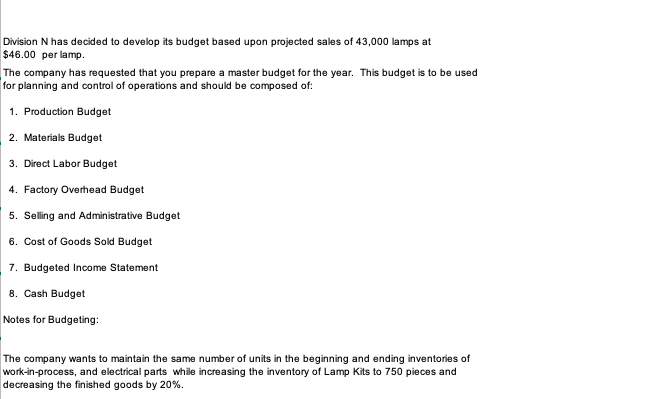
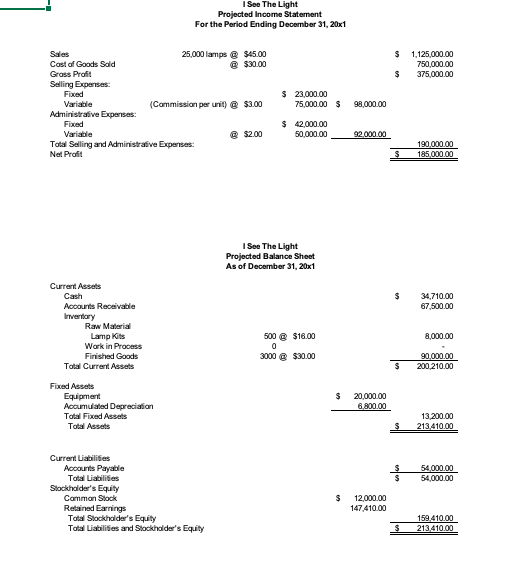
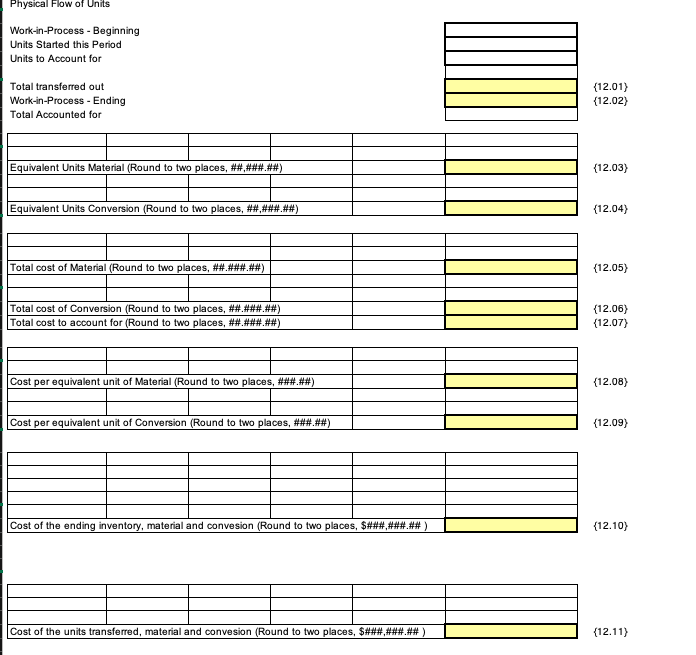
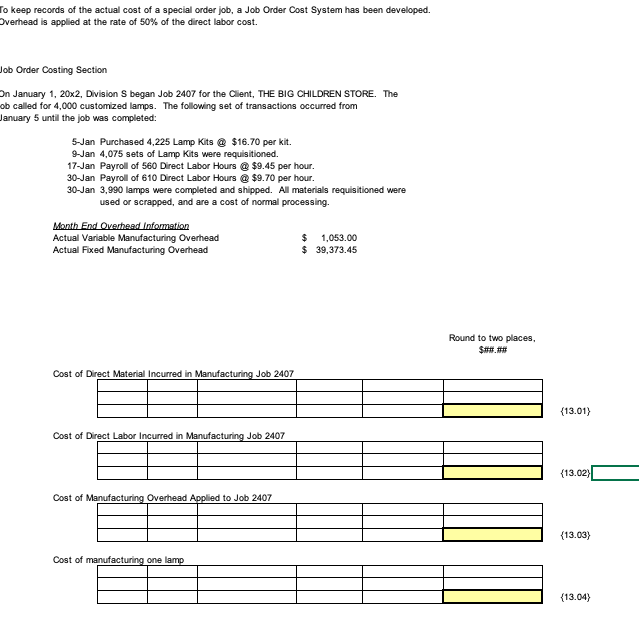
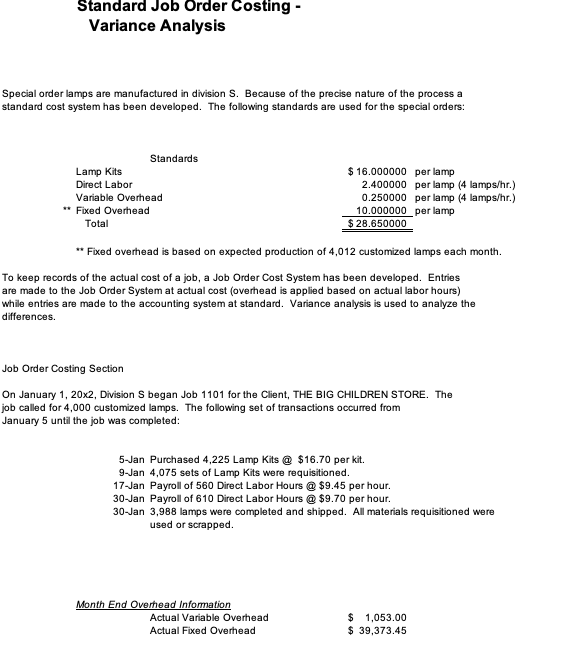
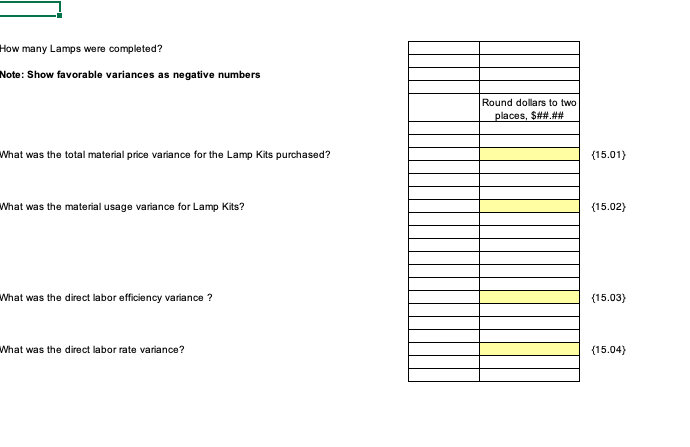
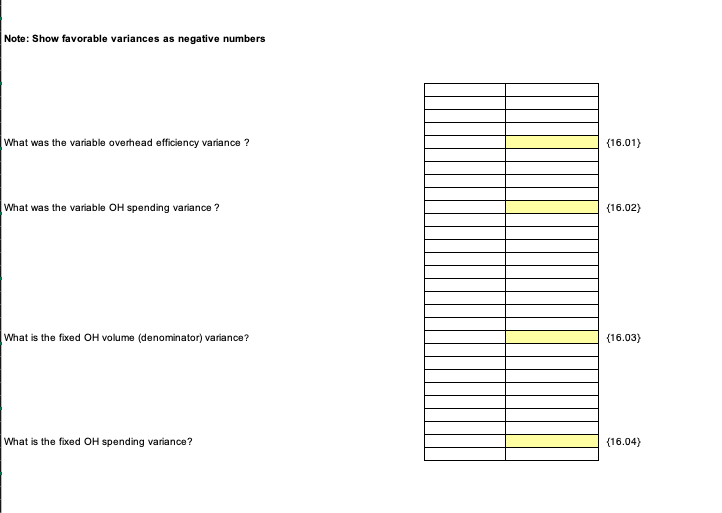
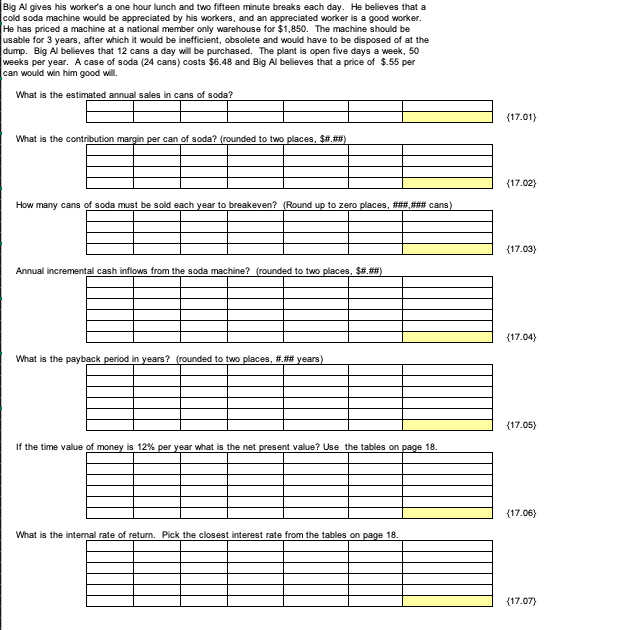
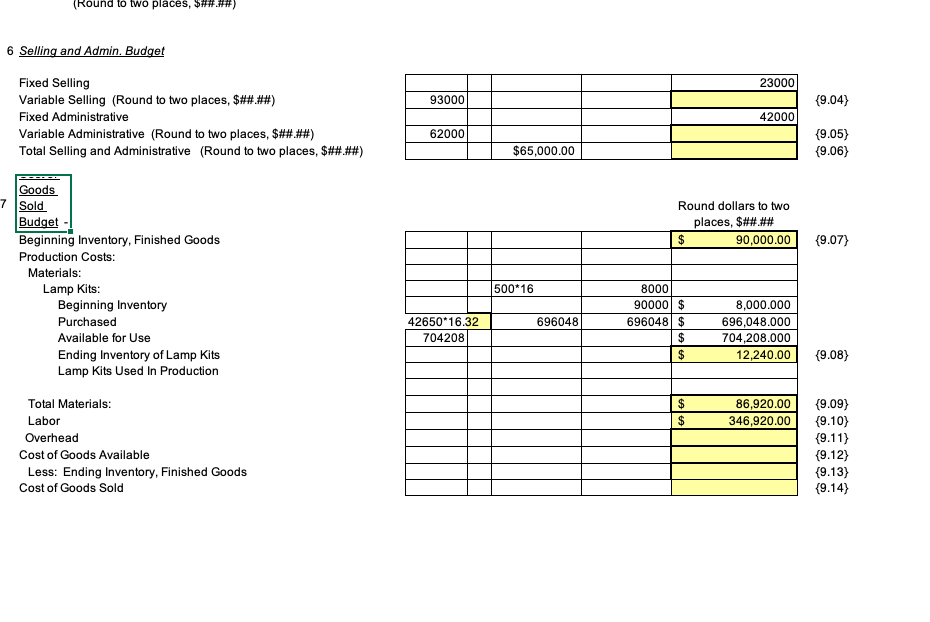
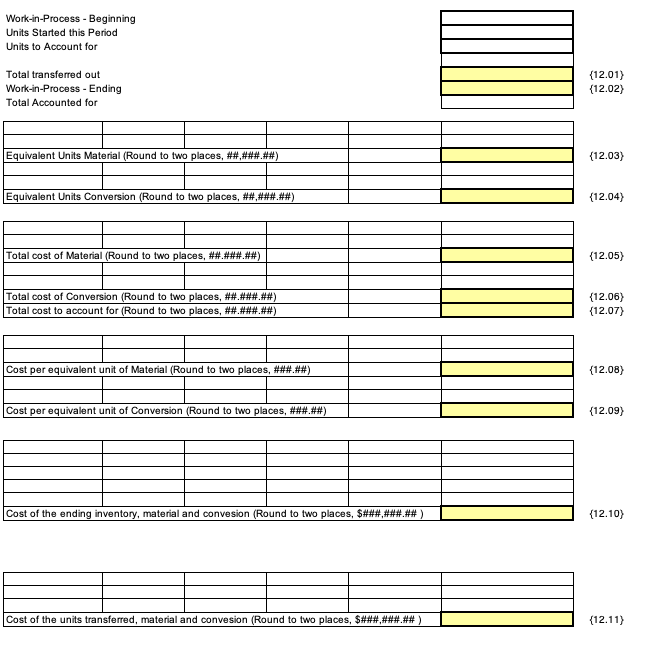
Division N has decided to develop its budget based upon projected sales of 43,000 lamps at $46.00 per lamp The company has requested that you prepare a master budget for the year. This budget is to be used for planning and control of operations and should be composed of: 1. Production Budget 2. Materials Budget 3. Direct Labor Budget 4. Factory Overhead Budget 5. Selling and Administrative Budget 6. Cost of Goods Sold Budget 7. Budgeted Income Statement 8. Cash Budget Notes for Budgeting: The company wants to maintain the same number of units in the beginning and ending inventories of work-in-process, and electrical parts while increasing the inventory of Lamp Kits to 750 pieces and decreasing the finished goods by 20% See The Light Projected Income Statement For the Period Ending December 31, 20x1 $ 1.125,000.00 750,000.00 375,000.00 $ $ 23.000.00 Sales 25,000 lamps @ $45.00 Cost of Goods Sold @ $30.00 Gross Profit Selling Expenses Fixed Variable (Commission per unit) $3.00 Administrative Expenses Fixed Variable @ $2.00 Total Selling and Administrative Expenses Net Profit $ 42.000.00 50,000.00 92,000.00 190,000.00 185,000.00 I See The Light Projected Balance Sheet As of December 31, 20x1 34,710.00 67 500.00 Current Assets Cash Accounts Receivable Inventory Raw Material Lamp Kits Work in Process Finished Goods Total Current Assets 8.000.00 500 @ $16.00 3000 @ $30.00 90,000.00 200 210.00 $ Fixed Assets Equipment Accumulated Depreciation Total Fixed Assets Total Assets 20,000.00 6,800.00 $ 13.200.00 213.410.00 Current Liabilities Accounts Payable Total Liabilities Stockholder's Equity Common Stock Retained Earnings Total Stockholder's Equity Total Liabilities and Stockholder's Equity $ 12.000.00 147 410.00 159 410.00 213.410.00 Physical Flow of Units Work-in-Process - Beginning Units Started this Period Units to Account for Total transferred out Work-in-Process - Ending Total Accounted for {12.01) (12.02) Equivalent Units Material (Round to two places, ##.###.##) {12.03) Equivalent Units Conversion (Round to two places, ##.###.##) {12.04) Total cost of Material (Round to two places, ##.###.##) (12.05) Total cost of Conversion (Round to two places, ##.###.##) Total cost to account for (Round to two places, ##.###.##) {12.06) {12.07) Cost per equivalent unit of Material (Round to two places. ###.##) (12.08) Cost per equivalent unit of Conversion (Round to two places, ###.##) (12.09) Cost of the ending inventory, material and convesion (Round to two places, $###.###.## ) (12.10) Cost of the units transferred, material and convesion (Round to two places, $###.###.## ) {12.11) To keep records of the actual cost of a special order job, a Job Order Cost System has been developed. Overhead is applied at the rate of 50% of the direct labor cost. Job Order Costing Section On January 1, 20x2, Division S began Job 2407 for the Client, THE BIG CHILDREN STORE. The ob called for 4,000 customized lamps. The following set of transactions occurred from January 5 until the job was completed: 5-Jan Purchased 4,225 Lamp Kits @ $16.70 per kit. 9-Jan 4,075 sets of Lamp Kits were requisitioned. 17-Jan Payroll of 560 Direct Labor Hours @ $9.45 per hour. 30-Jan Payroll of 610 Direct Labor Hours @ $9.70 per hour. 30-Jan 3,990 lamps were completed and shipped. All materials requisitioned were used or scrapped, and are a cost of normal processing. Month End Overhead Information Actual Variable Manufacturing Overhead Actual Fixed Manufacturing Overhead $ $ 1.053.00 39.373.45 Round to two places, St Cost of Direct Material incurred in Manufacturing Job 2407 {13.01) Cost of Direct Labor Incurred in Manufacturing Job 2407 (13.02 Cost of Manufacturing Overhead Applied to Job 2407 (13.03) Cost of manufacturing one lamp 13.04) Standard Job Order Costing - Variance Analysis Special order lamps are manufactured in division S. Because of the precise nature of the process a standard cost system has been developed. The following standards are used for the special orders: Standards Lamp Kits Direct Labor Variable Overhead Fixed Overhead Total $ 16.000000 per lamp 2.400000 per lamp (4 lamps/hr.) 0.250000 per lamp (4 lamps/hr.) 10.000000 per lamp $ 28.650000 ** Fixed overhead is based on expected production of 4,012 customized lamps each month To keep records of the actual cost of a job, a Job Order Cost System has been developed. Entries are made to the Job Order System at actual cost (overhead is applied based on actual labor hours) while entries are made to the accounting system at standard. Variance analysis is used to analyze the differences. Job Order Costing Section On January 1, 20x2. Division S began Job 1101 for the Client, THE BIG CHILDREN STORE. The job called for 4,000 customized lamps. The following set of transactions occurred from January 5 until the job was completed: 5-Jan Purchased 4,225 Lamp Kits @ $16.70 per kit. 9-Jan 4,075 sets of Lamp Kits were requisitioned. 17-Jan Payroll of 560 Direct Labor Hours @ $9.45 per hour. 30-Jan Payroll of 610 Direct Labor Hours $9.70 per hour. 30-Jan 3,988 lamps were completed and shipped. All materials requisitioned were used or scrapped. Month End Overhead Information Actual Variable Overhead Actual Fixed Overhead $ 1,053.00 $ 39,373.45 How many Lamps were completed? Note: Show favorable variances as negative numbers Round dollars to two places, $##.## What was the total material price variance for the Lamp Kits purchased? {15.01) What was the material usage variance for Lamp Kits? (15.02) Nhat was the direct labor efficiency variance ? {15.03) Nhat was the direct labor rate variance? (15.04) Note: Show favorable variances as negative numbers What was the variable overhead efficiency variance ? (16.01) What was the variable OH spending variance ? (16.02) What is the fixed OH volume (denominator) variance? (16.03) What is the fixed OH spending variance? (16.04) Big Al gives his worker's a one hour lunch and two fifteen minute breaks each day. He believes that a cold soda machine would be appreciated by his workers, and an appreciated worker is a good worker. He has priced a machine at a national member only warehouse for $1,850. The machine should be usable for 3 years, after which it would be inefficient, obsolete and would have to be disposed of at the dump. Big Al believes that 12 cans a day will be purchased. The plant is open five days a week, 50 weeks per year. A case of soda (24 cans) costs $6.48 and Big Al believes that a price of $.55 per can would win him good will What is the estimated annual sales in cans of soda? {17.01) What is the contribution margin per can of soda? (rounded to two places. St. ) {17.02) How many cans of soda must be sold each year to breakeven? (Round up to zero places t o cans) {17.03) Annual incremental cash inflows from the soda machine? (rounded to two places. St. ) {17.04) What is the payback period in years? (rounded to two places #tre years {17.05) If the time value of money is 12% per year what is the net present value? Use the tables on page 18 {17.06) What is the internal rate of return. Pick the closest interest rate from the tables on page 18 {17.07) (Round to two places, $##.##) 6 Selling and Admin. Budget 23000 93000 {9.04} Fixed Selling Variable Selling (Round to two places, $##.##) Fixed Administrative Variable Administrative (Round to two places, $##.##) Total Selling and Administrative (Round to two places, $##.##) 42000 62000 (9.05) {9.06) $65,000.00 Round dollars to two places, $##.## $ 90,000.00 {9.07) Goods Sold Budget- Beginning Inventory, Finished Goods Production Costs: Materials: Lamp Kits: Beginning Inventory Purchased Available for Use Ending Inventory of Lamp Kits Lamp Kits Used In Production 500*16 696048 42650*16.32 704208 8000 90000 $ 696048 $ $ $ 8.000.000 696,048.000 704,208.000 12,240.00 {9.08) $ $ 86,920.00 346,920.00 Total Materials: Labor Overhead Cost of Goods Available Less: Ending Inventory, Finished Goods Cost of Goods Sold {9.09) {9.10) {9.11) (9.12) {9.13) (9.14) Work-in-Process - Beginning Units Started this Period Units to Account for Total transferred out Work-in-Process - Ending Total Accounted for {12.01) (12.02) Equivalent Units Material (Round to two places, ##.###.##) (12.03) Equivalent Units Conversion (Round to two places, ## ###.##) (12.04) Total cost of Material (Round to two places, ##.###.##) (12.05) Total cost of Conversion (Round to two places. ##.###.##) Total cost to account for (Round to two places, ##.###.##) {12.06) {12.07) Cost per equivalent unit of Material (Round to two places. ###.##) {12.08) Cost per equivalent unit of Conversion (Round to two places, ###.##) (12.09) Cost of the ending inventory. material and convesion (Round to two places. S###.###.## ) (12.10) Cost of the units transferred, material and convesion (Round to two places, $###.###.## ) (12.11) Division N has decided to develop its budget based upon projected sales of 43,000 lamps at $46.00 per lamp The company has requested that you prepare a master budget for the year. This budget is to be used for planning and control of operations and should be composed of: 1. Production Budget 2. Materials Budget 3. Direct Labor Budget 4. Factory Overhead Budget 5. Selling and Administrative Budget 6. Cost of Goods Sold Budget 7. Budgeted Income Statement 8. Cash Budget Notes for Budgeting: The company wants to maintain the same number of units in the beginning and ending inventories of work-in-process, and electrical parts while increasing the inventory of Lamp Kits to 750 pieces and decreasing the finished goods by 20% See The Light Projected Income Statement For the Period Ending December 31, 20x1 $ 1.125,000.00 750,000.00 375,000.00 $ $ 23.000.00 Sales 25,000 lamps @ $45.00 Cost of Goods Sold @ $30.00 Gross Profit Selling Expenses Fixed Variable (Commission per unit) $3.00 Administrative Expenses Fixed Variable @ $2.00 Total Selling and Administrative Expenses Net Profit $ 42.000.00 50,000.00 92,000.00 190,000.00 185,000.00 I See The Light Projected Balance Sheet As of December 31, 20x1 34,710.00 67 500.00 Current Assets Cash Accounts Receivable Inventory Raw Material Lamp Kits Work in Process Finished Goods Total Current Assets 8.000.00 500 @ $16.00 3000 @ $30.00 90,000.00 200 210.00 $ Fixed Assets Equipment Accumulated Depreciation Total Fixed Assets Total Assets 20,000.00 6,800.00 $ 13.200.00 213.410.00 Current Liabilities Accounts Payable Total Liabilities Stockholder's Equity Common Stock Retained Earnings Total Stockholder's Equity Total Liabilities and Stockholder's Equity $ 12.000.00 147 410.00 159 410.00 213.410.00 Physical Flow of Units Work-in-Process - Beginning Units Started this Period Units to Account for Total transferred out Work-in-Process - Ending Total Accounted for {12.01) (12.02) Equivalent Units Material (Round to two places, ##.###.##) {12.03) Equivalent Units Conversion (Round to two places, ##.###.##) {12.04) Total cost of Material (Round to two places, ##.###.##) (12.05) Total cost of Conversion (Round to two places, ##.###.##) Total cost to account for (Round to two places, ##.###.##) {12.06) {12.07) Cost per equivalent unit of Material (Round to two places. ###.##) (12.08) Cost per equivalent unit of Conversion (Round to two places, ###.##) (12.09) Cost of the ending inventory, material and convesion (Round to two places, $###.###.## ) (12.10) Cost of the units transferred, material and convesion (Round to two places, $###.###.## ) {12.11) To keep records of the actual cost of a special order job, a Job Order Cost System has been developed. Overhead is applied at the rate of 50% of the direct labor cost. Job Order Costing Section On January 1, 20x2, Division S began Job 2407 for the Client, THE BIG CHILDREN STORE. The ob called for 4,000 customized lamps. The following set of transactions occurred from January 5 until the job was completed: 5-Jan Purchased 4,225 Lamp Kits @ $16.70 per kit. 9-Jan 4,075 sets of Lamp Kits were requisitioned. 17-Jan Payroll of 560 Direct Labor Hours @ $9.45 per hour. 30-Jan Payroll of 610 Direct Labor Hours @ $9.70 per hour. 30-Jan 3,990 lamps were completed and shipped. All materials requisitioned were used or scrapped, and are a cost of normal processing. Month End Overhead Information Actual Variable Manufacturing Overhead Actual Fixed Manufacturing Overhead $ $ 1.053.00 39.373.45 Round to two places, St Cost of Direct Material incurred in Manufacturing Job 2407 {13.01) Cost of Direct Labor Incurred in Manufacturing Job 2407 (13.02 Cost of Manufacturing Overhead Applied to Job 2407 (13.03) Cost of manufacturing one lamp 13.04) Standard Job Order Costing - Variance Analysis Special order lamps are manufactured in division S. Because of the precise nature of the process a standard cost system has been developed. The following standards are used for the special orders: Standards Lamp Kits Direct Labor Variable Overhead Fixed Overhead Total $ 16.000000 per lamp 2.400000 per lamp (4 lamps/hr.) 0.250000 per lamp (4 lamps/hr.) 10.000000 per lamp $ 28.650000 ** Fixed overhead is based on expected production of 4,012 customized lamps each month To keep records of the actual cost of a job, a Job Order Cost System has been developed. Entries are made to the Job Order System at actual cost (overhead is applied based on actual labor hours) while entries are made to the accounting system at standard. Variance analysis is used to analyze the differences. Job Order Costing Section On January 1, 20x2. Division S began Job 1101 for the Client, THE BIG CHILDREN STORE. The job called for 4,000 customized lamps. The following set of transactions occurred from January 5 until the job was completed: 5-Jan Purchased 4,225 Lamp Kits @ $16.70 per kit. 9-Jan 4,075 sets of Lamp Kits were requisitioned. 17-Jan Payroll of 560 Direct Labor Hours @ $9.45 per hour. 30-Jan Payroll of 610 Direct Labor Hours $9.70 per hour. 30-Jan 3,988 lamps were completed and shipped. All materials requisitioned were used or scrapped. Month End Overhead Information Actual Variable Overhead Actual Fixed Overhead $ 1,053.00 $ 39,373.45 How many Lamps were completed? Note: Show favorable variances as negative numbers Round dollars to two places, $##.## What was the total material price variance for the Lamp Kits purchased? {15.01) What was the material usage variance for Lamp Kits? (15.02) Nhat was the direct labor efficiency variance ? {15.03) Nhat was the direct labor rate variance? (15.04) Note: Show favorable variances as negative numbers What was the variable overhead efficiency variance ? (16.01) What was the variable OH spending variance ? (16.02) What is the fixed OH volume (denominator) variance? (16.03) What is the fixed OH spending variance? (16.04) Big Al gives his worker's a one hour lunch and two fifteen minute breaks each day. He believes that a cold soda machine would be appreciated by his workers, and an appreciated worker is a good worker. He has priced a machine at a national member only warehouse for $1,850. The machine should be usable for 3 years, after which it would be inefficient, obsolete and would have to be disposed of at the dump. Big Al believes that 12 cans a day will be purchased. The plant is open five days a week, 50 weeks per year. A case of soda (24 cans) costs $6.48 and Big Al believes that a price of $.55 per can would win him good will What is the estimated annual sales in cans of soda? {17.01) What is the contribution margin per can of soda? (rounded to two places. St. ) {17.02) How many cans of soda must be sold each year to breakeven? (Round up to zero places t o cans) {17.03) Annual incremental cash inflows from the soda machine? (rounded to two places. St. ) {17.04) What is the payback period in years? (rounded to two places #tre years {17.05) If the time value of money is 12% per year what is the net present value? Use the tables on page 18 {17.06) What is the internal rate of return. Pick the closest interest rate from the tables on page 18 {17.07) (Round to two places, $##.##) 6 Selling and Admin. Budget 23000 93000 {9.04} Fixed Selling Variable Selling (Round to two places, $##.##) Fixed Administrative Variable Administrative (Round to two places, $##.##) Total Selling and Administrative (Round to two places, $##.##) 42000 62000 (9.05) {9.06) $65,000.00 Round dollars to two places, $##.## $ 90,000.00 {9.07) Goods Sold Budget- Beginning Inventory, Finished Goods Production Costs: Materials: Lamp Kits: Beginning Inventory Purchased Available for Use Ending Inventory of Lamp Kits Lamp Kits Used In Production 500*16 696048 42650*16.32 704208 8000 90000 $ 696048 $ $ $ 8.000.000 696,048.000 704,208.000 12,240.00 {9.08) $ $ 86,920.00 346,920.00 Total Materials: Labor Overhead Cost of Goods Available Less: Ending Inventory, Finished Goods Cost of Goods Sold {9.09) {9.10) {9.11) (9.12) {9.13) (9.14) Work-in-Process - Beginning Units Started this Period Units to Account for Total transferred out Work-in-Process - Ending Total Accounted for {12.01) (12.02) Equivalent Units Material (Round to two places, ##.###.##) (12.03) Equivalent Units Conversion (Round to two places, ## ###.##) (12.04) Total cost of Material (Round to two places, ##.###.##) (12.05) Total cost of Conversion (Round to two places. ##.###.##) Total cost to account for (Round to two places, ##.###.##) {12.06) {12.07) Cost per equivalent unit of Material (Round to two places. ###.##) {12.08) Cost per equivalent unit of Conversion (Round to two places, ###.##) (12.09) Cost of the ending inventory. material and convesion (Round to two places. S###.###.## ) (12.10) Cost of the units transferred, material and convesion (Round to two places, $###.###.## ) (12.11)
Step by Step Solution
There are 3 Steps involved in it

Get step-by-step solutions from verified subject matter experts
 Study Help