







Question: Do the problem like how the other problem at the bottom is solved Curtis Hamilton started a new business and completed these transactions during December.
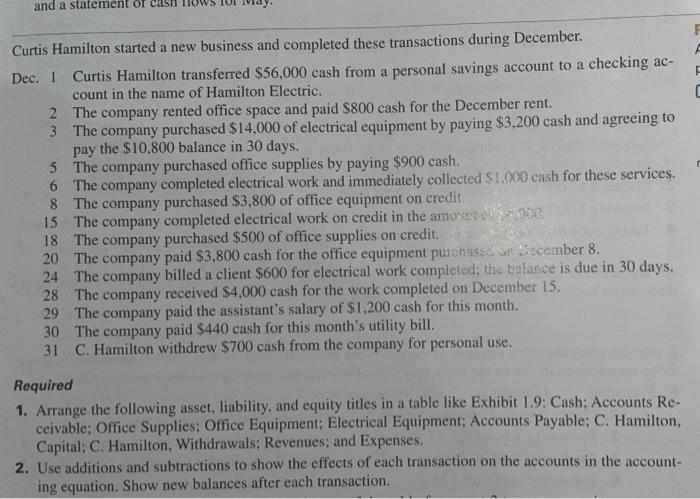
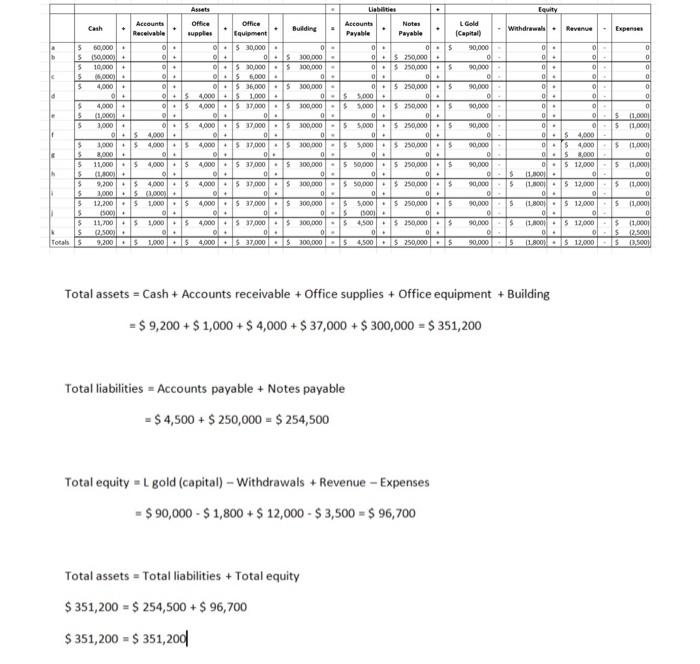
Curtis Hamilton started a new business and completed these transactions during December. Dec. I Curtis Hamilton transferred $56,000 cash from a personal savings account to a checking account in the name of Hamilton Electric. 2 The company rented office space and paid $800 cash for the December rent. 3 The company purchased $14,000 of electrical equipment by paying $3,200 cash and agreeing to pay the $10,800 balance in 30 days. 5 The company purchased office supplies by paying $900cash. 6 The company completed electrical work and immediately collected \$1.000 cash for these services. 8 The company purchased $3,800 of office equipment on credit. 15 The company completed electrical work on credit in the amossershosing? 18 The company purchased $500 of office supplies on credit. 20 The company paid $3,800 cash for the office equipment purchass su $2 cember 8. 24 The company billed a client $600 for electrical work completed; the belance is due in 30 days. 28 The company received $4,000 cash for the work completed on December 15. 29 The company paid the assistant's salary of $1,200 cash for this month. 30 The company paid $440 cash for this month's utility bill. 31 C. Hamilton withdrew $700 cash from the company for personal use. Required 1. Arrange the following asset, liability, and equity titles in a table like Exhibit 1.9: Cash; Accounts Receivable; Office Supplies; Office Equipment; Electrical Equipment; Accounts Payable; C. Hamilton, Capital; C. Hamilton, Withdrawals; Revenues; and Expenses. 2. Use additions and subtractions to show the effects of each transaction on the accounts in the accounting equation. Show new balances after each transaction. Total liabilities = Accounts payable + Notes payable =$4,500+$250,000=$254,500 Total equity = L gold ( capital) Withdrawals + Revenue Expenses =$90,000$1,800+$12,000$3,500=$96,700 Total assets = Total liabilities + Total equity $351,200=$254,500+$96,700 $351,200=$351,200
Step by Step Solution
There are 3 Steps involved in it

Get step-by-step solutions from verified subject matter experts
 Study Help