



Question: Down options: 1. once a quarter / once a month / once a year 2. an income and expense statement / a ledger / a
Down options:
1. once a quarter / once a month / once a year
2. an income and expense statement / a ledger / a balance sheet
3A. liabilities / assets 3B. liabilities / assets 3C. expenses / income 3D. income / expenses
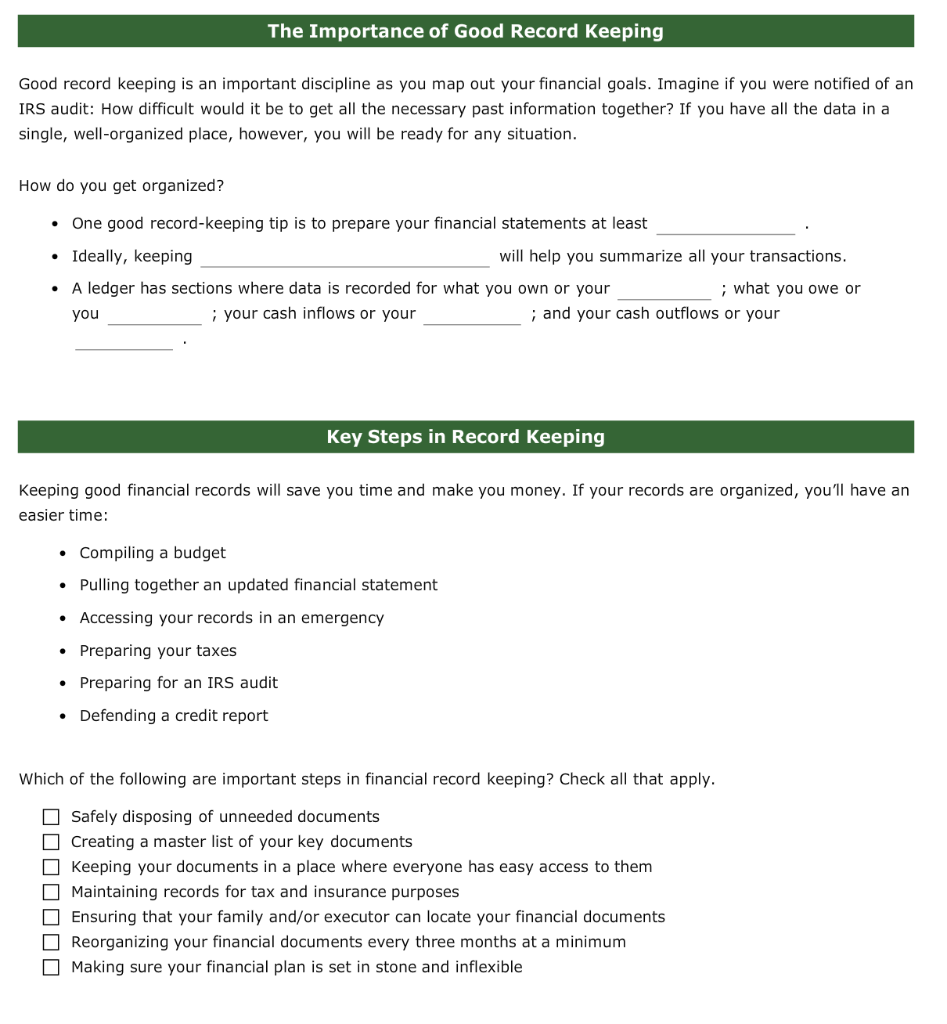
The Importance of Good Record keeping Good record keeping is an important discipline as you map out your financial goals. Imagine if you were notified of an IRS audit: How difficult would it be to get all the necessary past information together? If you have all the data in a single, well-organized place, however, you will be ready for any situation. How do you get organized? One good record-keeping tip is to prepare your financial statements at least Ideally, keeping will help you summarize all your transactions. A ledger has sections where data is recorded for what you own or your ; what you owe or you ; your cash inflows or your ; and your cash outflows or your Key Steps in Record keeping Keeping good financial records will save you time and make you money. If your records are organized, you'll have an easier time: Compiling a budget Pulling together an updated financial statement Accessing your records in an emergency Preparing your taxes Preparing for an IRS audit Defending a credit report Which of the following are important steps in financial record keeping? Check all that apply. Safely disposing of unneeded documents Creating a master list of your key documents Keeping your documents in a place where everyone has easy access to them Maintaining records for tax and insurance purposes Ensuring that your family and/or executor can locate your financial documents Reorganizing your financial documents every three months at a minimum Making sure your financial plan is set in stone and inflexible O
Step by Step Solution
There are 3 Steps involved in it

Get step-by-step solutions from verified subject matter experts