







Question: drop down (left to right): assests first : (building / furniture , checkable deposits, loans, net worth , reserves ) second: 300k , 1.2m ,
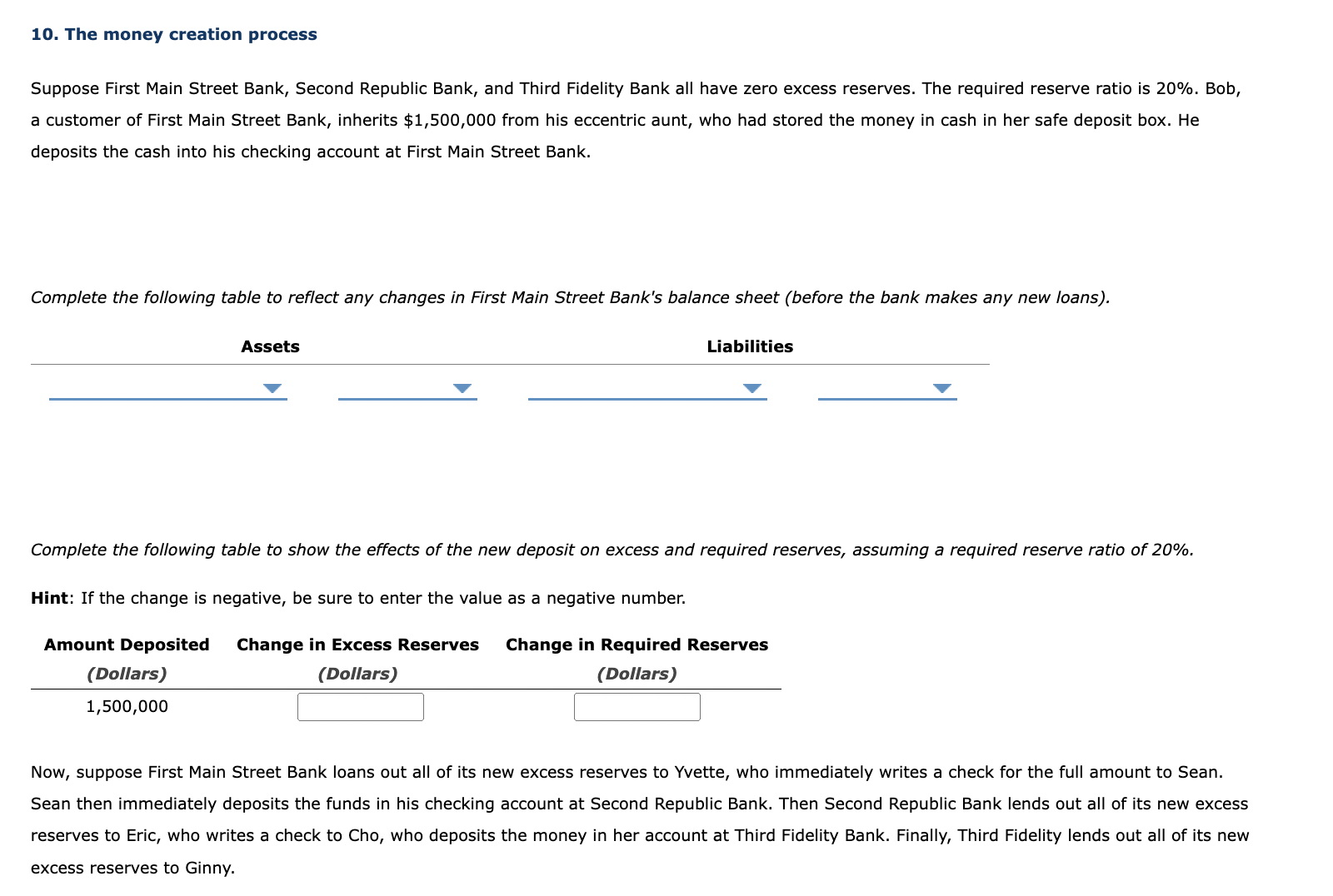
drop down (left to right):
assests first : (building / furniture , checkable deposits, loans, net worth , reserves )
second: 300k , 1.2m , 1.5m , 3.6m
liabilities third: (building / furniture , checkable deposits, loans, net worth , reserves )
fourth: 300k , 1.2m , 1.5m , 3.6m
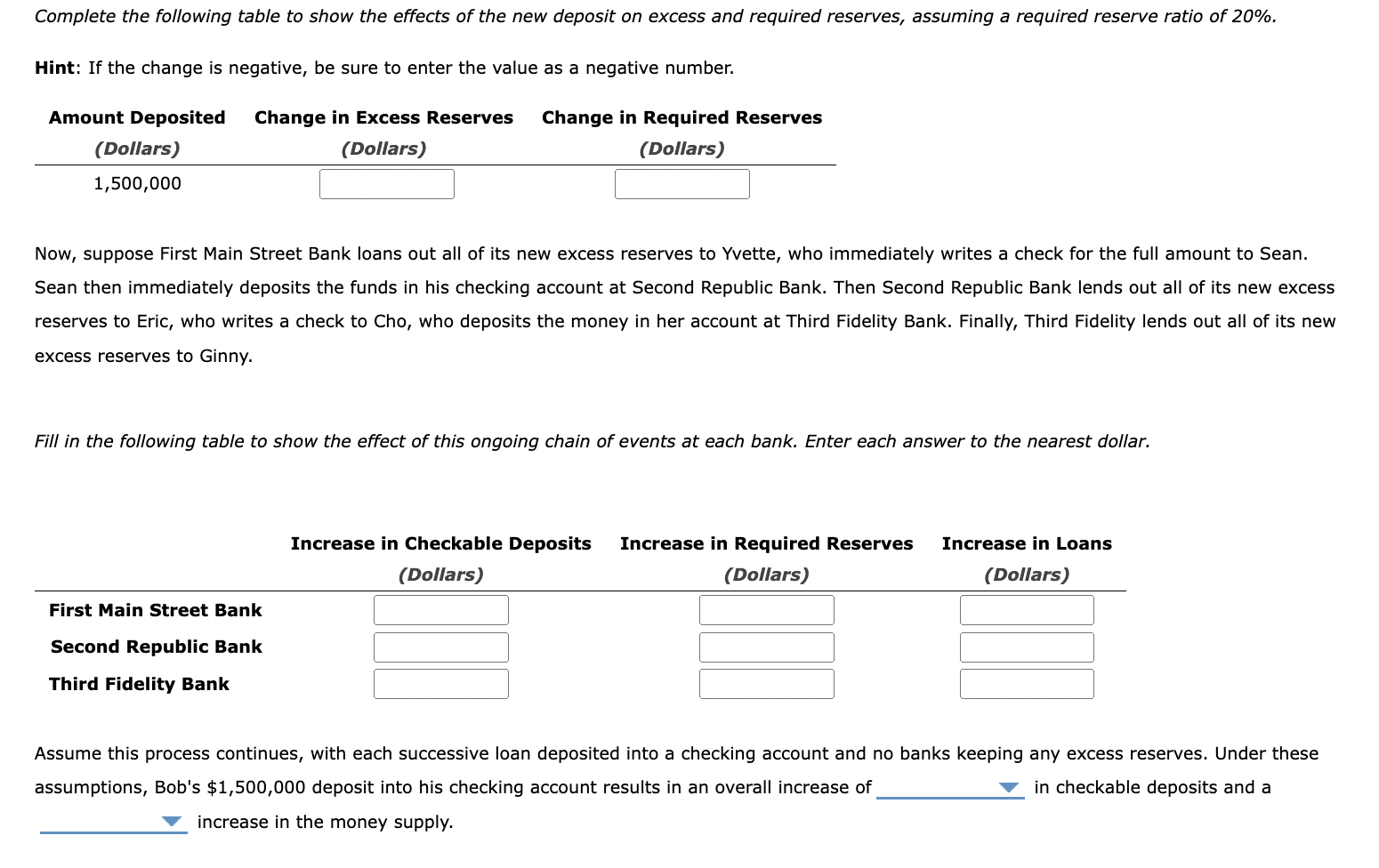
drop downs;
overall increase; 750k , 6 million, 7.5 million
checkable deposits and; 750k , 6 million, 7.5 million
10. The money creation process Suppose First Main Street Bank, Second Republic Bank, and Third Fidelity Bank all have zero excess reserves. The required reserve ratio is 20\%. Bob, a customer of First Main Street Bank, inherits $1,500,000 from his eccentric aunt, who had stored the money in cash in her safe deposit box. He deposits the cash into his checking account at First Main Street Bank. Complete the following table to reflect any changes in First Main Street Bank's balance sheet (before the bank makes any new loans). Complete the following table to show the effects of the new deposit on excess and required reserves, assuming a required reserve ratio of 20%. Hint: If the change is negative, be sure to enter the value as a negative number. Now, suppose First Main Street Bank loans out all of its new excess reserves to Yvette, who immediately writes a check for the full amount to Sean. Sean then immediately deposits the funds in his checking account at Second Republic Bank. Then Second Republic Bank lends out all of its new excess reserves to Eric, who writes a check to Cho, who deposits the money in her account at Third Fidelity Bank. Finally, Third Fidelity lends out all of its new excess reserves to Ginny. Complete the following table to show the effects of the new deposit on excess and required reserves, assuming a required reserve ratio of 20%. Hint: If the change is negative, be sure to enter the value as a negative number. Now, suppose First Main Street Bank loans out all of its new excess reserves to Yvette, who immediately writes a check for the full amount to Sean. Sean then immediately deposits the funds in his checking account at Second Republic Bank. Then Second Republic Bank lends out all of its new excess reserves to Eric, who writes a check to Cho, who deposits the money in her account at Third Fidelity Bank. Finally, Third Fidelity lends out all of its new excess reserves to Ginny. Fill in the following table to show the effect of this ongoing chain of events at each bank. Enter each answer to the nearest dollar. Assume this process continues, with each successive loan deposited into a checking account and no banks keeping any excess reserves. Under these assumptions, Bob's $1,500,000 deposit into his checking account results in an overall increase of in checkable deposits and a increase in the money supply
Step by Step Solution
There are 3 Steps involved in it

Get step-by-step solutions from verified subject matter experts
 Study Help