







Question: Durable Consumption. In the two-perjod consumption-savings framework, the representative consumer's utility function is DUR DUR u(C,C2,C = In (q)+y; In (qpUR)+B[In (cz)+y In (cQur)], in
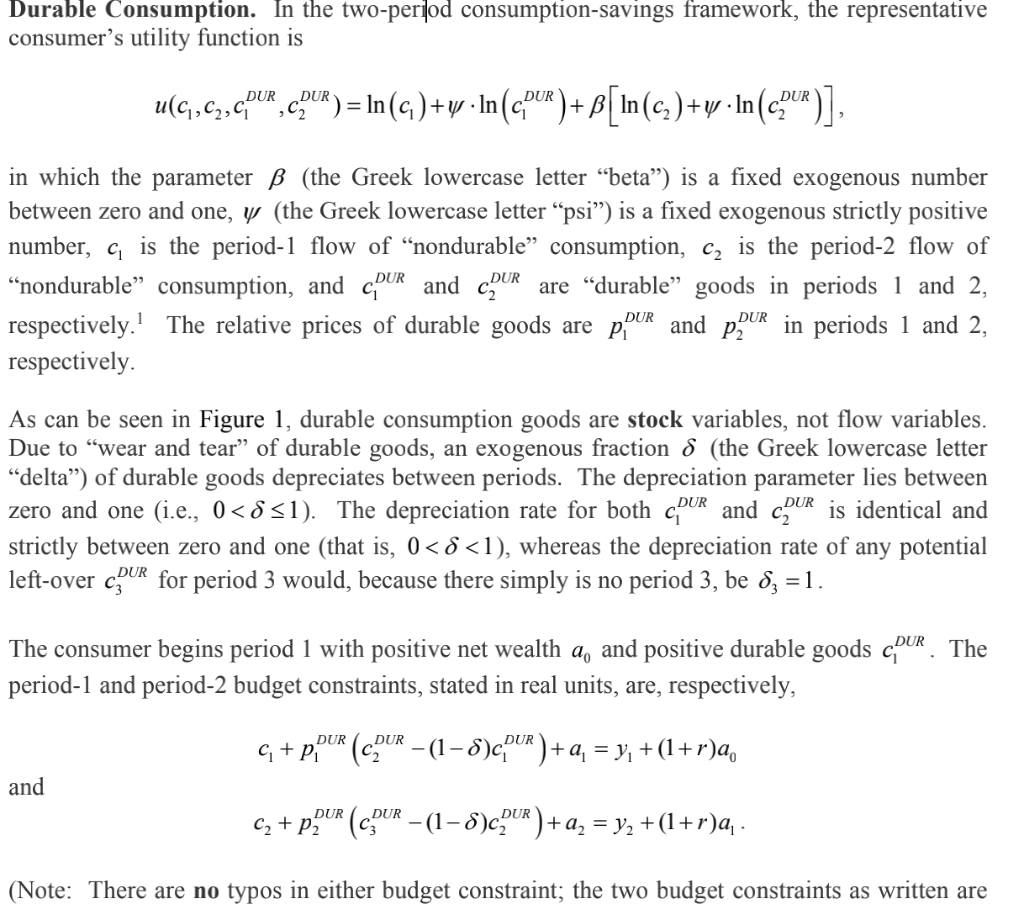
![(cQur)], in which the parameter B (the Greek lowercase letter beta) is](https://dsd5zvtm8ll6.cloudfront.net/si.experts.images/questions/2024/10/66fe70a7152b0_01466fe70a69fc99.jpg)
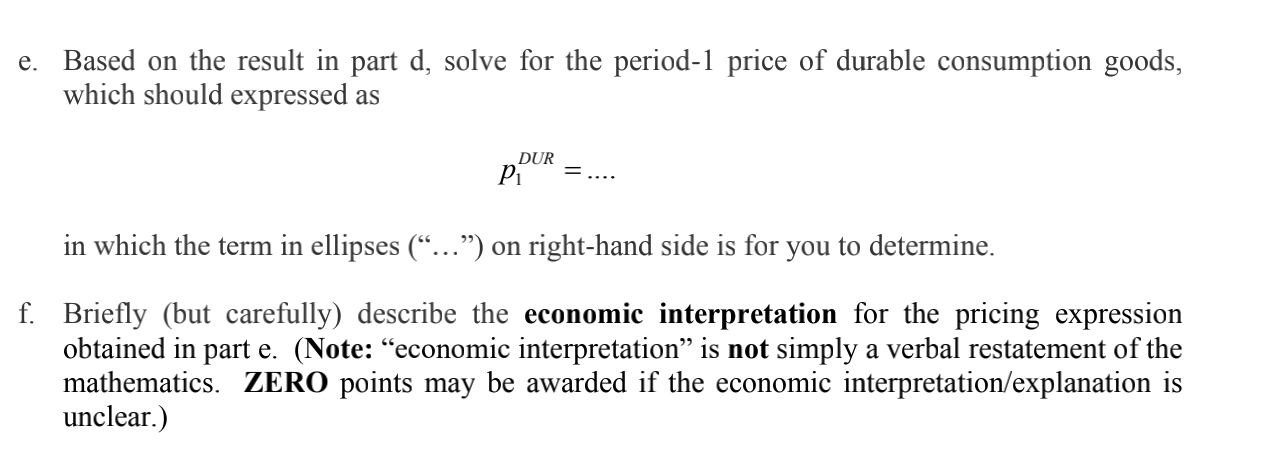
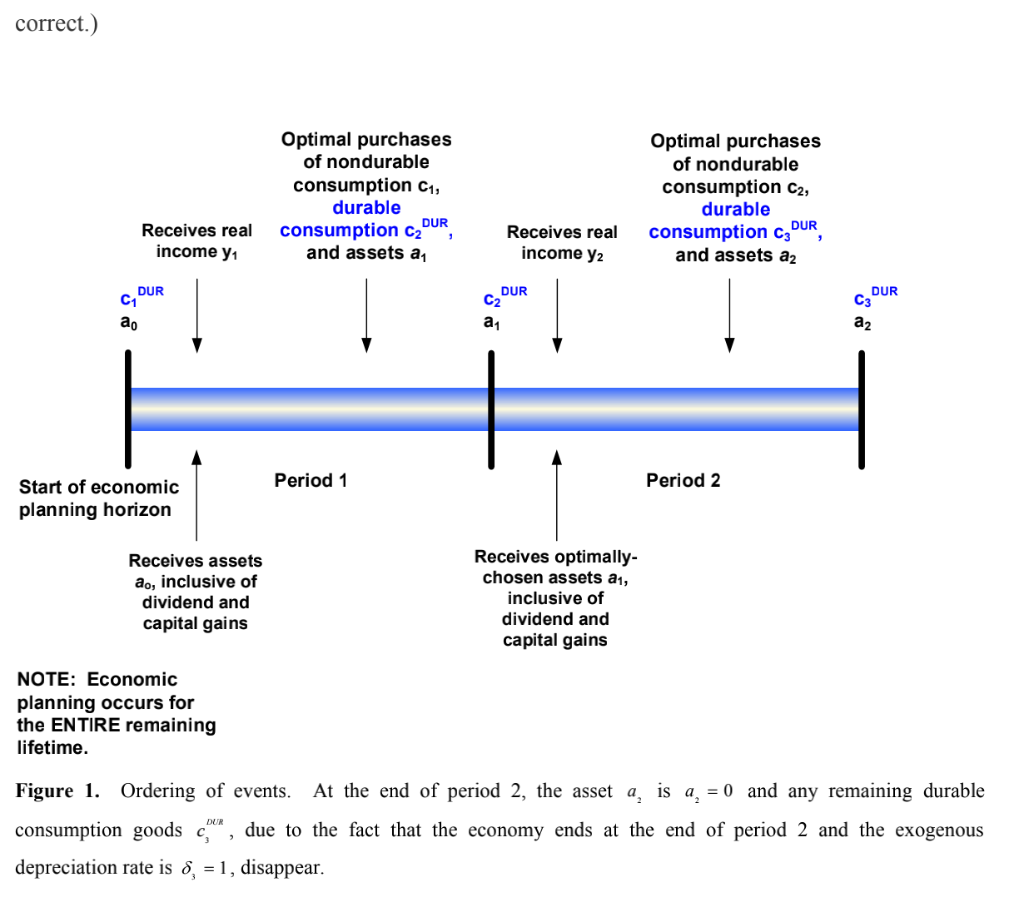
Durable Consumption. In the two-perjod consumption-savings framework, the representative consumer's utility function is DUR DUR u(C,C2,C" = In (q)+y; In (qpUR)+B[In (cz)+y In (cQur)], in which the parameter B (the Greek lowercase letter beta) is a fixed exogenous number between zero and one, y (the Greek lowercase letter psi) is a fixed exogenous strictly positive number, q is the period-1 flow of nondurable consumption, c2 is the period-2 flow of nondurable consumption, and cpur and CPUR are durable goods in periods 1 and 2, respectively. The relative prices of durable goods are p and P2 in periods 1 and 2, respectively. DUR DUR As can be seen in Figure 1, durable consumption goods are stock variables, not flow variables. Due to wear and tear of durable goods, an exogenous fraction S (the Greek lowercase letter delta) of durable goods depreciates between periods. The depreciation parameter lies between zero and one (i.e., 0
Step by Step Solution
There are 3 Steps involved in it

Get step-by-step solutions from verified subject matter experts
 Study Help