Question: e Analysis: Audience Analysis i Saved H Audience Analysis Understanding the needs of your audience is one of your first tasks as you develop your
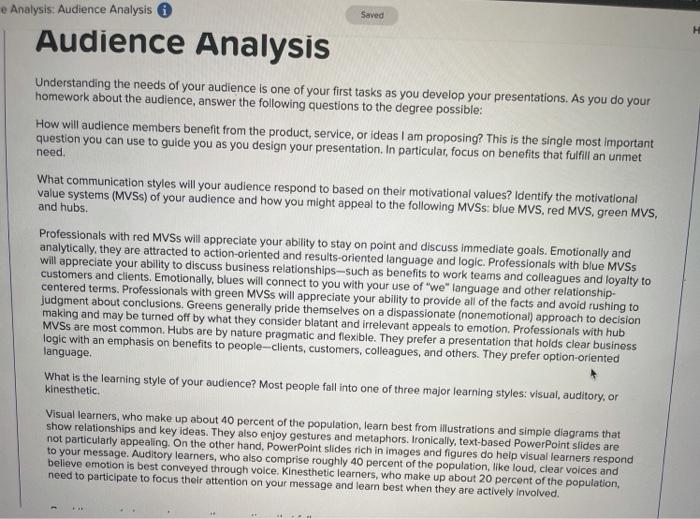
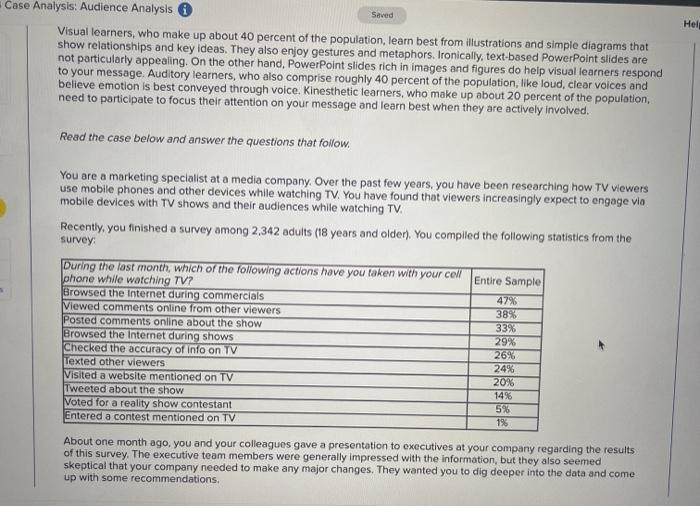
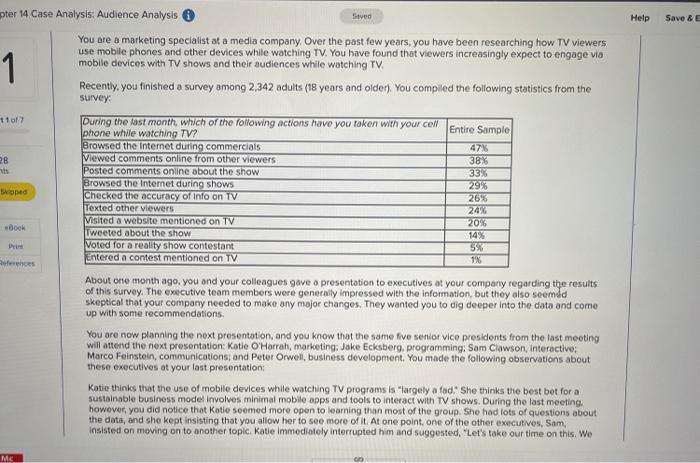
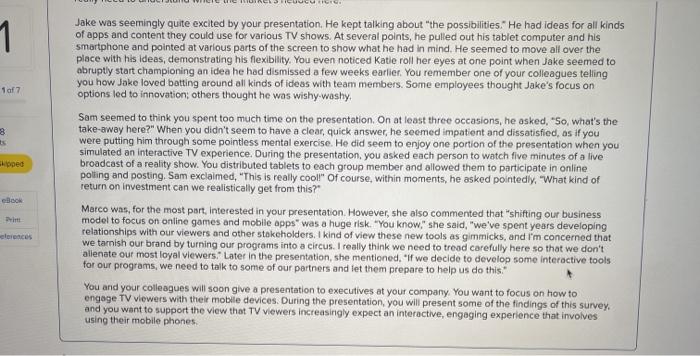
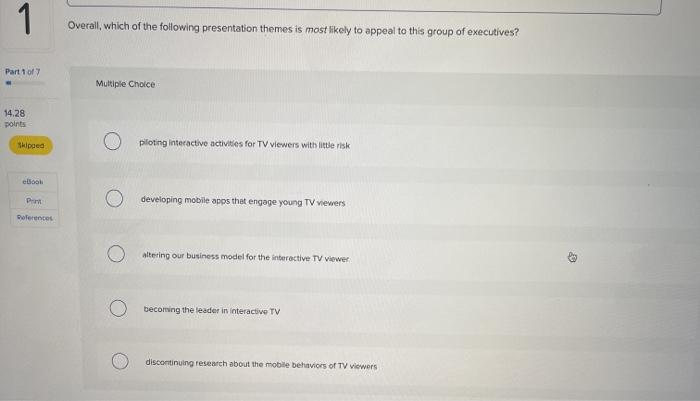
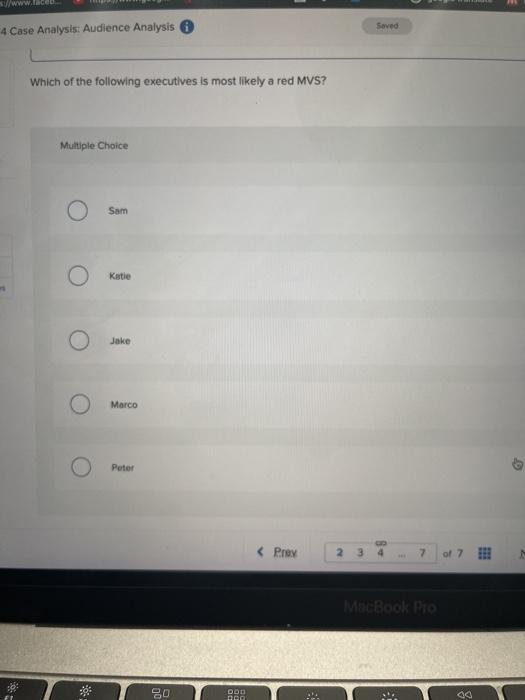
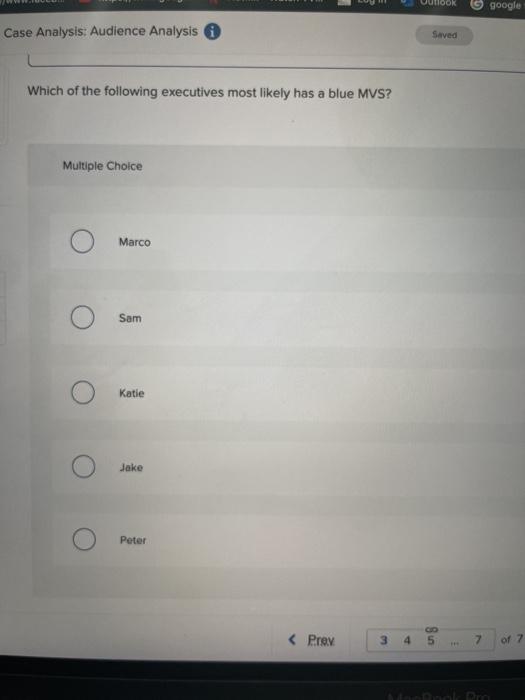
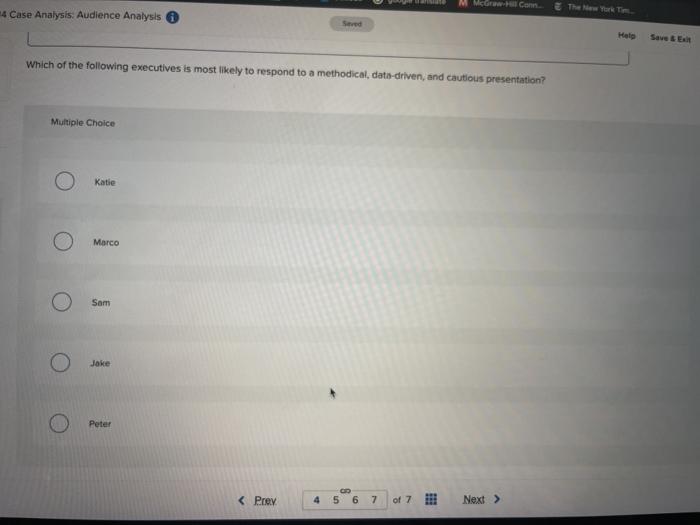
e Analysis: Audience Analysis i Saved H Audience Analysis Understanding the needs of your audience is one of your first tasks as you develop your presentations. As you do your homework about the audience, answer the following questions to the degree possible: How will audience members benefit from the product, service, or ideas I am proposing? This is the single most important question you can use to guide you as you design your presentation. In particular, focus on benefits that fulfill an unmet need. What communication styles will your audience respond to based on their motivational values? Identify the motivational value systems (MVSs) of your audience and how you might appeal to the following MVSs: blue MVS, red MVS, green MVS, and hubs. Professionals with red MVSs will appreciate your ability to stay on point and discuss immediate goals. Emotionally and analytically, they are attracted to action-oriented and results-oriented language and logic. Professionals with blue MVSS will appreciate your ability to discuss business relationships-such as benefits to work teams and colleagues and loyalty to customers and clients. Emotionally, blues will connect to you with your use of "we" language and other relationship- centered terms. Professionals with green MVSs will appreciate your ability to provide all of the facts and avoid rushing to judgment about conclusions. Greens generally pride themselves on a dispassionate (nonemotional approach to decision making and may be turned off by what they consider blatant and irrelevant appeals to emotion. Professionals with hub MVSs are most common. Hubs are by nature pragmatic and flexible. They prefer a presentation that holds clear business logic with an emphasis on benefits to people-clients, customers, colleagues, and others. They prefer option-oriented language. What is the learning style of your audience? Most people fall into one of three major learning styles: visual, auditory, or kinesthetic. Visual learners, who make up about 40 percent of the population, learn best from illustrations and simple diagrams that show relationships and key ideas. They also enjoy gestures and metaphors. Ironically, text-based PowerPoint slides are not particularly appealing. On the other hand, PowerPoint slides rich in images and figures do help visual learners respond to your message. Auditory learners, who also comprise roughly 40 percent of the population, like loud, clear voices and believe emotion is best conveyed through voice. Kinesthetic learners, who make up about 20 percent of the population, need to participate to focus their attention on your message and learn best when they are actively involved. Saved Hel Case Analysis: Audience Analysis i Visual learners, who make up about 40 percent of the population, learn best from illustrations and simple diagrams that show relationships and key ideas. They also enjoy gestures and metaphors. Ironically, text-based PowerPoint slides are not particularly appealing. On the other hand, PowerPoint slides rich in images and figures do help visual learners respond to your message. Auditory learners, who also comprise roughly 40 percent of the population, like loud, clear voices and believe emotion is best conveyed through voice, Kinesthetic learners, who make up about 20 percent of the population, need to participate to focus their attention on your message and learn best when they are actively involved. Read the case below and answer the questions that follow. You are a marketing specialist at a media company. Over the past few years, you have been researching how TV Viewers use mobile phones and other devices while watching TV. You have found that viewers increasingly expect to engage via mobile devices with TV shows and their audiences while watching TV. Recently, you finished a survey among 2,342 adults (18 years and older). You compiled the following statistics from the survey During the last month, which of the following actions have you taken with your coll phone while watching TV? Browsed the internet during commercials Viewed comments online from other viewers Posted comments online about the show Browsed the Internet during shows Checked the accuracy of info on TV Texted other viewers Visited a website mentioned on TV Tweeted about the show Voted for a reality show contestant Entered a contest mentioned on TV Entire Sample 47% 38% 33% 29% 26% 24% 20% 14% 5% 1% About one month ago you and your colleagues gave a presentation to executives at your company regarding the results of this survey. The executive team members were generally impressed with the information, but they also seemed skeptical that your company needed to make any major changes. They wanted you to dig deeper into the data and come up with some recommendations. Help Save & E pter 14 Case Analysis: Audience Analysis Seved You are a marketing specialist at a media company Over the past few years, you have been researching how TV viewers use mobile phones and other devices while watching TV. You have found that viewers increasingly expect to engage via mobile devices with TV shows and their audiences while watching TV Recently, you finished a survey among 2,342 adults (18 years and older). You compiled the following statistics from the survey 1 11 of 28 ws During the last month, which of the following actions have you taken with your cell phone while watching TV? Browsed the Internet during commercials Viewed comments online from other viewers Posted comments online about the show Browsed the Internet during shows Checked the accuracy of info on TV Texted other viewers Visited a website mentioned on TV Tweeted about the show Noted for a reality show contestant Entered a contest mentioned on TV Entire Sample 47% 38% 33% 29% 26% 24% 20% 14% swoped 1% About one month ago, you and your colleagues gave a presentation to executives at your company regarding the results of this survey. The executive team members were generally impressed with the information, but they also seemed skeptical that your company needed to make any major changes. They wanted you to dig deeper into the data and come up with some recommendations. You are now planning the next presentation, and you know that the same five senior vice presidents from the last meeting will attend the next presentation Katie O'Harrah, marketing: Jake Ecksberg, programming: Sam Clawson, interactive: Marco Feinstein, communications, and Peter Orwell, business development. You made the following observations about these executives at your last presentation: Katie thinks that the use of mobile devices while watching TV programs is largely a fad." She thinks the best bet for a sustainable business model involves minimal mobile apps and tools to interact with TV shows. During the last meeting, however, you did notice that Kotie seemed more open to learning than most of the group. She had lots of questions about the dats, and she kept insisting that you allow her to see more of it At one point one of the other executives, Sam, insisted on moving on to another topic, Katie immediately interrupted him and suggested, "Let's take our time on this. We MC 1 Saf7 8 hipped Jake was seemingly quite excited by your presentation. He kept talking about the possibilities. He had ideas for all kinds of apps and content they could use for various TV shows. At several points, he pulled out his tablet computer and his smartphone and pointed at various parts of the screen to show what he had in mind. He seemed to move all over the place with his ideas, demonstrating his flexibility. You even noticed Katie roll her eyes at one point when Jake seemed to abruptly start championing an idea he had dismissed a few weeks earlier. You remember one of your colleagues telling you how Joke loved batting around all kinds of ideas with team members. Some employees thought Jake's focus on options led to innovation, others thought he was wishy washy, Sam seemed to think you spent too much time on the presentation. On at least three occasions, he asked, "So, what's the take-away here?" When you didn't seem to have a clear, quick answer, he seemed impatient and dissatisfied, as if you were putting him through some pointless mental exercise. He did seem to enjoy one portion of the presentation when you simulated an interactive TV experience. During the presentation, you asked each person to watch five minutes of a live broadcast of a reality show. You distributed tablets to each group member and allowed them to participate in online polling and posting. Sam exclaimed, "This is really cool!" Of course, within moments, he asked pointedly, "What kind of return on investment can we realistically get from this?" Marco was, for the most part, Interested in your presentation. However, she also commented that "shifting our business model to focus on online games and mobile apps" was a huge risk. "You know," she said, "we've spent years developing relationships with our viewers and other stakeholders. I kind of view these new tools as gimmicks, and I'm concerned that we tarnish our brand by turning our programs into a circus. I really think we need to tread carefully here so that we don't allenate our most loyal viewers. Later in the presentation, she mentioned. "If we decide to develop some interactive tools for our programs, we need to talk to some of our partners and let them prepare to help us do this." You and your colleagues will soon give a presentation to executives at your company. You want to focus on how to engage TV viewers with their mobile devices. During the presentation, you will present some of the findings of this survey and you want to support the view that TV viewers increasingly expect an interactive, engaging experience that involves using their mobile phones BO relorences 1 Overall, which of the following presentation themes is most likely to appeal to this group of executives? Part 1 of 7 Multiple Choice 14.28 points Skipped piloting interactive activities for TV viewers with little risk Look Pem developing mobile apps that engage young TV viewers Deferences O altering our business model for the interactive TV viewer O becoming the leader in interactive TV discontinuing research about the mobile behaviors of TV viewers Saved 4 Case Analysis: Audience Analysis Which of the following executives is most likely a red MVS? Multiple Choice Sam Katie Jake Marco Peter ase Analysis: Audience Analysis Saved using their mobile phones. Which of the following executives is most likely a kinesthetic learner? Multiple Choice Sam Katie Jake Marco Peter Prev 5 6 7 Next > MacBook Pro : sa F3 DOO DOO F4 DW 18 F2 75 F1 https://www.faceb... https://www.googl... Netflix - Watch TV... Log in Outlook google translate ter 14 Case Analysis: Audience Analysis Saved 5 Which of the following executives is most likely a visual learner? 6 of 7 Multiple Choice 8 ts O Jake eBook Print eferences Sam O Katie Marco Peter MC Graw HII









 Study Help