Question: e INTRODUCTION For this task, you will conduct an evaluation of your personal leadership effectiveness. You will write a paper evaluating your own leadership using
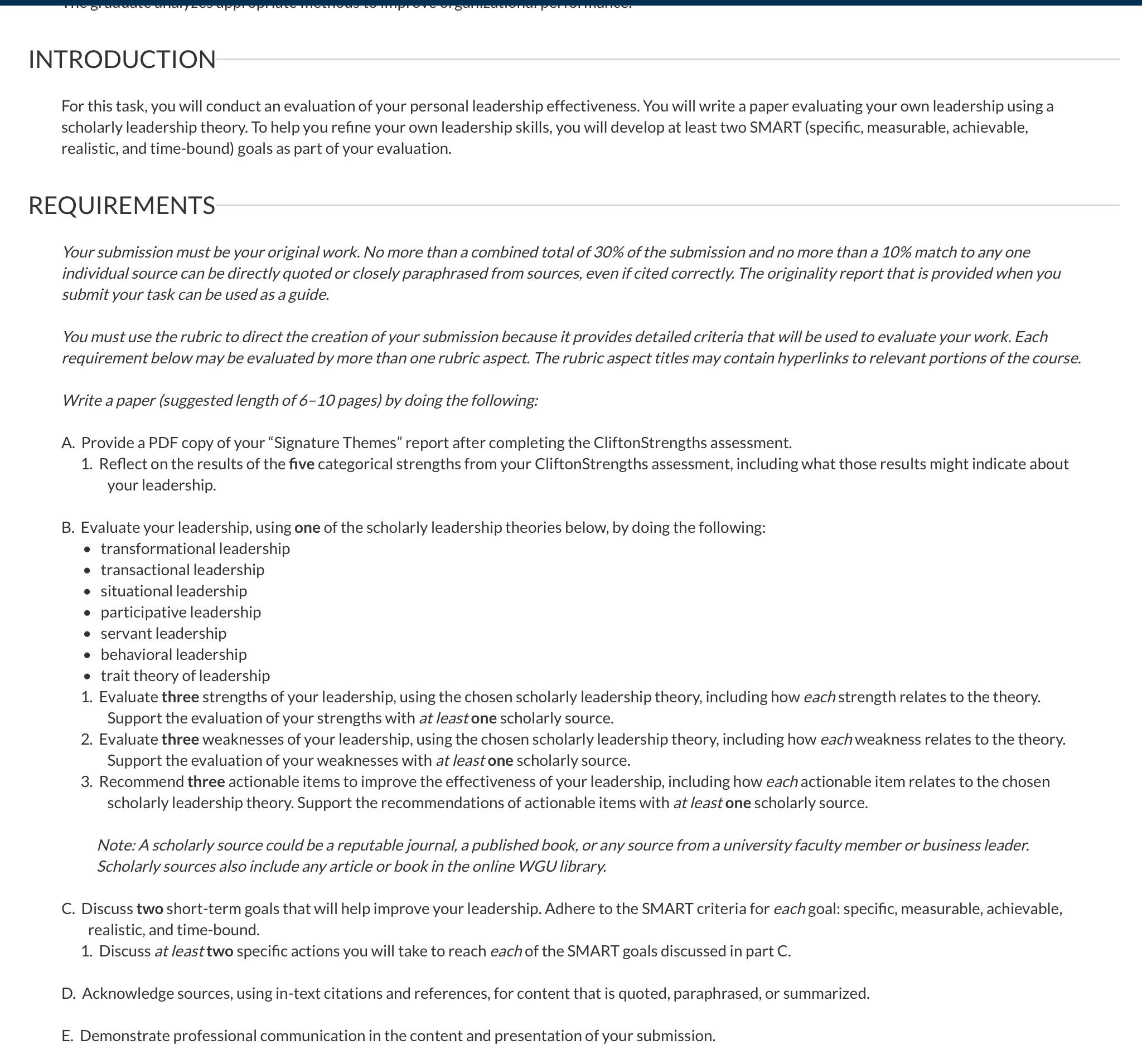
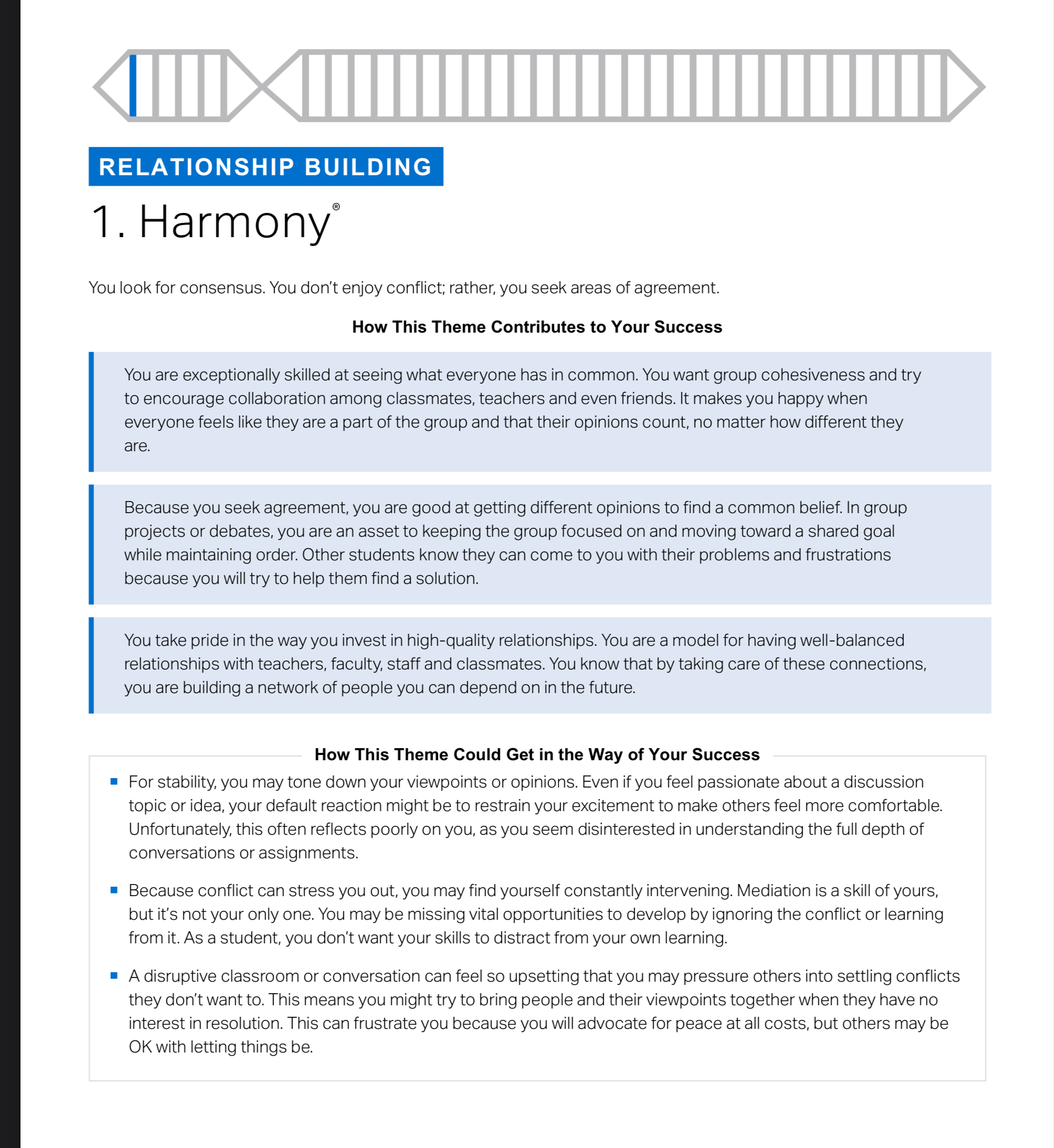
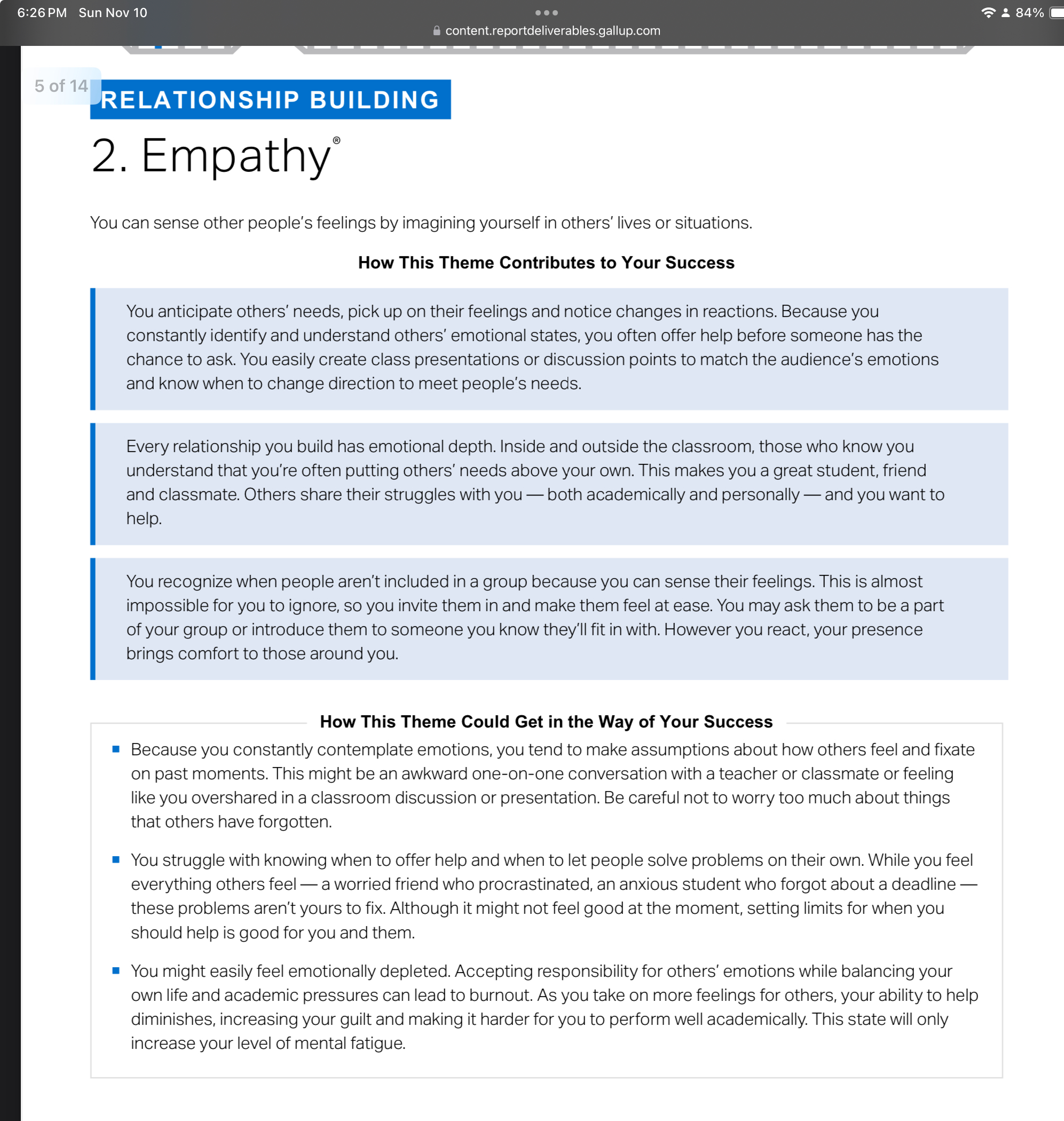
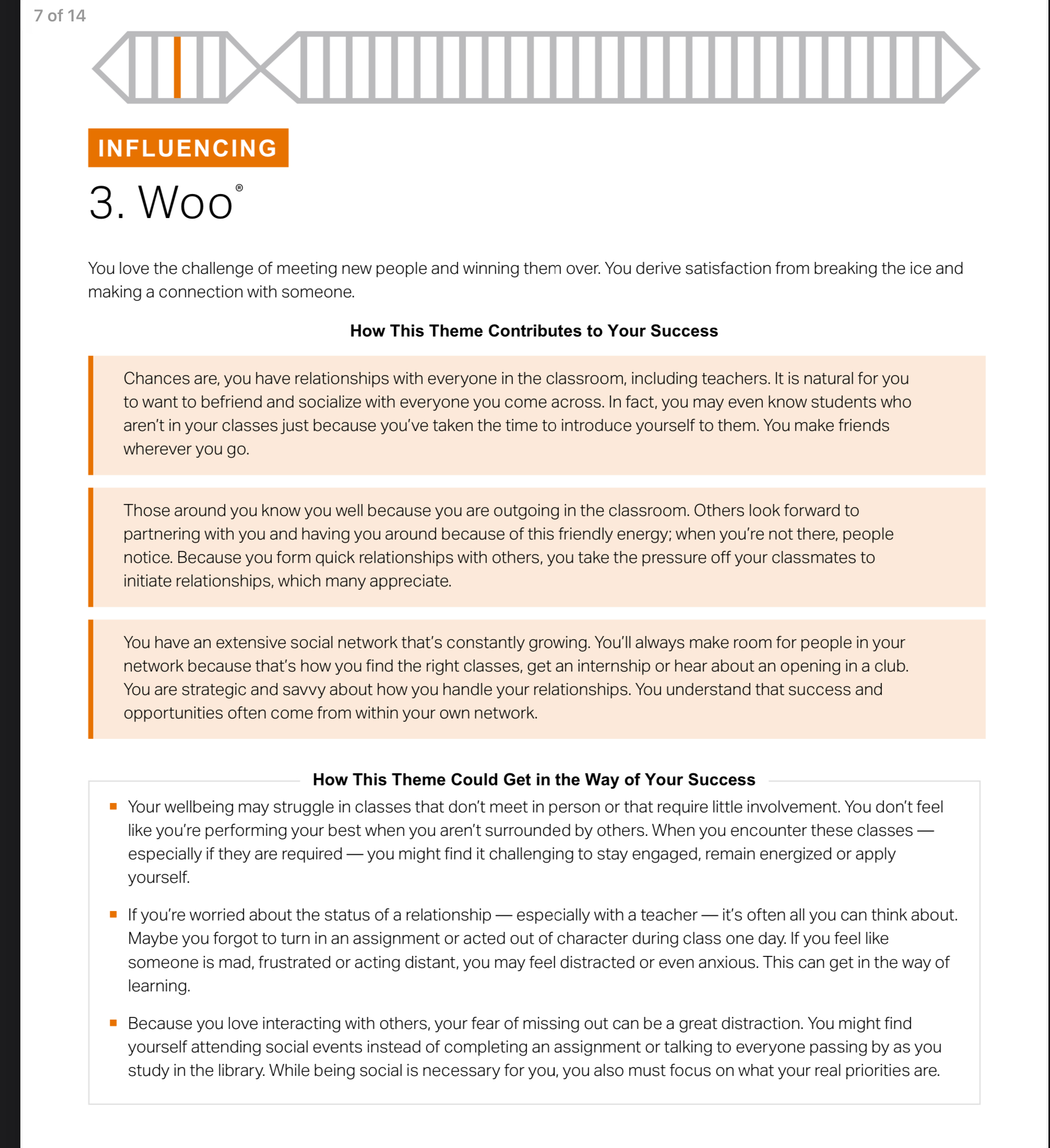
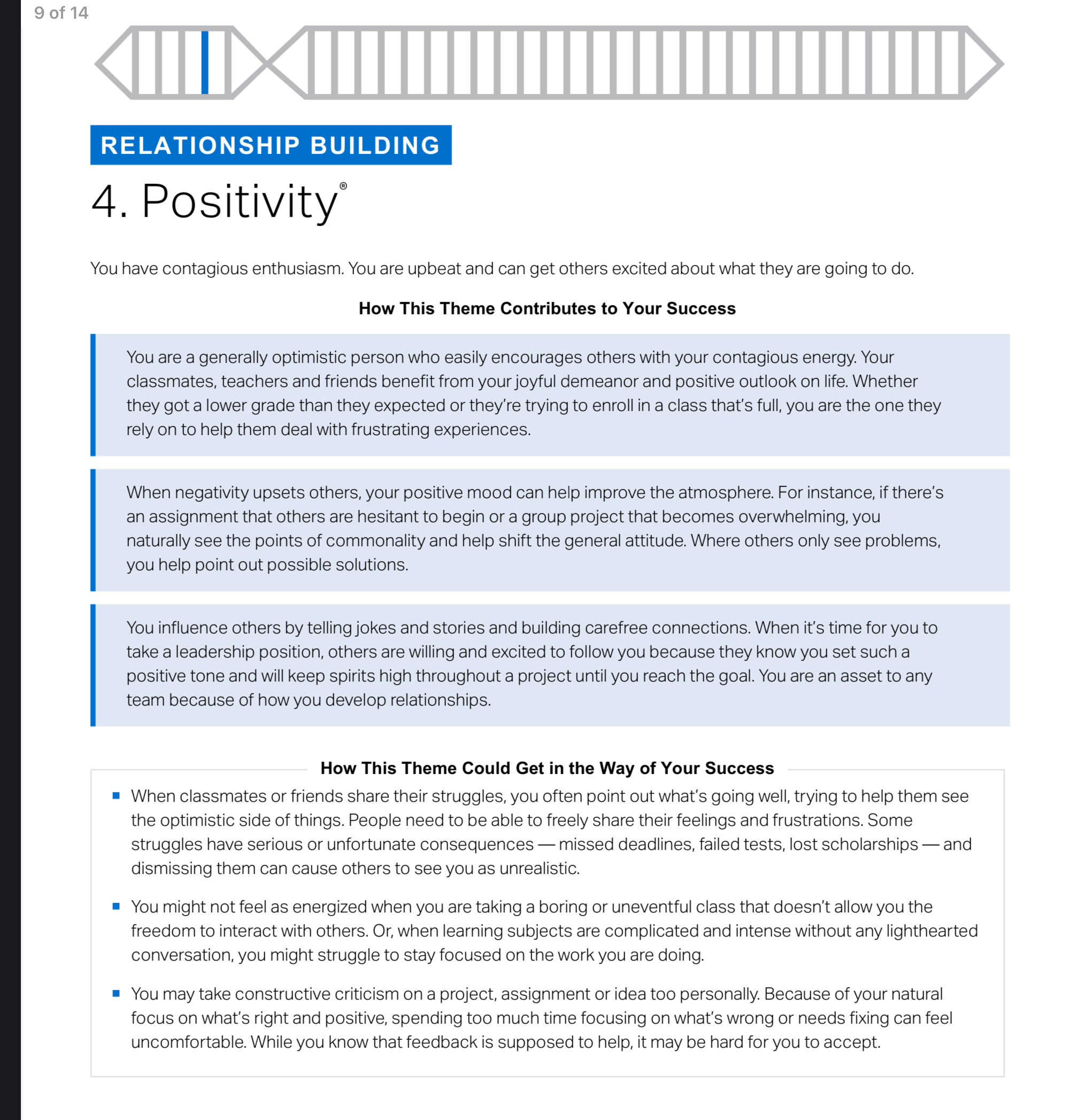
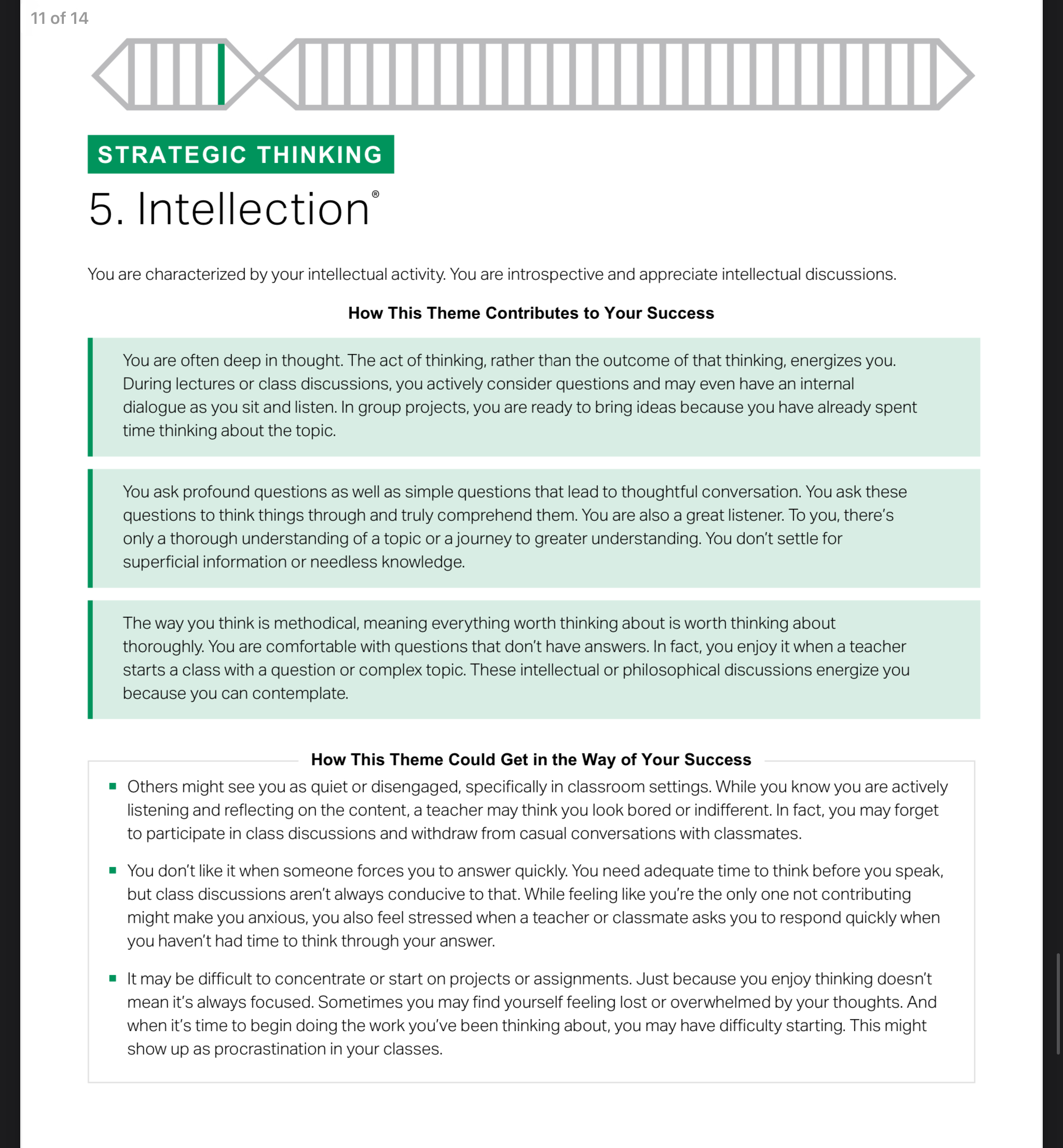
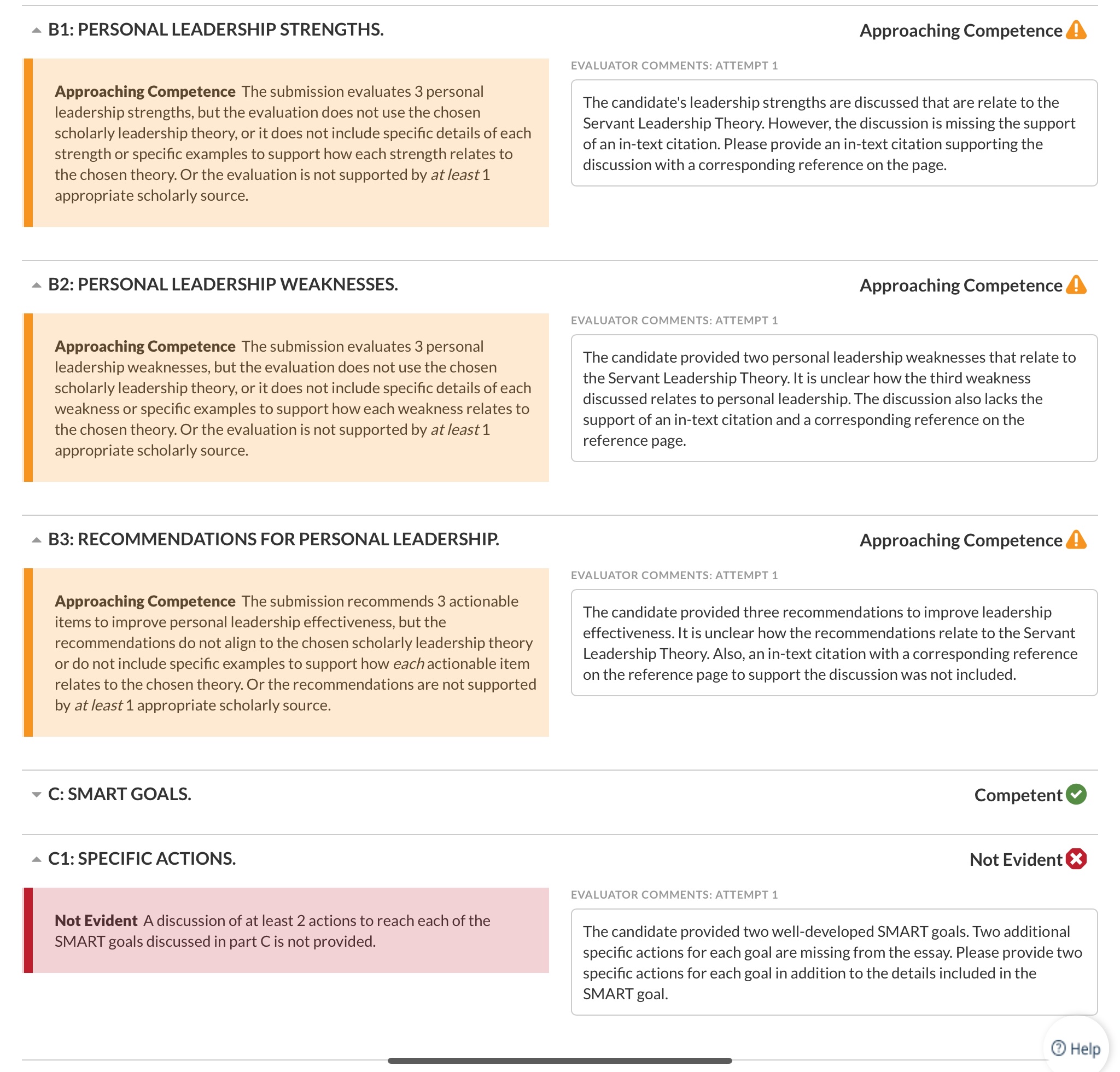
e INTRODUCTION For this task, you will conduct an evaluation of your personal leadership effectiveness. You will write a paper evaluating your own leadership using a scholarly leadership theory. To help you refine your own leadership skills, you will develop at least two SMART (specific, measurable, achievable, realistic, and time-bound) goals as part of your evaluation. REQUIREMENTS Your submission must be your original work. No more than a combined total of 30% of the submission and no more than a 10% match to any one individual source can be directly quoted or closely paraphrased from sources, even if cited correctly. The originality report that is provided when you submit your task can be used as a guide. You must use the rubric to direct the creation of your submission because it provides detailed criteria that will be used to evaluate your work. Each requirement below may be evaluated by more than one rubric aspect. The rubric aspect titles may contain hyperlinks to relevant portions of the course. Write a paper (suggested length of 6-10 pages) by doing the following: A. Provide a PDF copy of your \"Signature Themes\" report after completing the CliftonStrengths assessment. 1. Reflect on the results of the five categorical strengths from your CliftonStrengths assessment, including what those results might indicate about your leadership. B. Evaluate your leadership, using one of the scholarly leadership theories below, by doing the following: e transformational leadership transactional leadership situational leadership participative leadership servant leadership behavioral leadership trait theory of leadership . Evaluate three strengths of your leadership, using the chosen scholarly leadership theory, including how each strength relates to the theory. Support the evaluation of your strengths with at /east one scholarly source. 2. Evaluate three weaknesses of your leadership, using the chosen scholarly leadership theory, including how each weakness relates to the theory. Support the evaluation of your weaknesses with at least one scholarly source. 3. Recommend three actionable items to improve the effectiveness of your leadership, including how each actionable item relates to the chosen scholarly leadership theory. Support the recommendations of actionable items with at least one scholarly source. = Note: A scholarly source could be a reputable journal, a published book, or any source from a university faculty member or business leader. Scholarly sources also include any article or book in the online WGU library. C. Discuss two short-term goals that will help improve your leadership. Adhere to the SMART criteria for each goal: specific, measurable, achievable, realistic, and time-bound. 1. Discuss at leasttwo specific actions you will take to reach each of the SMART goals discussed in part C. D. Acknowledge sources, using in-text citations and references, for content that is quoted, paraphrased, or summarized. E. Demonstrate professional communication in the content and presentation of your submission. RELATIONSHIP BUILDING 1. Harmony You look for consensus. You don't enjoy conflict; rather, you seek areas of agreement. How This Theme Contributes to Your Success You are exceptionally skilled at seeing what everyone has in common. You want group cohesiveness and try to encourage collaboration among classmates, teachers and even friends. It makes you happy when everyone feels like they are a part of the group and that their opinions count, no matter how different they are. Because you seek agreement, you are good at getting different opinions to find a common belief. In group projects or debates, you are an asset to keeping the group focused on and moving toward a shared goal while maintaining order. Other students know they can come to you with their problems and frustrations because you will try to help them find a solution. You take pride in the way you invest in high-quality relationships. You are a model for having well-balanced relationships with teachers, faculty, staff and classmates. You know that by taking care of these connections, you are building a network of people you can depend on in the future. How This Theme Could Get in the Way of Your Success = For stability, you may tone down your viewpoints or opinions. Even if you feel passionate about a discussion topic or idea, your default reaction might be to restrain your exciterment to make others feel more comfortable. Unfortunately, this often reflects poorly on you, as you seem disinterested in understanding the full depth of conversations or assignments. = Because conflict can stress you out, you may find yourself constantly intervening. Mediation is a skill of yours, but it's not your only one. You may be missing vital opportunities to develop by ignoring the conflict or learning fromit. As a student, you don't want your skills to distract from your own learning. = Adisruptive classroom or conversation can feel so upsetting that you may pressure others into settling conflicts they don't want to. This means you might try to bring people and their viewpoints together when they have no interest in resolution. This can frustrate you because you will advocate for peace at all costs, but others may be OK with letting things be. 6:26 PM Sun Nov 10 LX) 2 @ content.reportdeliverables.gallup.com RELATIONSHIP BUILDING . Empathy You can sense other people's feelings by imagining yourself in others' lives or situations. How This Theme Contributes to Your Success You anticipate others' needs, pick up on their feelings and notice changes in reactions. Because you constantly identify and understand others' emotional states, you often offer help before someone has the chance to ask. You easily create class presentations or discussion points to match the audience's emotions and know when to change direction to meet people's needs. Every relationship you build has emotional depth. Inside and outside the classroom, those who know you understand that you're often putting others' needs above your own. This makes you a great student, friend and classmate. Others share their struggles with you both academically and personally and you want to help. You recognize when people aren't included in a group because you can sense their feelings. This is almost impossible for you to ignore, so you invite them in and make them feel at ease. You may ask them to be a part of your group or introduce them to someone you know they'll fit in with. However you react, your presence brings comfort to those around you. How This Theme Could Get in the Way of Your Success Because you constantly contemplate emotions, you tend to make assumptions about how others feel and fixate on past moments. This might be an awkward one-on-one conversation with a teacher or classmate or feeling like you overshared in a classroom discussion or presentation. Be careful not to worry too much about things that others have forgotten. You struggle with knowing when to offer help and when to let people solve problems on their own. While you feel everything others feel a worried friend who procrastinated, an anxious student who forgot about a deadline these problems aren't yours to fix. Although it might not feel good at the moment, setting limits for when you should help is good for you and them. You might easily feel emotionally depleted. Accepting responsibility for others' emotions while balancing your own life and academic pressures can lead to burnout. As you take on more feelings for others, your ability to help diminishes, increasing your guilt and making it harder for you to perform well academically. This state will only increase your level of mental fatigue. 7 of 14 3. Woo' You love the challenge of meeting new people and winning them over. You derive satisfaction from breaking the ice and making a connection with someone. How This Theme Contributes to Your Success Chances are, you have relationships with everyone in the classroom, including teachers. It is natural for you to want to befriend and socialize with everyone you come across. In fact, you may even know students who aren't in your classes just because you've taken the time to introduce yourself to them. You make friends wherever you go. Those around you know you well because you are outgoing in the classroom. Others look forward to partnering with you and having you around because of this friendly energy; when you're not there, people notice. Because you form quick relationships with others, you take the pressure off your classmates to initiate relationships, which many appreciate. You have an extensive social network that's constantly growing. You'll always make room for people in your network because that's how you find the right classes, get an internship or hear about an opening in a club. You are strategic and savvy about how you handle your relationships. You understand that success and opportunities often come from within your own network. How This Theme Could Get in the Way of Your Success Your wellbeing may struggle in classes that don't meet in person or that require little involvement. You don't feel like you're performing your best when you aren't surrounded by others. When you encounter these classes especially if they are required you might find it challenging to stay engaged, remain energized or apply yourself. If you're worried about the status of a relationship especially with a teacher it's often all you can think about. Maybe you forgot to turn in an assignment or acted out of character during class one day. If you feel like someone is mad, frustrated or acting distant, you may feel distracted or even anxious. This can get in the way of learning. Because you love interacting with others, your fear of missing out can be a great distraction. You might find yourself attending social events instead of completing an assignment or talking to everyone passing by as you study in the library. While being social is necessary for you, you also must focus on what your real priorities are. 9 of 14 4. Positivity You have contagious enthusiasm. You are upbeat and can get others excited about what they are going to do. How This Theme Contributes to Your Success You are a generally optimistic person who easily encourages others with your contagious energy. Your classmates, teachers and friends benefit from your joyful demeanor and positive outlook on life. Whether they got a lower grade than they expected or they're trying to enroll in a class that's full, you are the one they rely on to help them deal with frustrating experiences. When negativity upsets others, your positive mood can help improve the atmosphere. For instance, if there's an assignment that others are hesitant to begin or a group project that becomes overwhelming, you naturally see the points of commonality and help shift the general attitude. Where others only see problems, you help point out possible solutions. You influence others by telling jokes and stories and building carefree connections. When it's time for you to take a leadership position, others are willing and excited to follow you because they know you set such a positive tone and will keep spirits high throughout a project until you reach the goal. You are an asset to any team because of how you develop relationships. How This Theme Could Get in the Way of Your Success = When classmates or friends share their struggles, you often point out what's going well, trying to help them see the optimistic side of things. People need to be able to freely share their feelings and frustrations. Some struggles have serious or unfortunate consequences missed deadlines, failed tests, lost scholarships and dismissing them can cause others to see you as unrealistic. = You might not feel as energized when you are taking a boring or uneventful class that doesn't allow you the freedom to interact with others. Or, when learning subjects are complicated and intense without any lighthearted conversation, you might struggle to stay focused on the work you are doing. = You may take constructive criticism on a project, assignment or idea too personally. Because of your natural focus on what's right and positive, spending too much time focusing on what's wrong or needs fixing can feel uncomfortable. While you know that feedback is supposed to help, it may be hard for you to accept. = 5. Intellection' You are characterized by your intellectual activity. You are introspective and appreciate intellectual discussions. How This Theme Contributes to Your Success You are often deep in thought. The act of thinking, rather than the outcome of that thinking, energizes you. During lectures or class discussions, you actively consider questions and may even have an internal dialogue as you sit and listen. In group projects, you are ready to bring ideas because you have already spent time thinking about the topic. You ask profound questions as well as simple questions that lead to thoughtful conversation. You ask these questions to think things through and truly comprehend them. You are also a great listener. To you, there's only a thorough understanding of a topic or a journey to greater understanding. You don't settle for superficial information or needless knowledge. The way you think is methodical, meaning everything worth thinking about is worth thinking about thoroughly. You are comfortable with questions that don't have answers. In fact, you enjoy it when a teacher starts a class with a question or complex topic. These intellectual or philosophical discussions energize you because you can contemplate. How This Theme Could Get in the Way of Your Success = Others might see you as quiet or disengaged, specifically in classroom settings. While you know you are actively listening and reflecting on the content, a teacher may think you look bored or indifferent. In fact, you may forget to participate in class discussions and withdraw from casual conversations with classmates. = You don't like it when someone forces you to answer quickly. You need adequate time to think before you speak, but class discussions aren't always conducive to that. While feeling like you're the only one not contributing might make you anxious, you also feel stressed when a teacher or classmate asks you to respond quickly when you haven't had time to think through your answer. = |t may be difficult to concentrate or start on projects or assignments. Just because you enjoy thinking doesn't mean it's always focused. Sometimes you may find yourself feeling lost or overwhelmed by your thoughts. And when it's time to begin doing the work you've been thinking about, you may have difficulty starting. This might show up as procrastination in your classes. B1: PERSONAL LEADERSHIP STRENGTHS. Approaching Competence The submission evaluates 3 personal leadership strengths, but the evaluation does not use the chosen scholarly leadership theory, or it does not include specific details of each strength or specific examples to support how each strength relates to the chosen theory. Or the evaluation is not supported by at /east 1 appropriate scholarly source. ~ B2: PERSONAL LEADERSHIP WEAKNESSES. Approaching Competence The submission evaluates 3 personal leadership weaknesses, but the evaluation does not use the chosen scholarly leadership theory, or it does not include specific details of each weakness or specific examples to support how each weakness relates to the chosen theory. Or the evaluation is not supported by at /east 1 appropriate scholarly source. ~ B3: RECOMMENDATIONS FOR PERSONAL LEADERSHIP. Approaching Competence The submission recommends 3 actionable items to improve personal leadership effectiveness, but the recommendations do not align to the chosen scholarly leadership theory or do not include specific examples to support how each actionable item relates to the chosen theory. Or the recommendations are not supported by at least 1 appropriate scholarly source. ~ C: SMART GOALS. ~ C1: SPECIFIC ACTIONS. Not Evident A discussion of at least 2 actions to reach each of the SMART goals discussed in part C is not provided. Approaching Competence } EVALUATOR COMMENTS: ATTEMPT 1 The candidate's leadership strengths are discussed that are relate to the Servant Leadership Theory. However, the discussion is missing the support of an in-text citation. Please provide an in-text citation supporting the discussion with a corresponding reference on the page. Approaching Competence O EVALUATOR COMMENTS: ATTEMPT 1 The candidate provided two personal leadership weaknesses that relate to the Servant Leadership Theory. It is unclear how the third weakness discussed relates to personal leadership. The discussion also lacks the support of an in-text citation and a corresponding reference on the reference page. Approaching Competence \\ EVALUATOR COMMENTS: ATTEMPT 1 The candidate provided three recommendations to improve leadership effectiveness. It is unclear how the recommendations relate to the Servant Leadership Theory. Also, an in-text citation with a corresponding reference on the reference page to support the discussion was not included. Competent o Not Evident 0 EVALUATOR COMMENTS: ATTEMPT 1 The candidate provided two well-developed SMART goals. Two additional specific actions for each goal are missing from the essay. Please provide two specific actions for each goal in addition to the details included in the SMART goal. @ Help
Step by Step Solution
There are 3 Steps involved in it
1 Expert Approved Answer
Step: 1 Unlock
Question Has Been Solved by an Expert!
Get step-by-step solutions from verified subject matter experts
Step: 2 Unlock
Step: 3 Unlock
Students Have Also Explored These Related Law Questions!









 Study Help