







Question: E9-6 Computing Depreciation under Alternative Methods [LO 9-3] Solar Innovations Corporation bought a machine at the beginning of the year at a cost of $25,000.
![E9-6 Computing Depreciation under Alternative Methods [LO 9-3] Solar Innovations Corporation](https://dsd5zvtm8ll6.cloudfront.net/si.experts.images/questions/2024/09/66f7a2ffd3260_15166f7a2ff7157f.jpg)
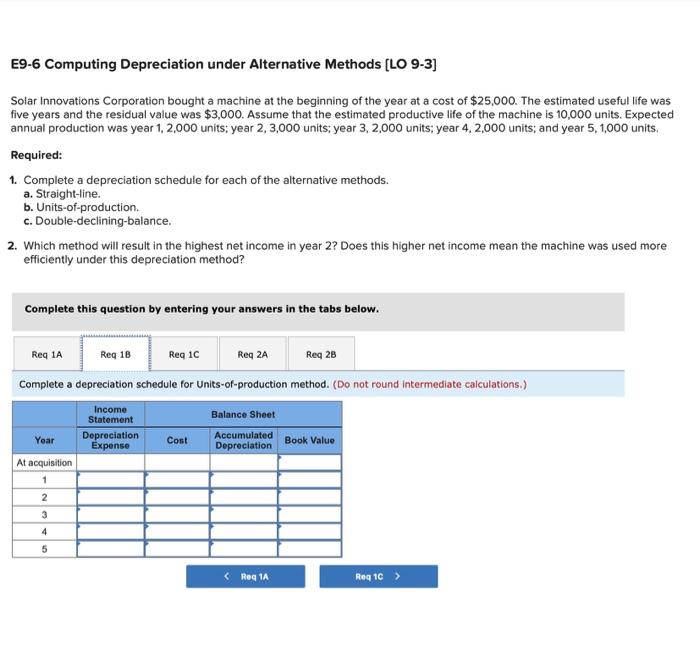
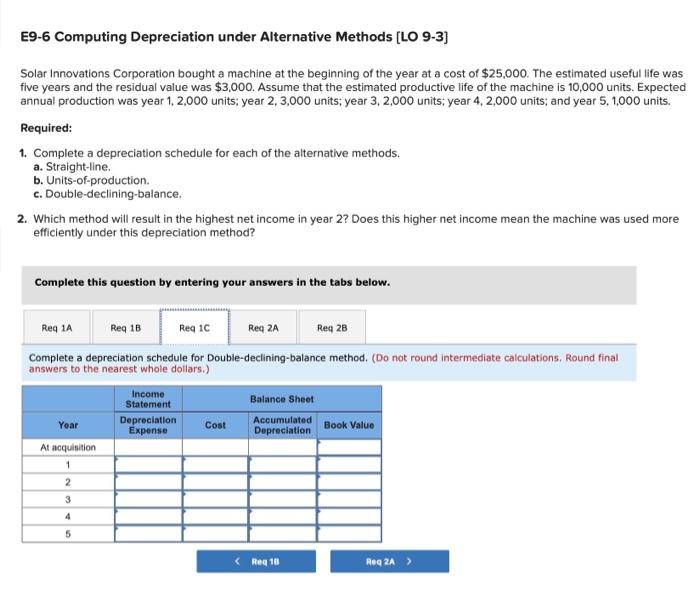
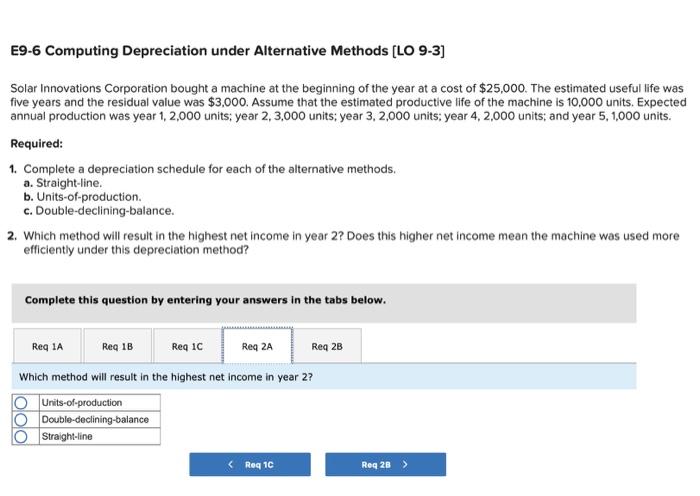
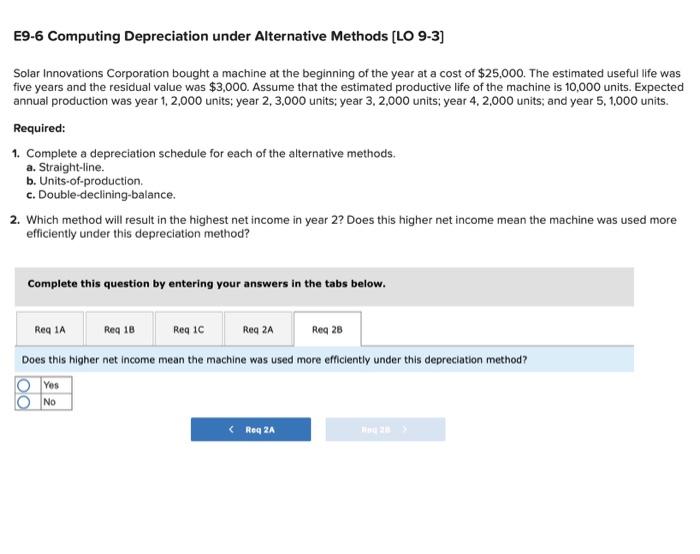
E9-6 Computing Depreciation under Alternative Methods [LO 9-3] Solar Innovations Corporation bought a machine at the beginning of the year at a cost of $25,000. The estimated useful life was five years and the residual value was $3,000. Assume that the estimated productive life of the machine is 10,000 units. Expected annual production was year 1, 2,000 units; year 2, 3,000 units; year 3, 2,000 units; year 4, 2,000 units; and year 5.1,000 units. Required: 1. Complete a depreciation schedule for each of the alternative methods. a. Straight-line. b. Units-of-production. c. Double-declining balance. 2. Which method will result in the highest net income in year 2? Does this higher net income mean the machine was used more efficiently under this depreciation method? Complete this question by entering your answers in the tabs below. Req 1A Reg 18 Reg 10 Req 2A Reg 28 Complete a depreciation schedule for Straight-line method. (Do not round intermediate calculations.) Income Statement Balance Sheet Depreciation Cost Accumulated Expense Depreciation Book Value At acquisition Year 2 3 4 5 Reg 10 > E9-6 Computing Depreciation under Alternative Methods [LO 9-3) Solar Innovations Corporation bought a machine at the beginning of the year at a cost of $25,000. The estimated useful life was five years and the residual value was $3,000. Assume that the estimated productive life of the machine is 10,000 units. Expected annual production was year 1, 2,000 units; year 2, 3,000 units; year 3, 2,000 units; year 4, 2,000 units; and year 5.1000 units. Required: 1. Complete a depreciation schedule for each of the alternative methods. a. Straight-line. b. Units-of-production. c. Double-declining-balance. 2. Which method will result in the highest net income in year 2? Does this higher net income mean the machine was used more efficiently under this depreciation method? Complete this question by entering your answers in the tabs below. Reg 1A Req 18 Req1c Req 2A Reg 28 Complete a depreciation schedule for Units-of-production method. (Do not round intermediate calculations.) Income Balance Sheet Statement Year Depreciation Cost Accumulated Expense Depreciation Book Value At acquisition 1 2 3 4 5 E9-6 Computing Depreciation under Alternative Methods [LO 9-3) Solar Innovations Corporation bought a machine at the beginning of the year at a cost of $25,000. The estimated useful life was five years and the residual value was $3,000. Assume that the estimated productive life of the machine is 10,000 units. Expected annual production was year 1, 2,000 units, year 2, 3,000 units; year 3, 2,000 units: year 4. 2,000 units; and year 5, 1.000 units. Required: 1. Complete a depreciation schedule for each of the alternative methods. a. Straight-line. b. Units-of-production. c. Double-declining balance. 2. Which method will result in the highest net income in year 2? Does this higher net income mean the machine was used more efficiently under this depreciation method? Complete this question by entering your answers in the tabs below. Req1A Req 18 Reg 10 Red 2A Reg 28 Complete a depreciation schedule for Double-declining-balance method. (Do not round intermediate calculations, Round final answers to the nearest whole dollars.) Income Statement Balance Sheet Year Depreciation Accumulated Expense Cost Depreciation Book Value At acquisition 1 2 3 4 5 E9-6 Computing Depreciation under Alternative Methods (LO 9-3) Solar Innovations Corporation bought a machine at the beginning of the year at a cost of $25,000. The estimated useful life was five years and the residual value was $3,000. Assume that the estimated productive life of the machine is 10,000 units. Expected annual production was year 1, 2,000 units; year 2, 3,000 units; year 3, 2,000 units: year 4, 2,000 units; and year 5, 1.000 units. Required: 1. Complete a depreciation schedule for each of the alternative methods. a. Straight-line. b. Units-of-production. c. Double-declining-balance. 2. Which method will result in the highest net income in year 2? Does this higher net income mean the machine was used more efficiently under this depreciation method? Complete this question by entering your answers in the tabs below. Reg 1A Req 18 Reg 1C Req 2A Req 28 Which method will result in the highest net income in year 2? Units-of-production O Double-declining-balance Straight-line E9-6 Computing Depreciation under Alternative Methods (LO 9-3] Solar Innovations Corporation bought a machine at the beginning of the year at a cost of $25,000. The estimated useful life was five years and the residual value was $3,000. Assume that the estimated productive life of the machine is 10,000 units. Expected annual production was year 1, 2,000 units: year 2, 3,000 units: year 3, 2,000 units; year 4, 2,000 units; and year 5, 1,000 units. Required: 1. Complete a depreciation schedule for each of the alternative methods. a. Straight-line. b. Units-of-production c. Double-declining-balance. 2. Which method will result in the highest net income in year 2? Does this higher net income mean the machine was used more efficiently under this depreciation method? Complete this question by entering your answers in the tabs below. Reg 1A Reg 18 Reg 10 Red 2A Reg 28 Does this higher net Income mean the machine was used more efficiently under this depreciation method? Yes No
Step by Step Solution
There are 3 Steps involved in it

Get step-by-step solutions from verified subject matter experts
 Study Help