



Question: each question has two or three parts please provide me just answers not details. Find the future value for the ordinary annuity with the given
each question has two or three parts please provide me just answers not details.
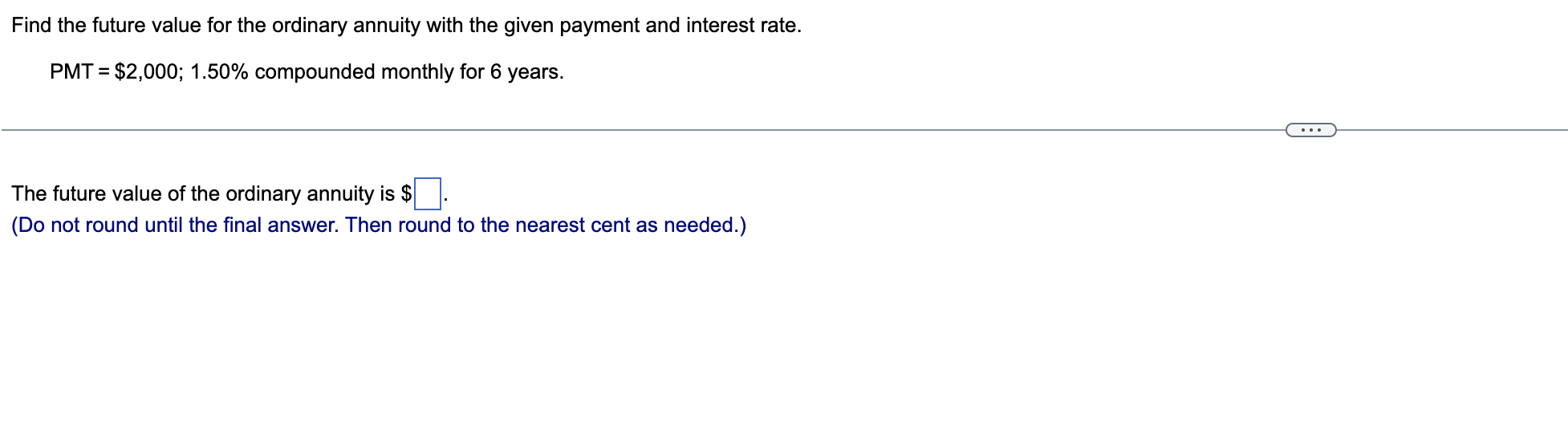
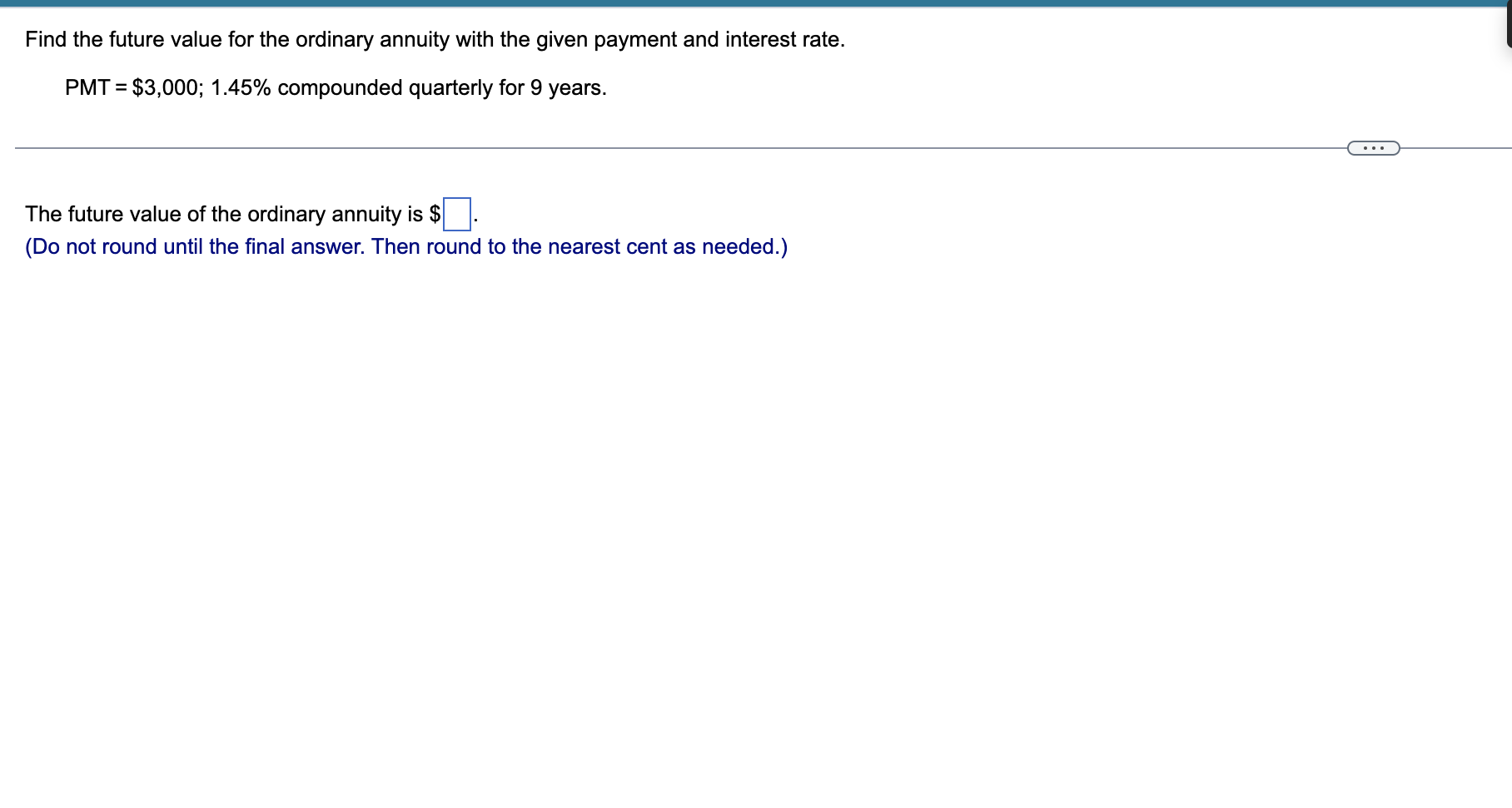
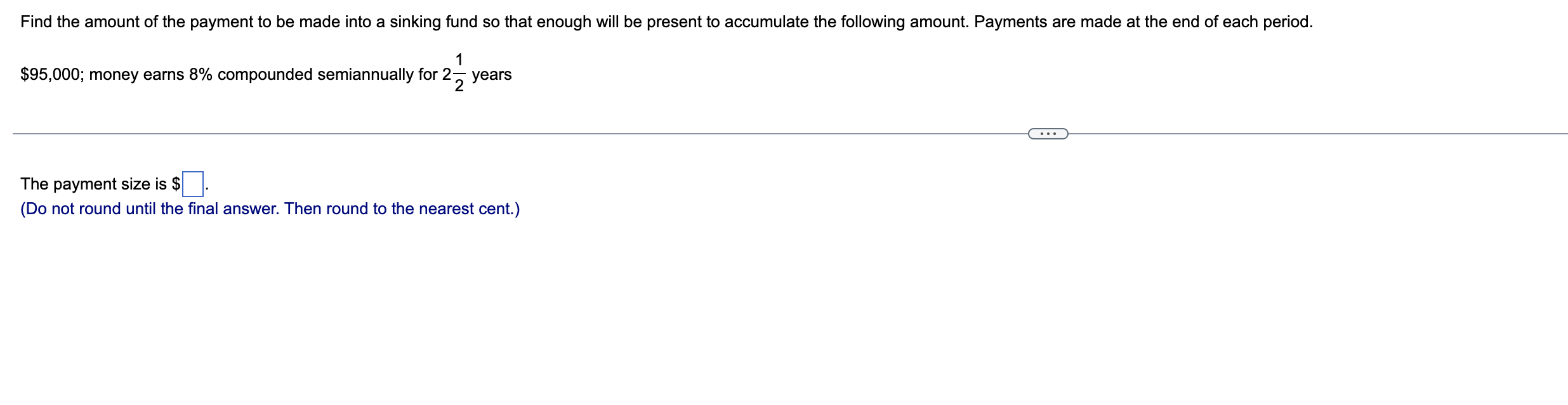
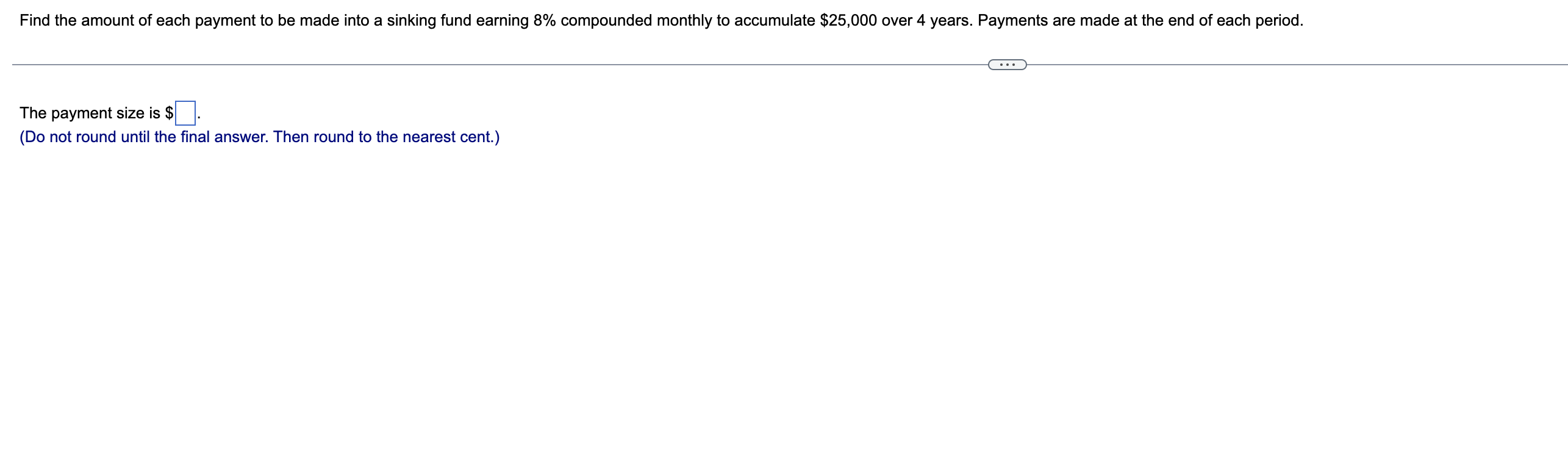

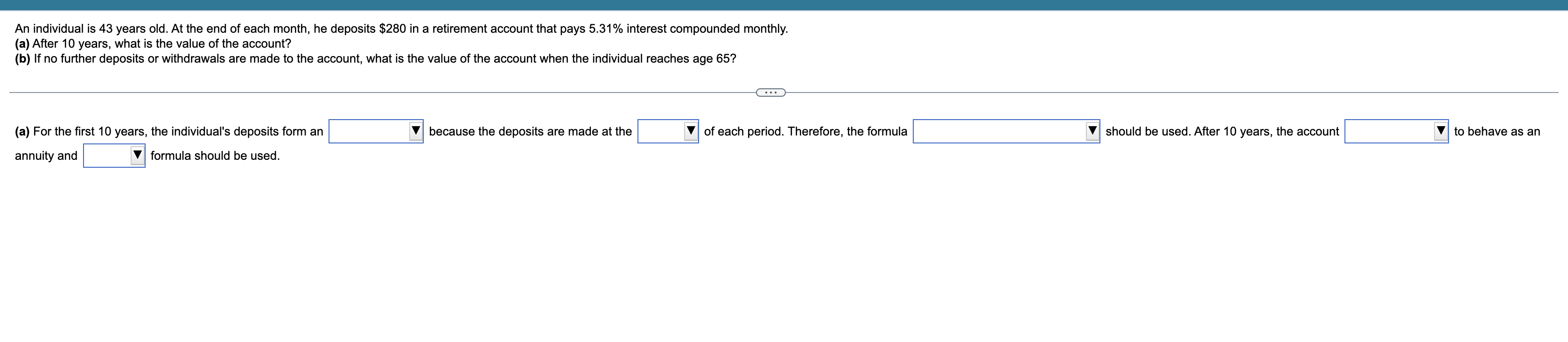
Find the future value for the ordinary annuity with the given payment and interest rate. PMT = $2,000; 1.50% compounded monthly for 6 years. E> The future value of the ordinary annuity is 5D. (Do not round until the nal answer. Then round to the nearest cent as needed.) Find the future value for the ordinary annuity with the given payment and interest rate. PMT = $3,000; 1.45% compounded quarterly for 9 years. . . . The future value of the ordinary annuity is $. (Do not round until the final answer. Then round to the nearest cent as needed.)Find the amount of the payment to be made into a sinking fund so that enough will be present to accumulate the following amount. Payments are made at the end of each period. 1 $95,000; money earns 8% compounded semiannually for 25 years The payment size is $ . (Do not round until the nal answer. Then round to the nearest cent.) Find the amount of each payment to be made into a sinking fund earning 8% compounded monthly to accumulate $25,000 over 4 years. Payments are made at the end of each period. The payment size is $ . (Do not round until the nal answer. Then round to the nearest cent.) In order to accumulate enough money for a down payment on a house, a couple deposits $664 per month into an account paying 3% compounded monthly. It payments are made at the end of each period, how much money will be in the account in 7 years? Type the amount in the account: 5 (Round to the nearest dollar.) An individual is 43 years old. At the end of each month, he deposits $280 in a retirement account that pays 5.31% interest compounded monthly. (a) After 10 years, what is the value of the account? (b) If no further deposits or withdrawals are made to the account, what is the value of the account when the individual reaches age 65? (a) For the first 10 years, the individual's deposits form an because the deposits are made at the of each period. Therefore, the formula should be used. After 10 years, the account to behave as an annuity and formula should be used
Step by Step Solution
There are 3 Steps involved in it

Get step-by-step solutions from verified subject matter experts