







Question: ECO 252 Problem Set 6 Question 0. Define each of the following: a. Budget Deficit b. Budget Surplus c. Balanced Budget d. National Debt e.
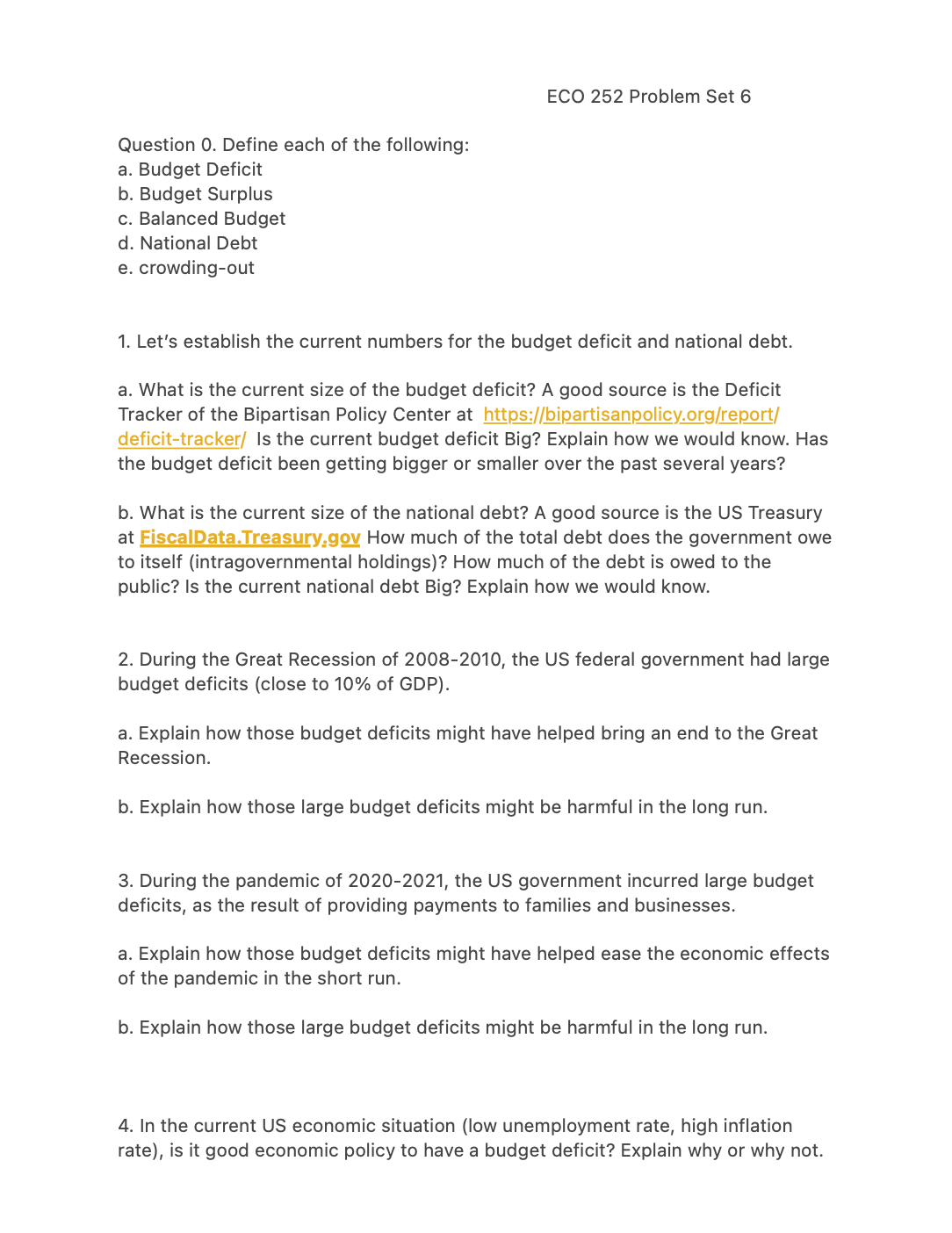
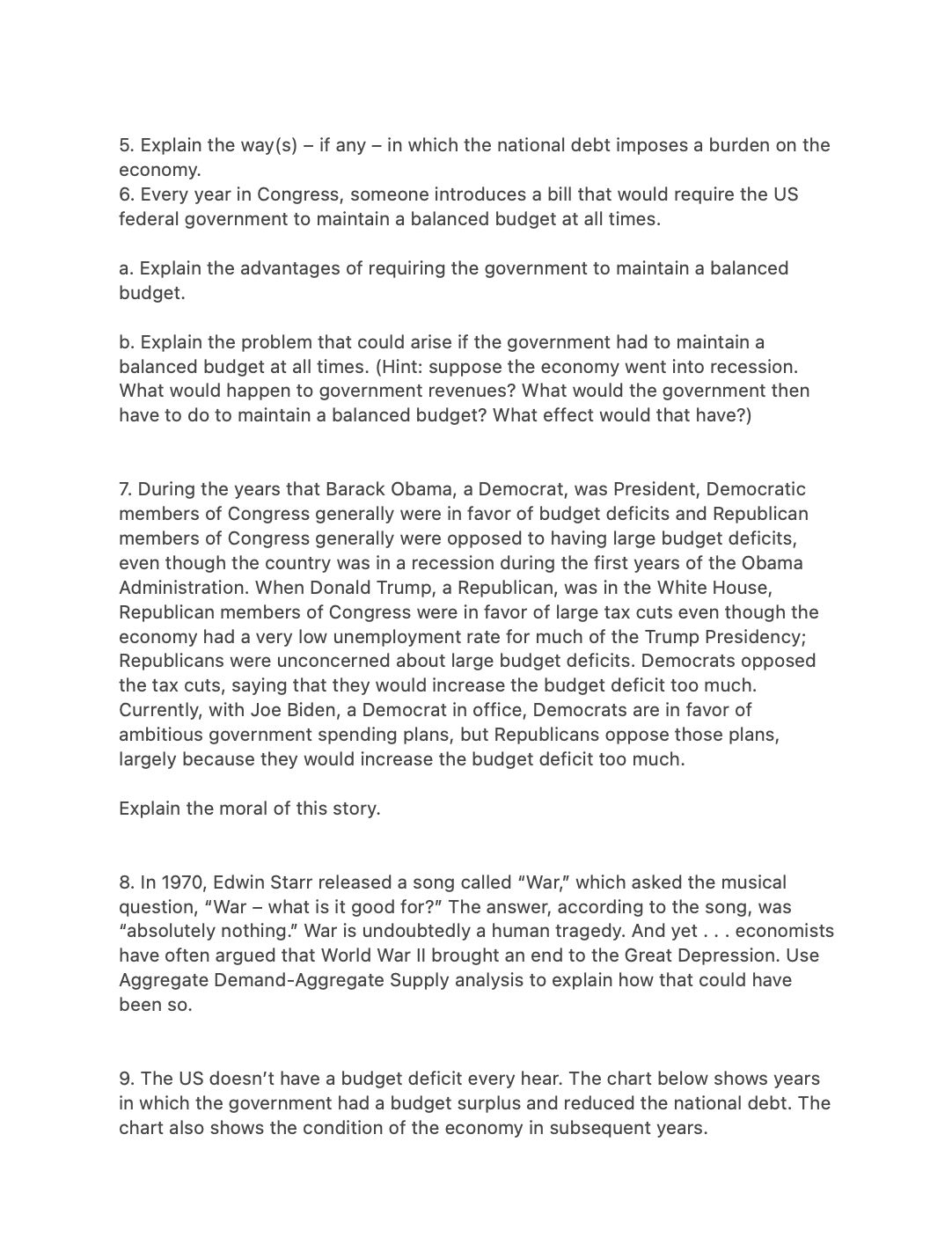
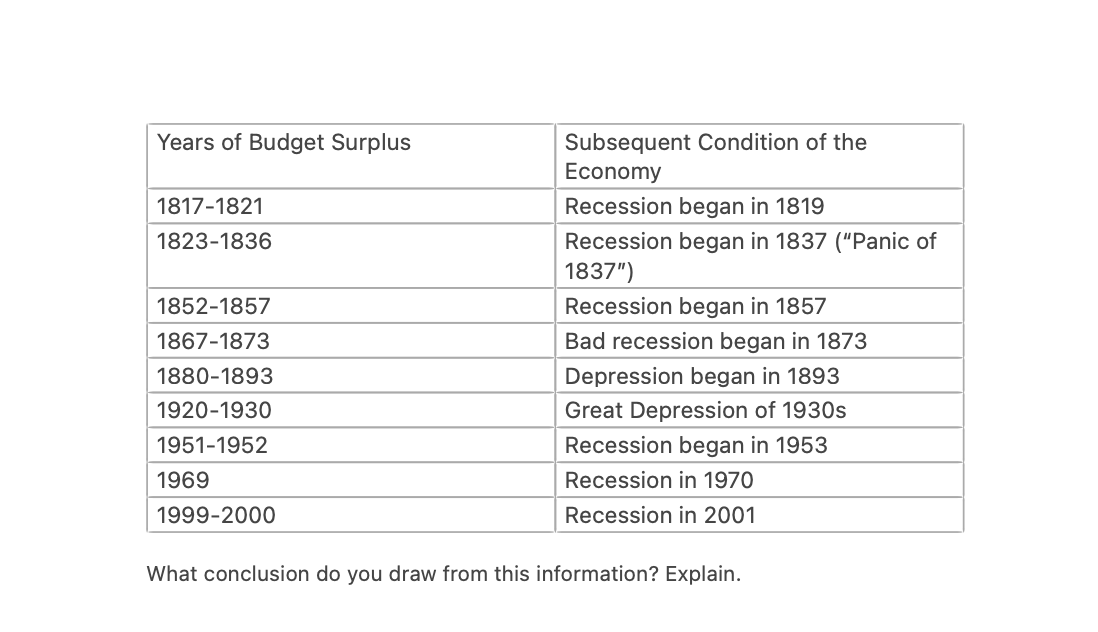
ECO 252 Problem Set 6 Question 0. Define each of the following: a. Budget Deficit b. Budget Surplus c. Balanced Budget d. National Debt e. crowdingout 1. Let's establish the current numbers for the budget deficit and national debt. a. What is the current size of the budget deficit? A good source is the Deficit Tracker of the Bipartisan Policy Center at Is the current budget deficit Big? Explain how we would know. Has the budget deficit been getting bigger or smaller over the past several years? b. What is the current size of the national debt? A good source is the US Treasury at How much of the total debt does the government owe to itself (intragovernmental holdings)? How much of the debt is owed to the public? Is the current national debt Big? Explain how we would know. 2. During the Great Recession of 2008-2010, the US federal government had large budget deficits (close to 10% of GDP). a. Explain how those budget deficits might have helped bring an end to the Great Recession. b. Explain how those large budget deficits might be harmful in the long run. 3. During the pandemic of 20202021, the US government incurred large budget deficits, as the result of providing payments to families and businesses. a. Explain how those budget deficits might have helped ease the economic effects of the pandemic in the short run. b. Explain how those large budget deficits might be harmful in the long run. 4. In the current US economic situation (low unemployment rate, high inflation rate), is it good economic policy to have a budget deficit? Explain why or why not. 5. Explain the way(s) if any in which the national debt imposes a burden on the economy. 6. Every year in Congress, someone introduces a bill that would require the US federal government to maintain a balanced budget at all times. a. Explain the advantages of requiring the government to maintain a balanced budget. b. Explain the problem that could arise if the government had to maintain a balanced budget at all times. (Hint: suppose the economy went into recession. What would happen to government revenues? What would the government then have to do to maintain a balanced budget? What effect would that have?) 7. During the years that Barack Obama, a Democrat, was President, Democratic members of Congress generally were in favor of budget deficits and Republican members of Congress generally were opposed to having large budget deficits, even though the country was in a recession during the first years of the Obama Administration. When Donald Trump, a Republican, was in the White House, Republican members of Congress were in favor of large tax cuts even though the economy had a very low unemployment rate for much of the Trump Presidency; Republicans were unconcerned about large budget deficits. Democrats opposed the tax cuts, saying that they would increase the budget deficit too much. Currently, with Joe Biden, a Democrat in office, Democrats are in favor of ambitious government spending plans, but Republicans oppose those plans, largely because they would increase the budget deficit too much. Explain the moral of this story. 8. In 1970, Edwin Starr released a song called "War," which asked the musical question, "War what is it good for?" The answer, according to the song, was "absolutely nothing." War is undoubtedly a human tragedy. And yet . . . economists have often argued that World War II brought an end to the Great Depression. Use Aggregate DemandAggregate Supply analysis to explain how that could have been so. 9. The US doesn't have a budget deficit every hear. The chart below shows years in which the government had a budget surplus and reduced the national debt. The chart also shows the condition of the economy in subsequent years. Years of Budget Surplus Subsequent Condition of the Economy 1817-1821 Recession began in 1819 1823-1836 Recession began in 1837 ("Panic of 1837") I 1852-1857 Recession began in 1857 I 1867-1873 Bad recession began in 1873 I 1880-1893 Depression began in 1893 I 1920-1930 Great Depression of 1930s 1951-1952 Recession began in 1953 I 1969 Recession in 1970 | 1999-2000 Recession in 2001 What conclusion do you draw from this information? Explain
Step by Step Solution
There are 3 Steps involved in it

Get step-by-step solutions from verified subject matter experts
 Study Help