



Question: ecommerce and ebusiness Final Project- 20% No. 1. 2 2 . 2 Looking at the overall market trends, more and more people are looking to
ecommerce and ebusiness 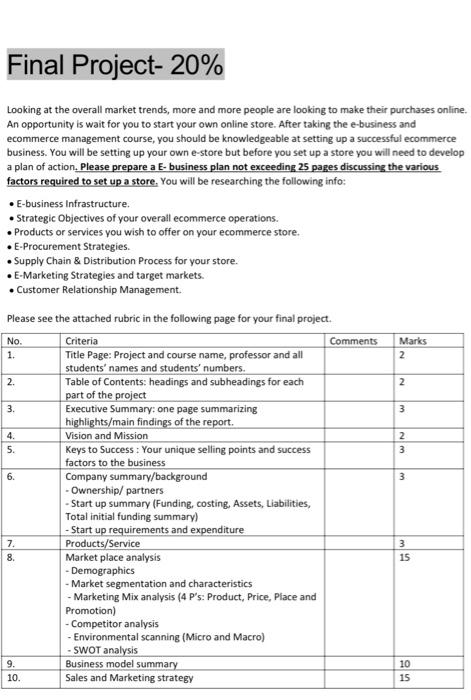
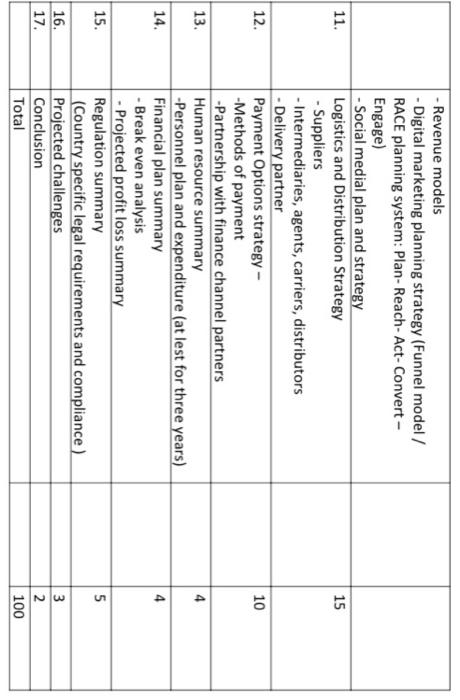
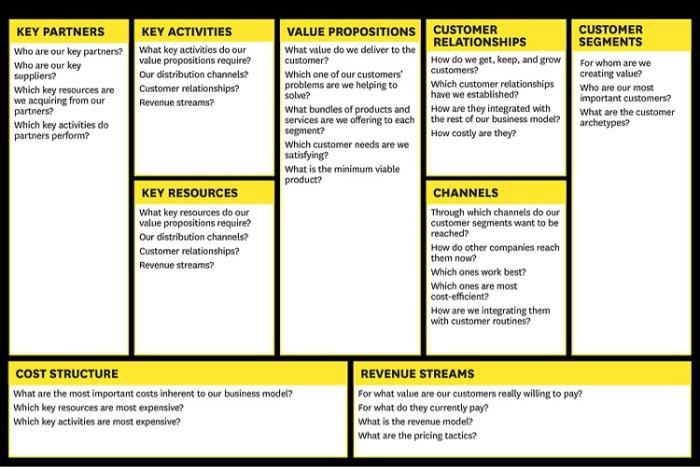
Final Project- 20% No. 1. 2 2 . 2 Looking at the overall market trends, more and more people are looking to make their purchases online. An opportunity is wait for you to start your own online store. After taking the e-business and ecommerce management course, you should be knowledgeable at setting up a successful ecommerce business. You will be setting up your own e-store but before you set up a store you will need to develop a plan of action. Please prepare a E-business plan not exceeding 25 pages discussing the various factors required to set up a store. You will be researching the following info: E-business Infrastructure. Strategic Objectives of your overall ecommerce operations. Products or services you wish to offer on your ecommerce store. E-Procurement Strategies. Supply Chain & Distribution Process for your store. E-Marketing Strategies and target markets. Customer Relationship Management Please see the attached rubric in the following page for your final project. Criteria Comments Marks Title Page: Project and course name, professor and all students' names and students' numbers. Table of Contents: headings and subheadings for each 2 part of the project Executive Summary: one page summarizing highlights/main findings of the report. Vision and Mission Keys to Success : Your unique selling points and success factors to the business 6. Company summary/background 3 - Ownership/ partners -Start up summary (Funding, costing, Assets, Liabilities, Total initial funding summary) - Start up requirements and expenditure Products/Service Market place analysis - Demographics -Market segmentation and characteristics - Marketing Mix analysis (4 P's: Product, Price, Place and Promotion) - Competitor analysis Environmental scanning (Micro and Macro) - SWOT analysis Business model summary Sales and Marketing strategy 3. 3 4. 5. Nm 2 3 7. 8. 3 15 9. 10. 10 15 11. 15 12. 10 - Revenue models - Digital marketing planning strategy (Funnel model / RACE planning system: Plan- Reach-Act- Convert - Engage) - Social medial plan and strategy Logistics and Distribution Strategy - Suppliers - Intermediaries, agents, carriers, distributors - Delivery partner Payment Options strategy - -Methods of payment -Partnership with finance channel partners Human resource summary - Personnel plan and expenditure (at lest for three years) Financial plan summary - Break even analysis - Projected profit loss summary Regulation summary (Country specific legal requirements and compliance) Projected challenges Conclusion Total 13. 4 14. 4 15. un 5 16. 17. 3 2 100 KEY PARTNERS KEY ACTIVITIES who are our key partners? What key activities do our who are our key value propositions require? suppliers? Our distribution channels? Which key resources are Customer relationships? we acquiring from our Revenue streams? partners? Which key activities do partners perform? VALUE PROPOSITIONS What value do we deliver to the customer? Which one of our customers' problems are we helping to solve? What bundles of products and services are we offering to each segment? Which customer needs are we satisfying? What is the minimum viable product? CUSTOMER RELATIONSHIPS How do we get, keep, and grow customers? Which customer relationships have we established? How are they integrated with the rest of our business model? How costly are they? CUSTOMER SEGMENTS For whom are we creating value? Who are our most important customers? What are the customer archetypes? KEY RESOURCES What key resources do our value propositions require? Our distribution channels? Customer relationships? Revenue streams? CHANNELS Through which channels do our customer segments want to be reached? How do other companies reach them now? Which ones work best? Which ones are most cost-efficient? How are we integrating them with customer routines? COST STRUCTURE What are the most important costs inherent to our business model? Which key resources are most expensive? which key activities are most expensive? REVENUE STREAMS For what value are our customers really willing to pay For what do they currently pay? What is the revenue model? What are the pricing tactics
Step by Step Solution
There are 3 Steps involved in it
1 Expert Approved Answer
Step: 1 Unlock

Question Has Been Solved by an Expert!
Get step-by-step solutions from verified subject matter experts
Step: 2 Unlock
Step: 3 Unlock