







Question: Edit the code given below to complete the task. Thumbs up for right answer :-) Task 1*(100 points) There are many variations of the exec
Edit the code given below to complete the task. Thumbs up for right answer :-)
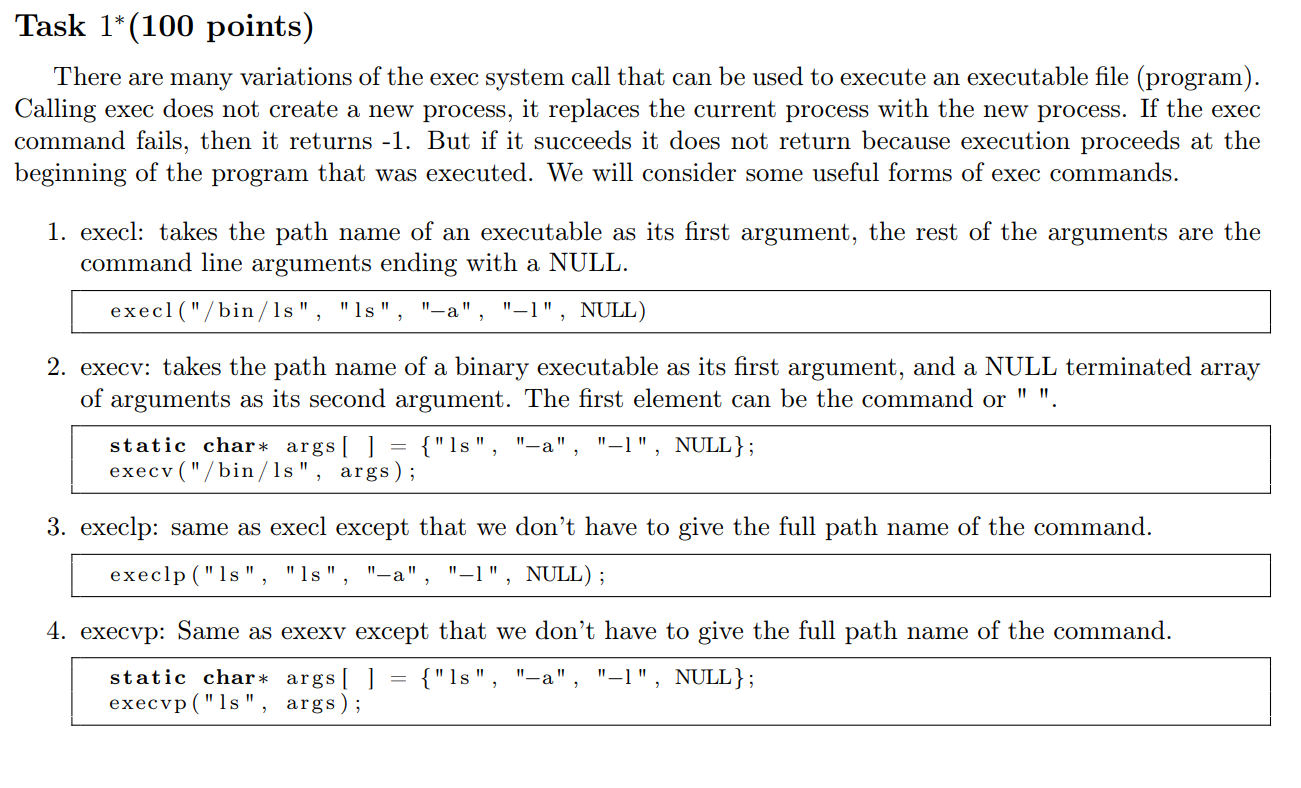
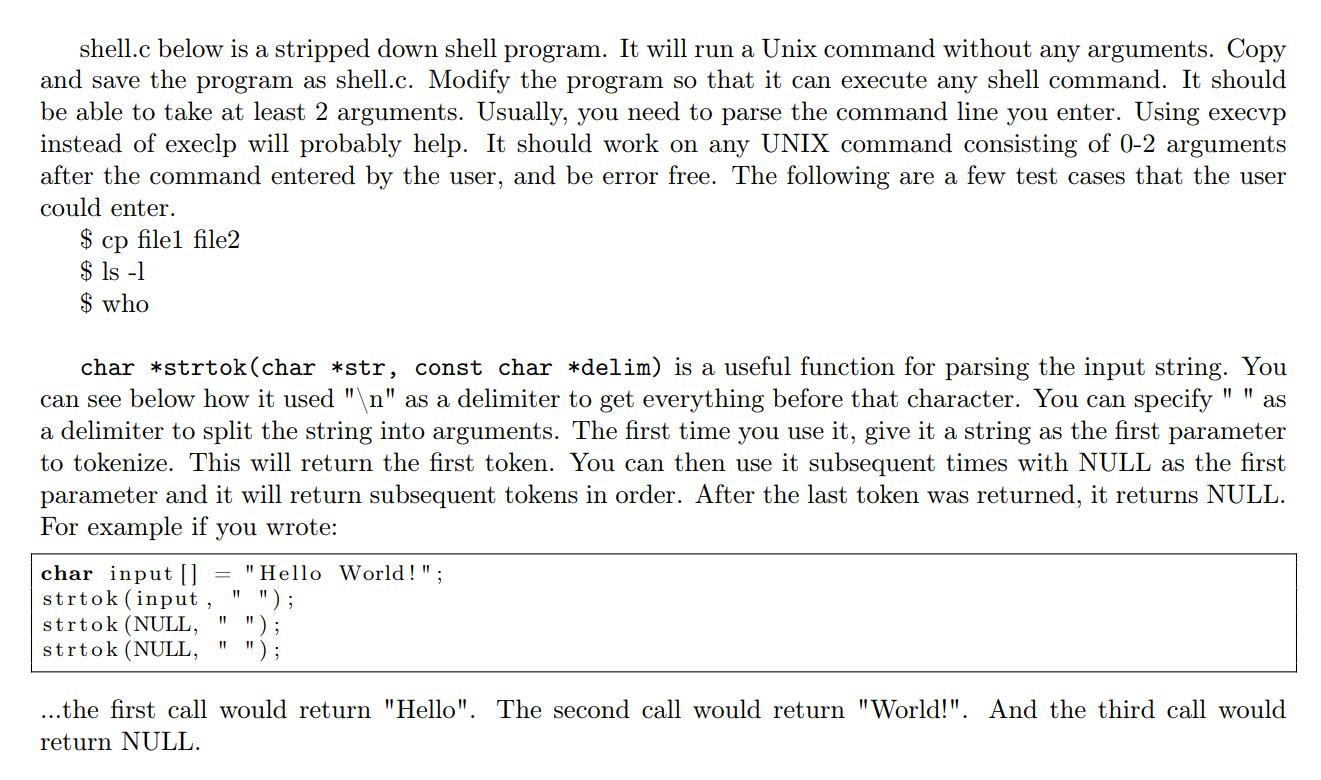
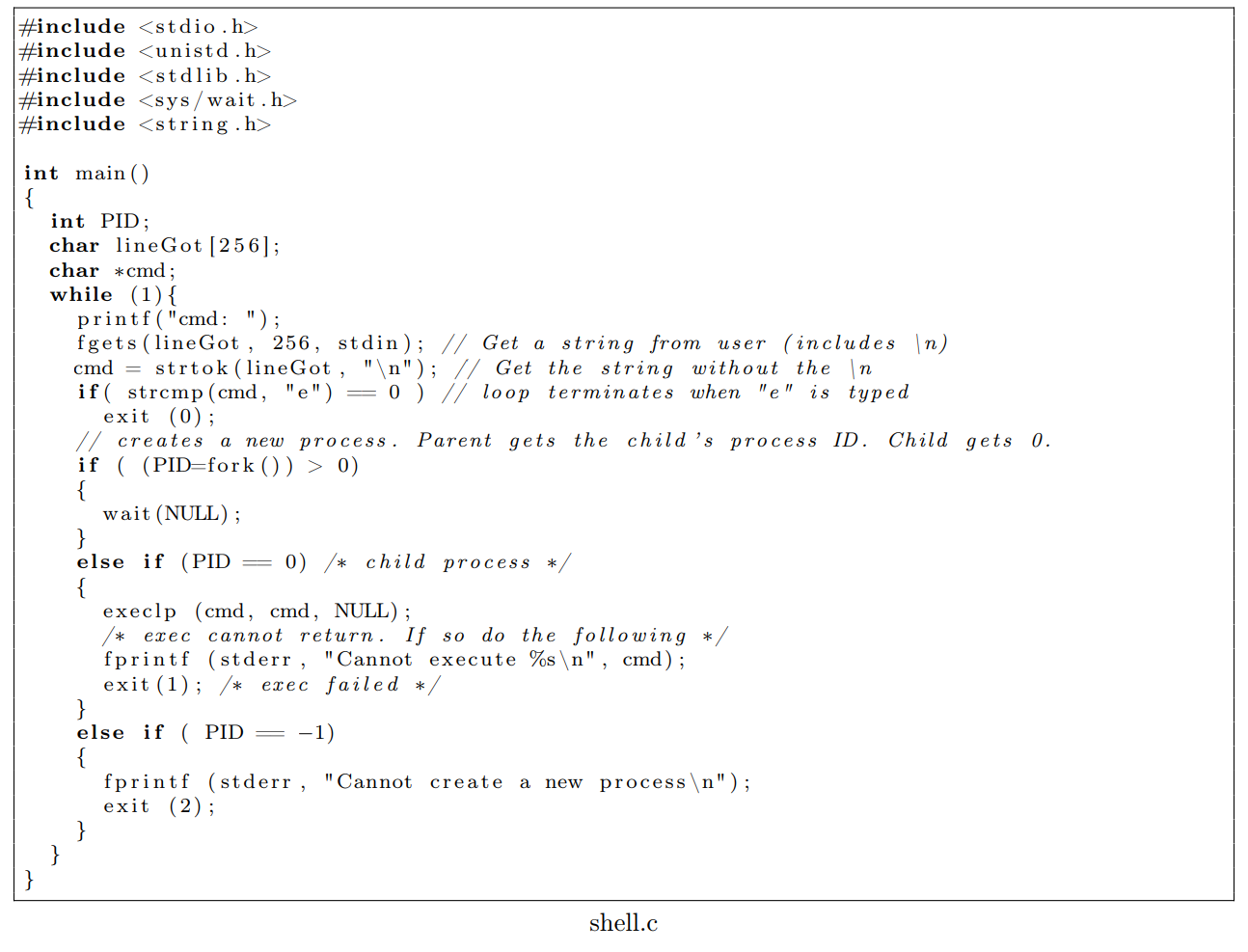
Task 1*(100 points) There are many variations of the exec system call that can be used to execute an executable file (program) Calling exec does not create a new process, it replaces the current process with the new process. If the exec command fails, then it returns -1. But if it succeeds it does not return because execution proceeds at the beginning of the program that was executed. We will consider some useful forms of exec commands. 1. execl: takes the path name of an executable as its first argument, the rest of the arguments are the command line arguments ending with a NULL. execl("/bin/1s" , "Is " , "-a" , "-1 " 2. execv: takes the path name of a binary executable as its first argument, and a NULL terminated array of arguments as its second argument. The first element can be the command or " " " I s '' , ''-a" "-I " , NULL} ; static char* args execv ( " / bin / ls " , args ) , 3. execlp: same as execl except that we don't have to give the full path name of the command. execlp ("ls", "1s", "-a", "-1", NULL) 4. execvp: Same as exexv except that we don't have to give the full path name of the command. " 1s", "-a", "-1", NULL; static char* args execvp("ls ", args)
Step by Step Solution
There are 3 Steps involved in it

Get step-by-step solutions from verified subject matter experts
 Study Help