







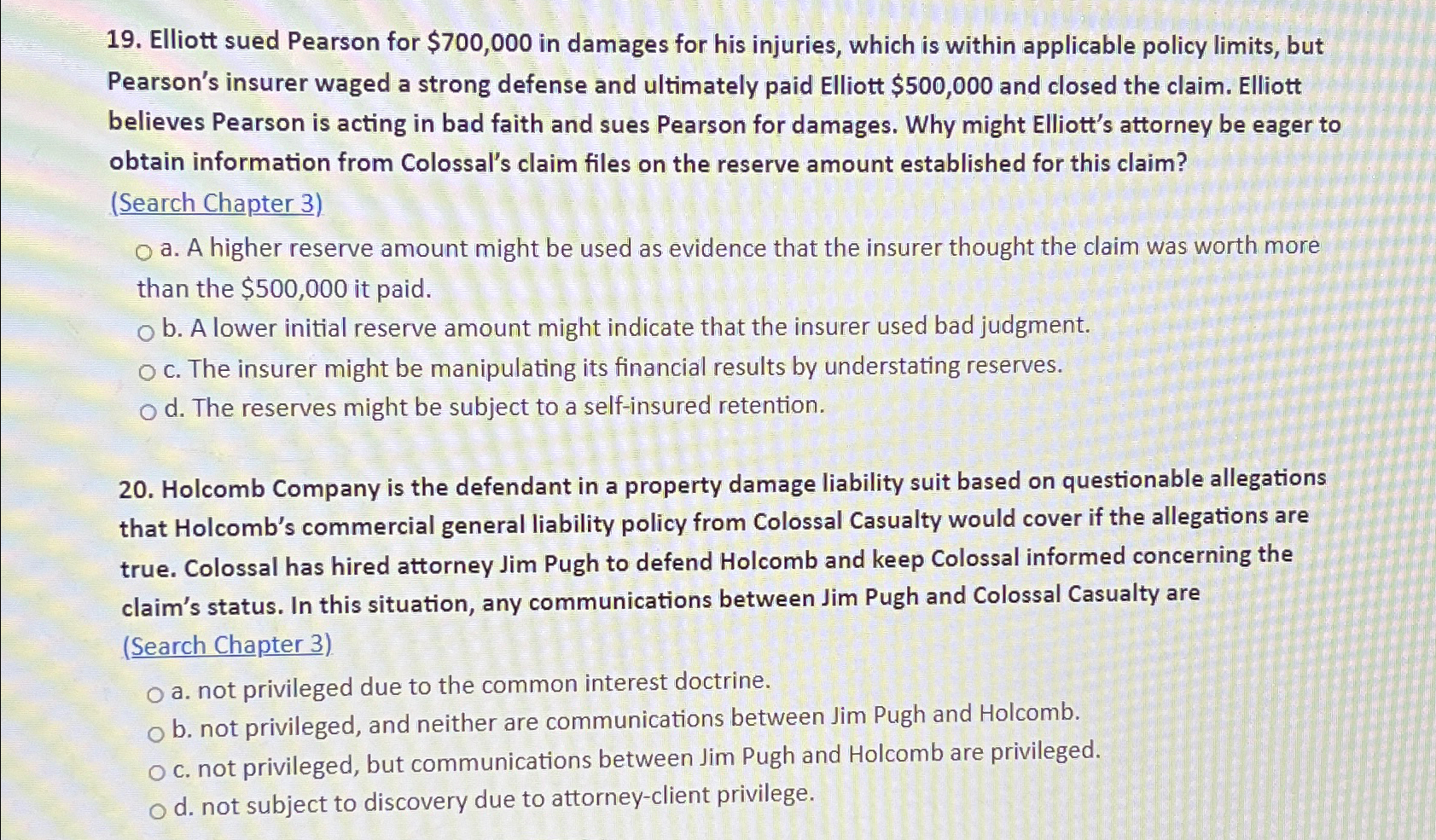
Question: Elliott sued Pearson for $ 7 0 0 , 0 0 0 in damages for his injuries, which is within applicable policy limits , but
Elliott sued Pearson for $ in damages for his injuries, which is within applicable policy limits but Pearson's insurer waged a strong defense and ultimately paid Elliott $ and closed the claim. Elliott believes Pearson is acting in bad faith and sues Pearson for damages. Why might Elliott's attorney be eager to obtain information from Colossal's claim files on the reserve amount established for this claim?
Search Chapter
a A higher reserve amount might be used as evidence that the insurer thought the claim was worth more than the $ it paid.
b A lower initial reserve amount might indicate that the insurer used bad judgment.
c The insurer might be manipulating its financial results by understating reserves.
d The reserves might be subject to a selfinsured retention.
Holcomb Company is the defendant in a property damage liability suit based on questionable allegations that Holcomb's commercial general liability policy from Colossal Casualty would cover if the allegations are true. Colossal has hired attorney Jim Pugh to defend Holcomb and keep Colossal informed concerning the claim's status. In this situation, any communications between Jim Pugh and Colossal Casualty are Search Chapter
a not privileged due to the common interest doctrine.
b not privileged, and neither are communications between Jim Pugh and Holcomb.
c not privileged, but communications between Jim Pugh and Holcomb are privileged.
d not subject to discovery due to attorneyclient privilege.
Step by Step Solution
There are 3 Steps involved in it
1 Expert Approved Answer
Step: 1 Unlock

Question Has Been Solved by an Expert!
Get step-by-step solutions from verified subject matter experts
Step: 2 Unlock
Step: 3 Unlock
 Study Help