







Question: Ellis issues 9.5%, five-year bonds dated January 1, 2017, with a $470,000 par value. The bonds pay interest on June 30 and December 31 and
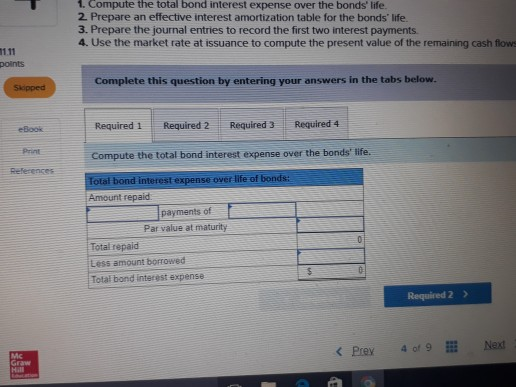
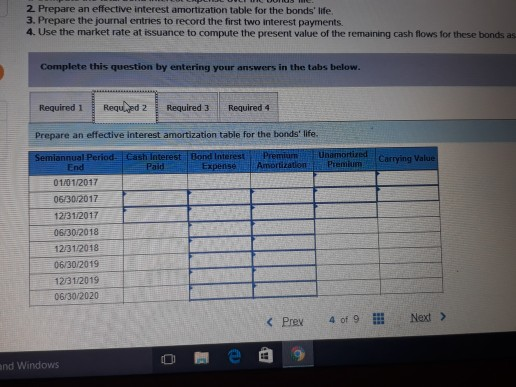
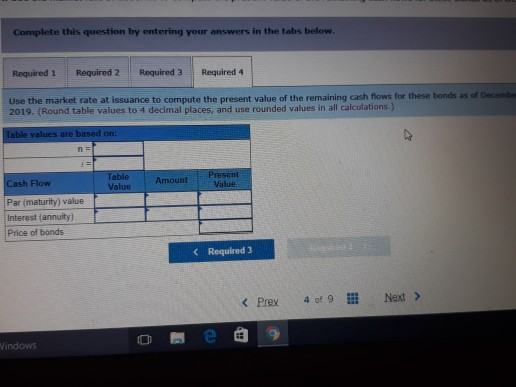
Ellis issues 9.5%, five-year bonds dated January 1, 2017, with a $470,000 par value. The bonds pay interest on June 30 and December 31 and are issued at a price of $498,608. The annual market rate is 8% on the issue date. (Table B.1, Table B.2, Table B.3, and Table B.4) (Use appropriate factor(s) from the tables provided.)
please help
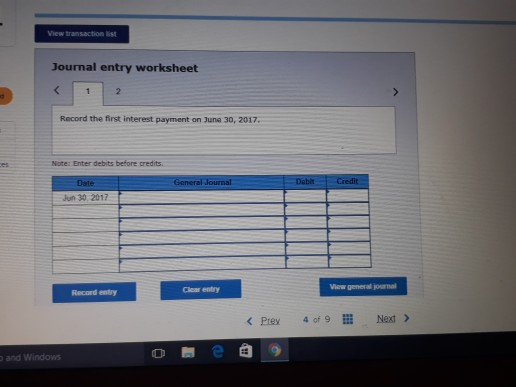
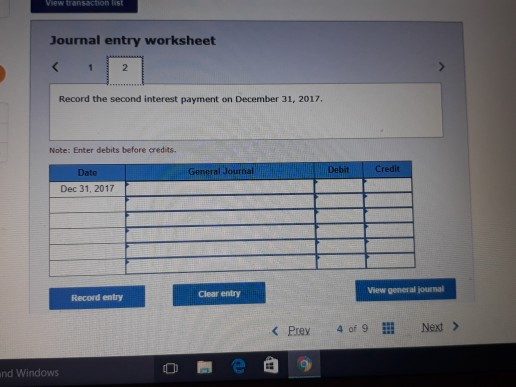
1. Compute the total bond interest expense over the bonds life 2. Prepare an effective interest amortization table for the bonds" life 3. Prepare the journal entries to record the first two interest payments 4. Use the market rate at issuance to compute the present value of the remaining cash flow 11.11 points Complete this question by entering your answers in the tabs below. Stopped Book Required 1 Required 2 Required 3 Required 4 Compute the total bond interest expense over the bonds' life. Deferences Total bond interest expense over life of bonds: Amount repaid. payments of Par value at maturity Total repaid Less amount borrowed Total bond interest expense Required 2 > and Windows View transactions Journal entry worksheet 1 2 Record the first interest payment on June 30, 2017 Note: Enter debits before credits General Journal Debit Credit View gener Clear entry Record entry al and Windows 9 View transaction list Journal entry worksheet and Windows Complete this question by entering your answers in the tabs below. Required 1 Required 2 Required 3 Required 4 Use the market rate at issuance to compute the present value of the remaining cash flows for these bonds as of Decembe 2019. (Round table values to 4 decimal places, and use rounded values in all calculations.) Table values are based on Table Value Table Present Amount Value Cash Flow Par (maturity) value Interest annuity) Price of bonds Vindows
Step by Step Solution
There are 3 Steps involved in it

Get step-by-step solutions from verified subject matter experts
 Study Help