



Question: End 1 Pass End 2 End End Healy, 2017 7. Consider the two versions of the centipede game below. Note that the only thing
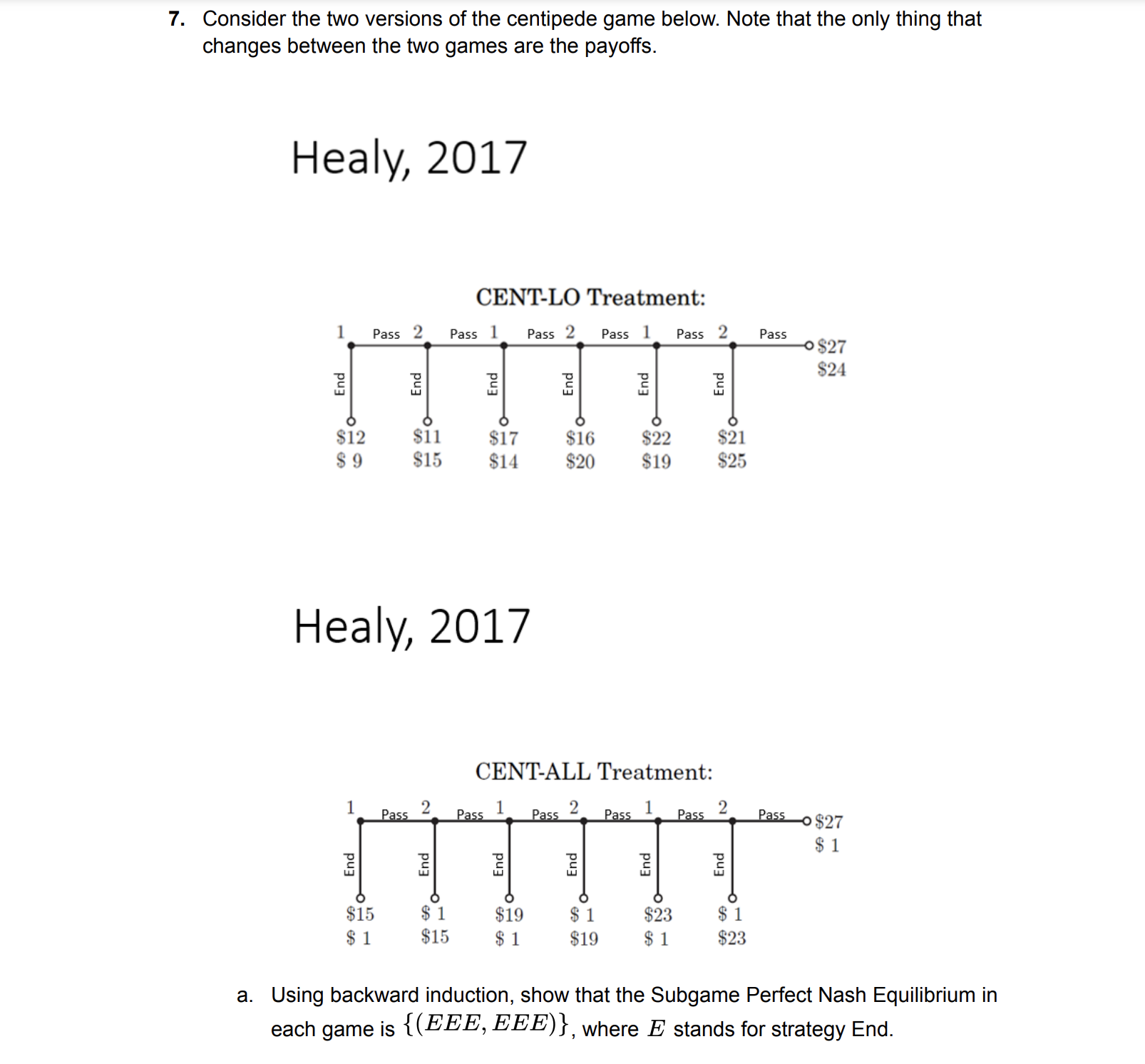
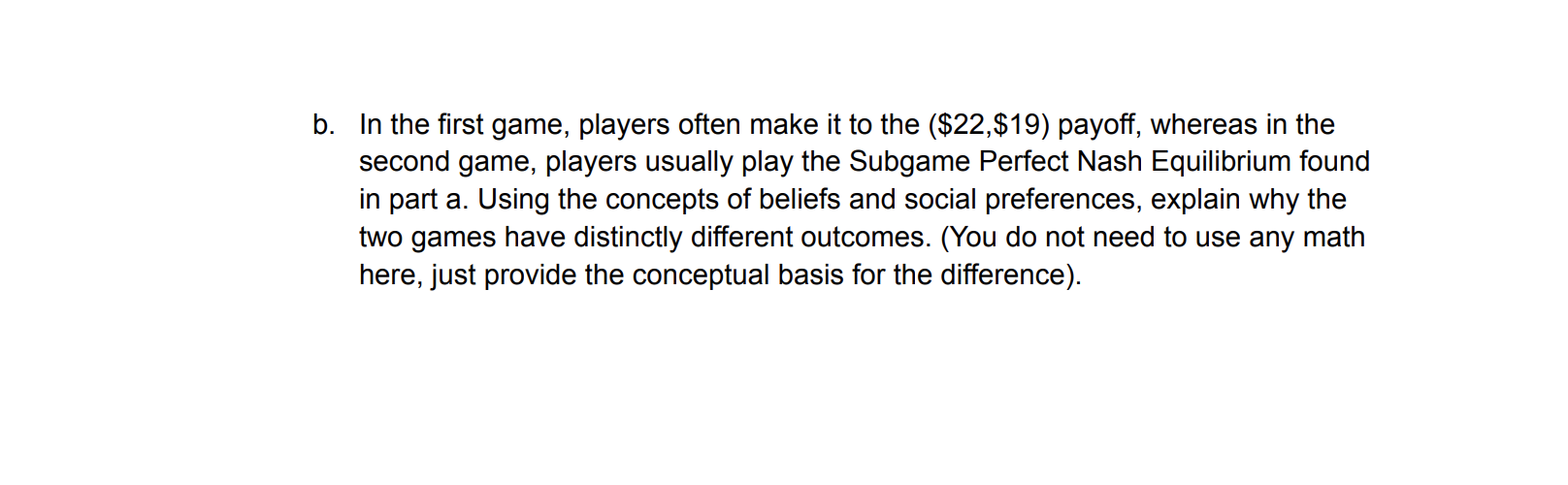
End 1 Pass End 2 End End Healy, 2017 7. Consider the two versions of the centipede game below. Note that the only thing that changes between the two games are the payoffs. CENT-LO Treatment: 1 Pass 2 Pass 1 Pass 2 Pass 1 Pass 2 End End $12 $11 $17 $16 $22 $21 $ 9 $15 $14 $20 $19 $25 Healy, 2017 Pass End CENT-ALL Treatment: End $15 $ 1 $19 $ 1 $23 $ 1 $ 1 $15 $ 1 $19 $ 1 $23 1 2 1 2 Pass Pass Pass Pass $27 $ 1 End End a. Using backward induction, show that the Subgame Perfect Nash Equilibrium in each game is {(EEE, EEE)}, where E stands for strategy End. End End Pass $27 $24 b. In the first game, players often make it to the ($22,$19) payoff, whereas in the second game, players usually play the Subgame Perfect Nash Equilibrium found in part a. Using the concepts of beliefs and social preferences, explain why the two games have distinctly different outcomes. (You do not need to use any math here, just provide the conceptual basis for the difference).
Step by Step Solution
There are 3 Steps involved in it

Get step-by-step solutions from verified subject matter experts