


Question: End of Chapter: Managing Groups and Teams Case Application 2 Remote Week at HubSpot When Rachel Leist was working in marketing at HubSpot-a technology company
End of Chapter: Managing Groups and Teams Case
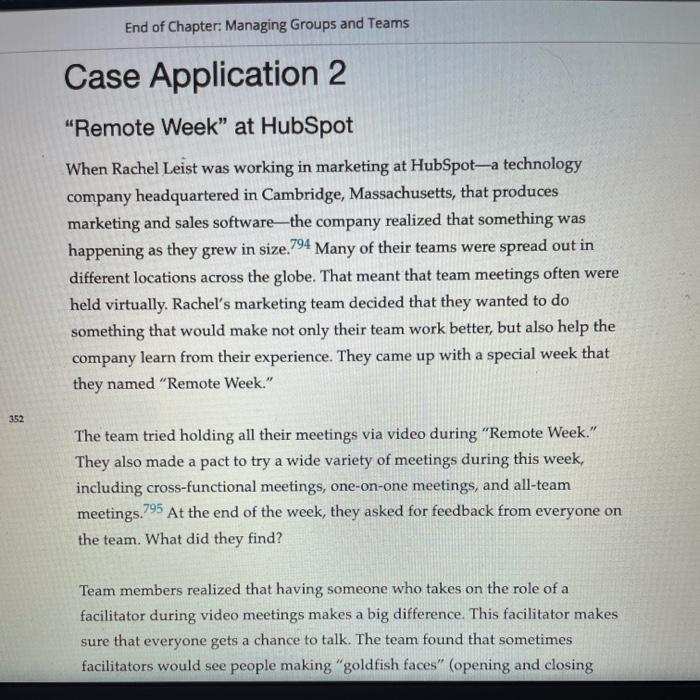
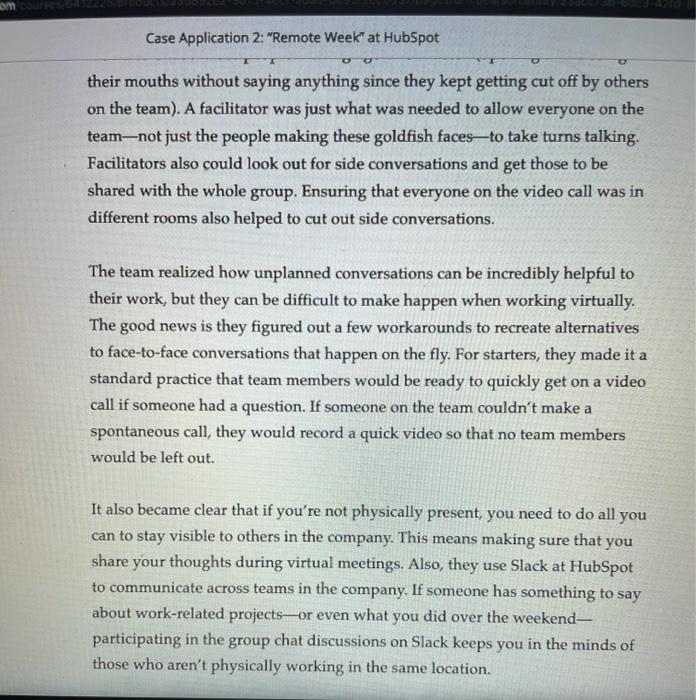
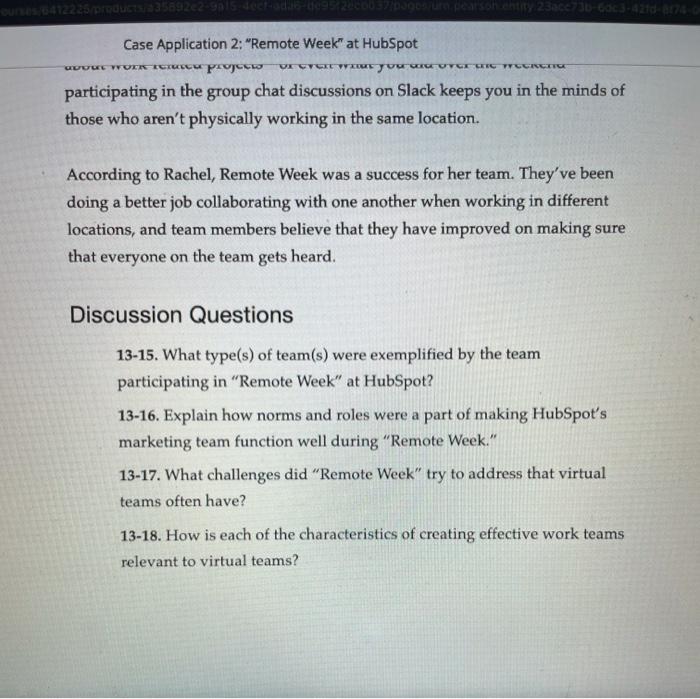
End of Chapter: Managing Groups and Teams Case Application 2 "Remote Week" at HubSpot When Rachel Leist was working in marketing at HubSpot-a technology company headquartered in Cambridge, Massachusetts, that produces marketing and sales software-the company realized that something was happening as they grew in size.794 Many of their teams were spread out in different locations across the globe. That meant that team meetings often were held virtually. Rachel's marketing team decided that they wanted to do something that would make not only their team work better, but also help the company learn from their experience. They came up with a special week that they named "Remote Week." 352 The team tried holding all their meetings via video during "Remote Week." They also made a pact to try a wide variety of meetings during this week, including cross-functional meetings, one-on-one meetings, and all-team meetings.795 At the end of the week, they asked for feedback from everyone on the team. What did they find? Team members realized that having someone who takes on the role of a facilitator during video meetings makes a big difference. This facilitator makes sure that everyone gets a chance to talk. The team found that sometimes facilitators would see people making "goldfish faces" (opening and closing om Case Application 2: "Remote Week" at HubSpot their mouths without saying anything since they kept getting cut off by others on the team). A facilitator was just what was needed to allow everyone on the team-not just the people making these goldfish faces--to take turns talking. Facilitators also could look out for side conversations and get those to be shared with the whole group. Ensuring that everyone on the video call was in different rooms also helped to cut out side conversations. The team realized how unplanned conversations can be incredibly helpful to their work, but they can be difficult to make happen when working virtually. The good news is they figured out a few workarounds to recreate alternatives to face-to-face conversations that happen on the fly. For starters, they made it a standard practice that team members would be ready to quickly get on a video call if someone had a question. If someone on the team couldn't make a spontaneous call, they would record a quick video so that no team members would be left out. It also became clear that if you're not physically present, you need to do all you can to stay visible to others in the company. This means making sure that you share your thoughts during virtual meetings. Also, they use Slack at HubSpot to communicate across teams in the company. If someone has something to say about work-related projects-or even what you did over the weekend- participating in the group chat discussions on Slack keeps you in the minds of those who aren't physically working in the same location
Step by Step Solution

There are 3 Steps involved in it

1 Expert Approved Answer
Step: 1 Unlock blur-text-image

Question Has Been Solved by an Expert!

Get step-by-step solutions from verified subject matter experts

Step: 2 Unlock
Step: 3 Unlock

Students Have Also Explored These Related General Management Questions!