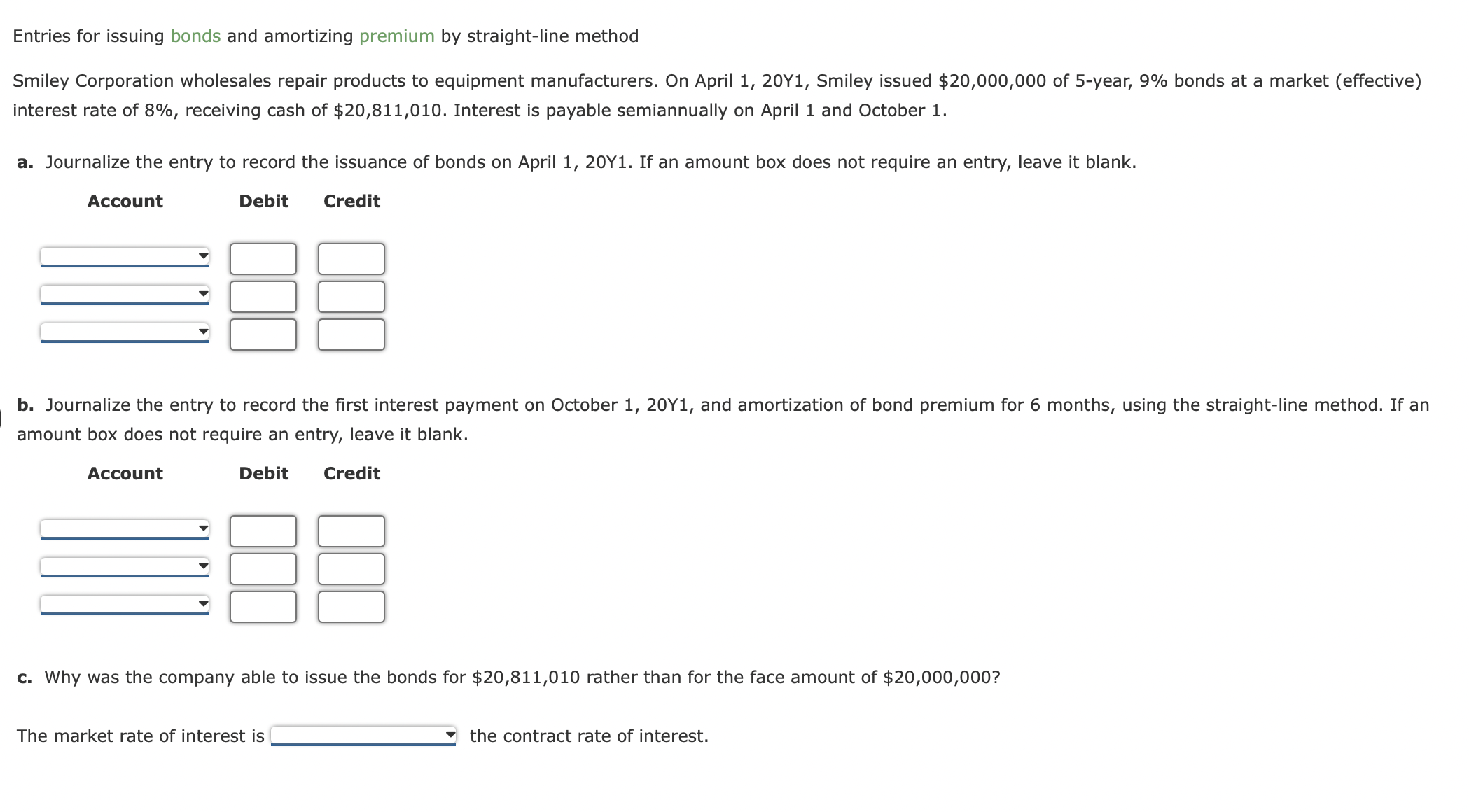
Question: Entries for issuing bonds and amortizing premium by straight-line method Smiley Corporation wholesales repair products to equipment manufacturers. On April 1, 20Y1, Smiley issued $20,000,000
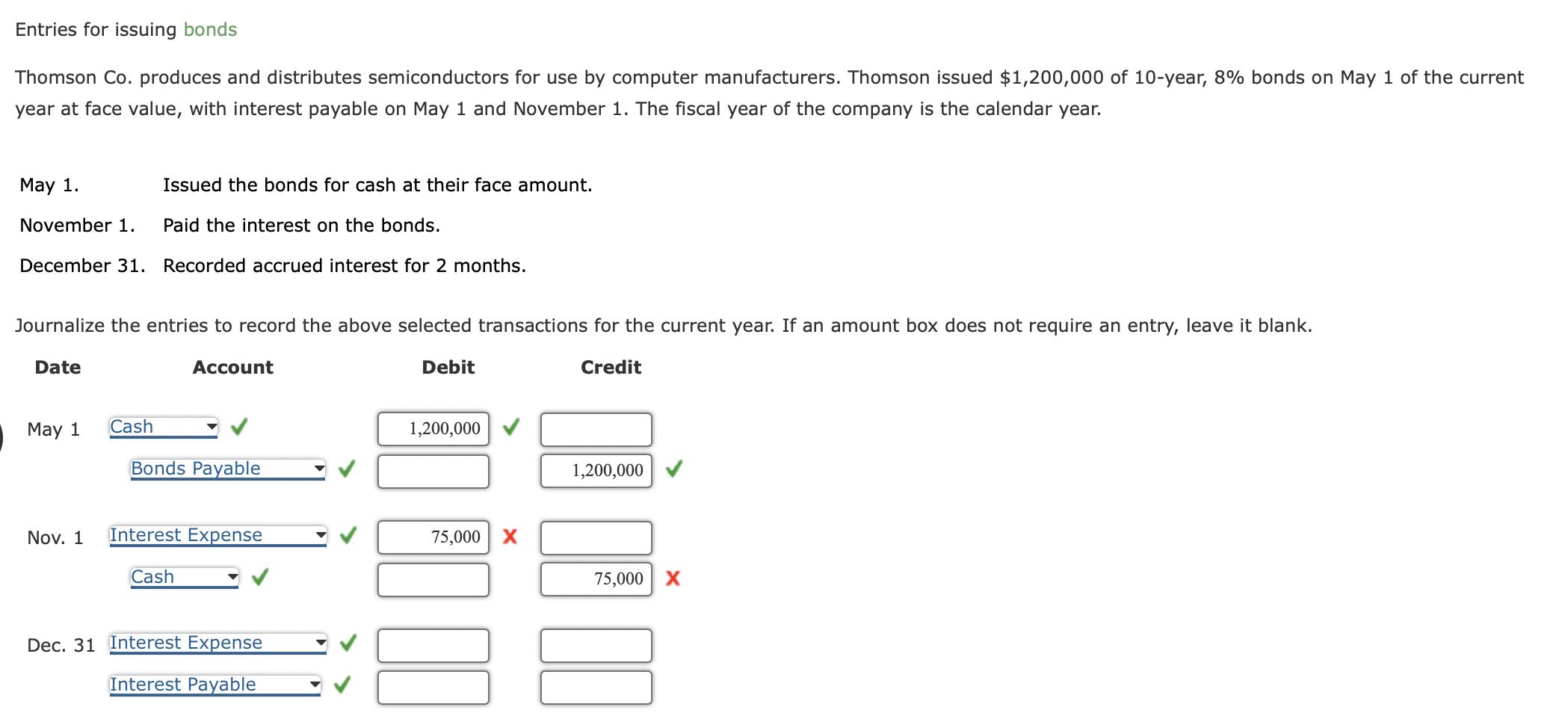
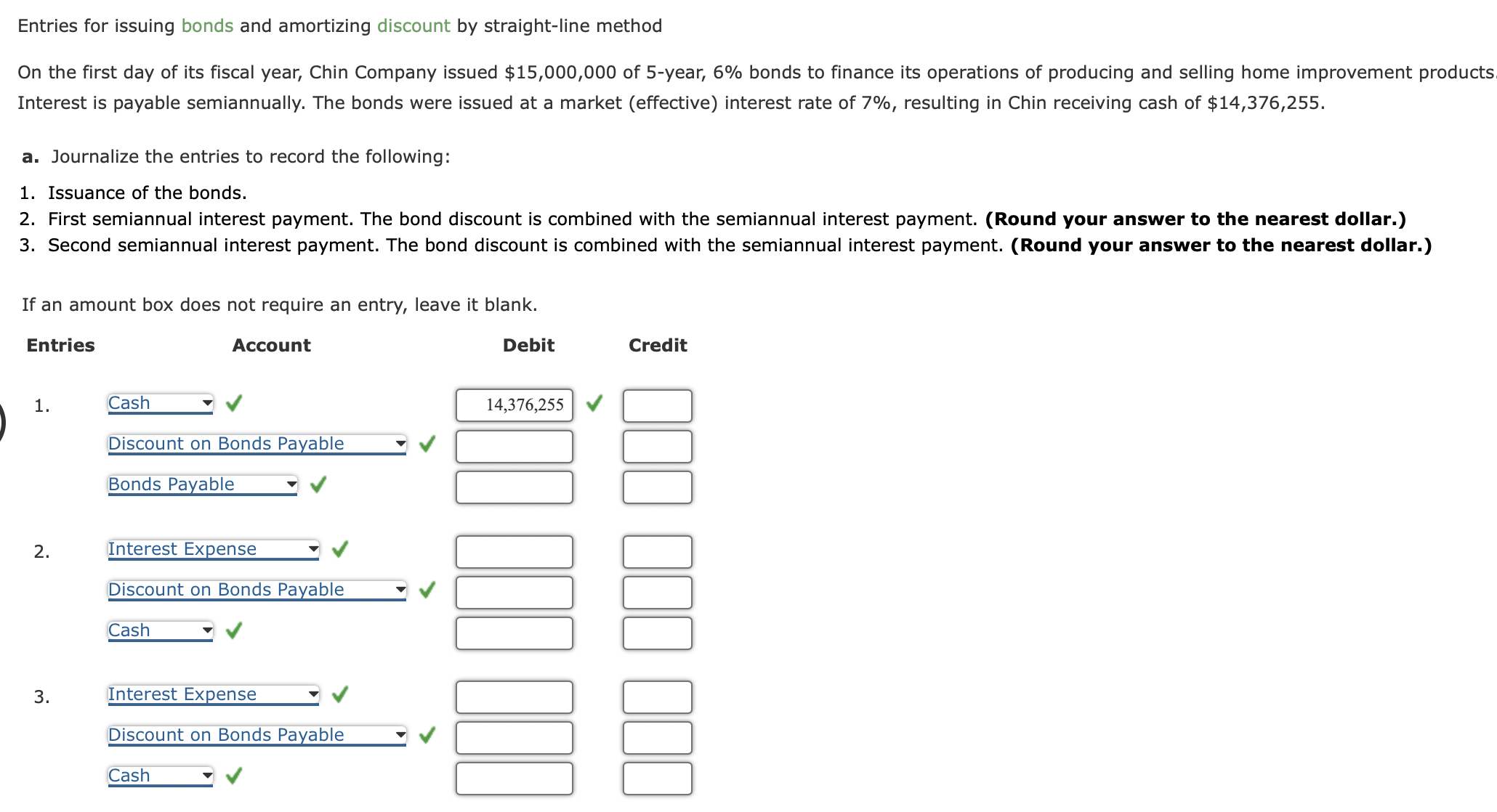
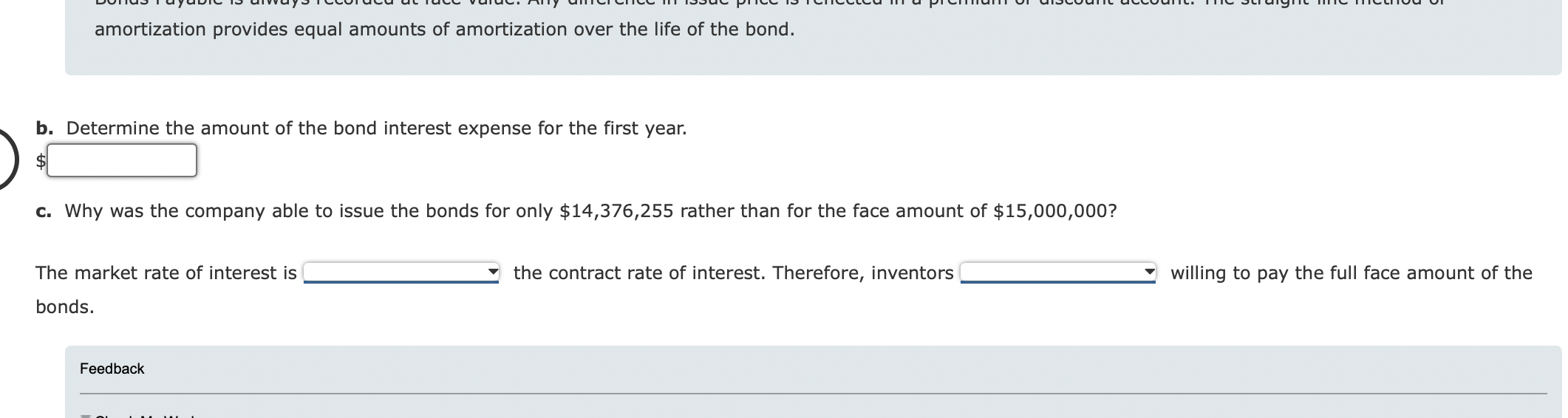
Entries for issuing bonds and amortizing premium by straight-line method Smiley Corporation wholesales repair products to equipment manufacturers. On April 1, 20Y1, Smiley issued $20,000,000 of 5year, 9% bonds at a market (effective) interest rate of 8%, receiving cash of $20,811,010. Interest is payable semiannually on April 1 and October 1. a. Journalize the entry to record the issuance of bonds on April 1, 20Y1. If an amount box does not require an entry, leave it blank. Account Debit Credit 000 mm b. Journalize the entry to record the first interest payment on October 1, 20Y1, and amortization of bond premium for 6 months, using the straightline method. If an amount box does not require an entry, leave it blank. Account Debit Credit 000 mm c. Why was the company able to issue the bonds for $20,811,010 rather than for the face amount of $20,000,000? The market rate of interest is V the contract rate of interest. Entries for issuing bonds Thomson Co. produces and distributes semiconductors for use by computer manufacturers. Thomson issued $1,200,000 of 10-year, 8% bonds on May 1 of the current year at face value, with interest payable on May 1 and November 1. The fiscal year of the company is the calendar year. May 1. Issued the bonds for cash at their face amount. November 1. Paid the interest on the bonds. December 31. Recorded accrued interest for 2 months. Journalize the entries to record the above selected transactions for the current year. If an amount box does not require an entry, leave it blank. Date Account Debit Credit May 1 Cash 1,200,000 Bonds Payable V 1,200,000 Nov. 1 Interest Expense V 75,000 X Cash 75,000 X Dec. 31 Interest Expense Interest PayableEntries for issuing bonds and amortizing discount by straight-line method On the first day of its fiscal year, Chin Company issued $15,000,000 of 5-year, 6% bonds to finance its operations of producing and selling home improvement products. Interest is payable semiannually. The bonds were issued at a market (effective) interest rate of 7%, resulting in Chin receiving cash of $14,376,255. a. Journalize the entries to record the following: 1. Issuance of the bonds. 2. First semiannual interest payment. The bond discount is combined with the semiannual interest payment. (Round your answer to the nearest dollar.) 3. Second semiannual interest payment. The bond discount is combined with the semiannual interest payment. (Round your answer to the nearest dollar.) If an amount box does not require an entry, leave it blank. Entries Account Debit Credit ' 1. Cash V J 14,376,255 J Discount on Bonds Payable ' J Bonds Payable v J 2, Interest Expense v J Discount on Bonds Payable v J Cash v J 3, Interest Expense v J Discount on Bonds Payable ' J Cash v J NW NW WW amortization provides equal amounts of amortization over the life of the bond. b. Determine the amount of the bond interest expense for the first year. c. Why was the company able to issue the bonds for only $14,376,255 rather than for the face amount of $15,000,000? The market rate of interest is the contract rate of interest. Therefore, inventors willing to pay the full face amount of the bonds. Feedback
Step by Step Solution
There are 3 Steps involved in it
1 Expert Approved Answer
Step: 1 Unlock
Question Has Been Solved by an Expert!
Get step-by-step solutions from verified subject matter experts
Step: 2 Unlock
Step: 3 Unlock
Students Have Also Explored These Related Accounting Questions!