







Question: esc Based on the information in Table 4-2, the average collection period is Table 4-2 Assets Cash and marketable securities Accounts receivable Inventories Prepaid expenses
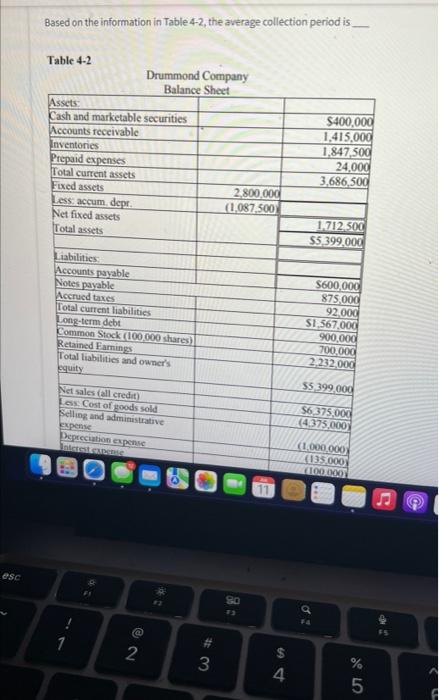
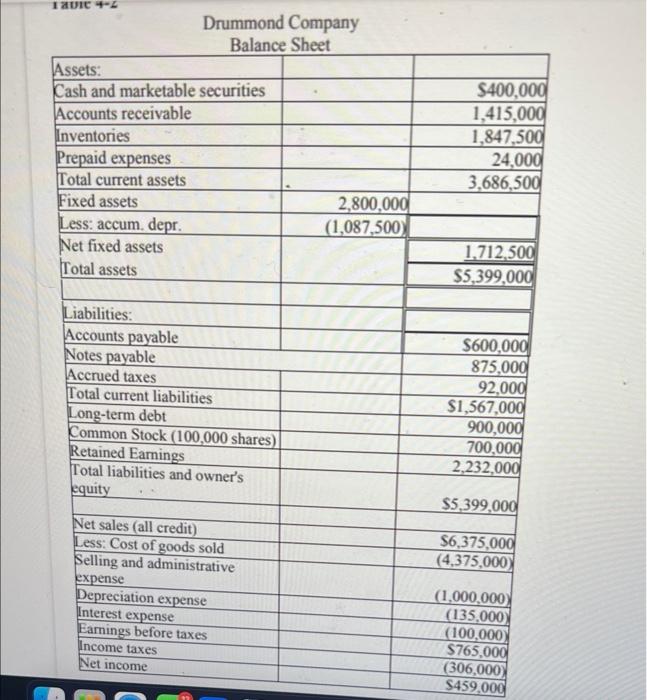
esc Based on the information in Table 4-2, the average collection period is Table 4-2 Assets Cash and marketable securities Accounts receivable Inventories Prepaid expenses Total current assets Fixed assets Less: accum, depr Net fixed assets Total assets Liabilities Accounts payable Notes payable Accrued taxes Total current liabilities Long-term debt Common Stock (100,000 shares) Drummond Company Balance Sheet Retained Earnings Total liabilities and owner's equity Net sales (all credit) Less Cost of goods sold Selling and administrative expense Depreciation expense Interest Capense 1 FI @2 #3 2,800,000 (1,087,500) 80 #3 15 $ 4 $400,000 1,415,000 1,847,500 24,000 3,686,500 1.712.500 $5.399.000 $600,000 875,000 92,000 $1,567,000 900,000 700,000 2,232,000 $5.399,000 $6,375,000 (4,375,000) (1.000.000) (135.000) (100.000 a % 5 A Tavie 4-2 Assets: Cash and marketable securities Accounts receivable Inventories Prepaid expenses Total current assets Fixed assets Drummond Company Balance Sheet Less: accum. depr. Net fixed assets Total assets Liabilities: Accounts payable Notes payable Accrued taxes Total current liabilities Long-term debt Common Stock (100,000 shares) Retained Earnings Total liabilities and owner's equity Net sales (all credit) Less: Cost of goods sold Selling and administrative expense Depreciation expense Interest expense Earnings before taxes Income taxes Net income 2,800,000 (1,087,500) $400,000 1,415,000 1,847,500 24,000 3,686,500 1,712,500 $5,399,000 $600,000 875,000 92,000 $1,567,000 900,000 700,000 2,232,000 $5,399,000 $6,375,000 (4,375,000) (1,000,000) (135,000) (100,000) $765,000 (306,000) $459,000
Step by Step Solution
There are 3 Steps involved in it

Get step-by-step solutions from verified subject matter experts
 Study Help