







Question: Essay Question - Use the IRAC system to answer this question - Identify the legal issue, the appropriate legal principle/rule/concept/law, apply the law, and reach
Essay Question - Use the IRAC system to answer this question - Identify the legal issue, the appropriate legal principle/rule/concept/law, apply the law, and reach logical conclusion(s). Remember the "because check" in your analysis section (this is explained in the IRAC Handout).
ABC Sign Company is in the business of designing and installing large billboard signs. Sandy is a nurse at the local hospital in California, which is a comparative negligence state. One evening, Sandy had to work a few hours overtime; and thus was running late to her daughter's school recital. After she "clocked" out from her shift, she ran to her car, jumped in, and took off as fast as she could to her daughter's school hoping she would not be late. The quickest way to the school is on a curvy highway where the posted speed limit is 50 MPH. Since she was late, and there was not much traffic on the road, she was speeding - driving almost 80 MPH. As she came around a corner on the highway, she noticed that one of ABC Sign Company's signs had fallen into the road. She braked hard, and tried to swerve to go around the fallen sign - but no luck - her vehicle hit the sign, and flipped over. She survived the accident, but broke both her legs, and severely hurt her back. She may never work as a nurse again. ABC Sign Company designed and installed the sign about 4 years ago. Sandy sues ABC Sign Company for negligence, specifically alleging that the ABC Sign Company failed to inspect it sign. If the ABC Sign Company had inspected the sign, they would have seen that several of the supporting bolts had rusted through.
Does Sandy have a cause of action for negligence against ABC Sign Company? Use the IRAC System to answer this question.
NOTE: If there are facts not mentioned above that can be reasonably inferred from the facts stated, you may add such facts if such helps your analysis.
--------------------------
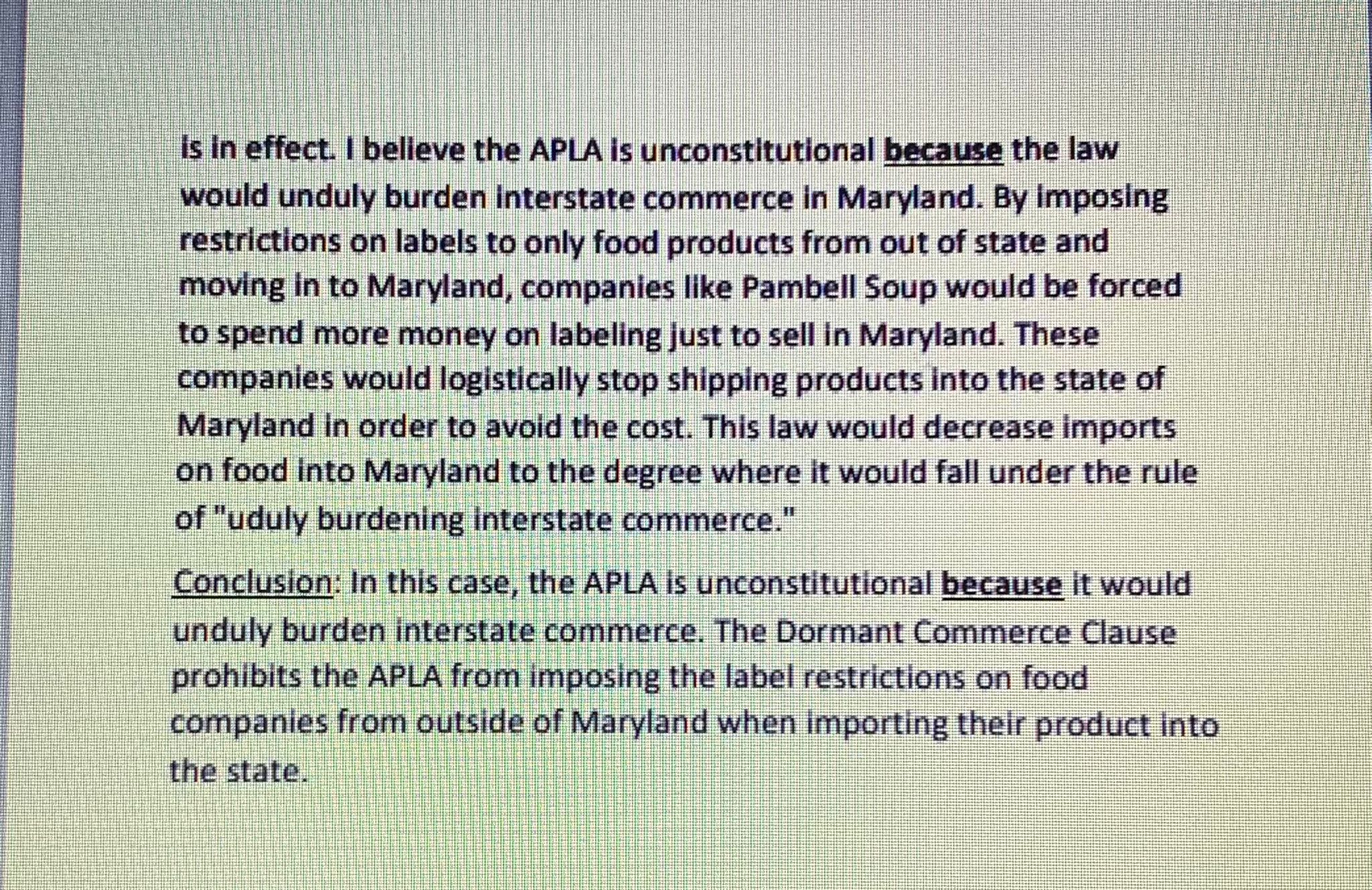
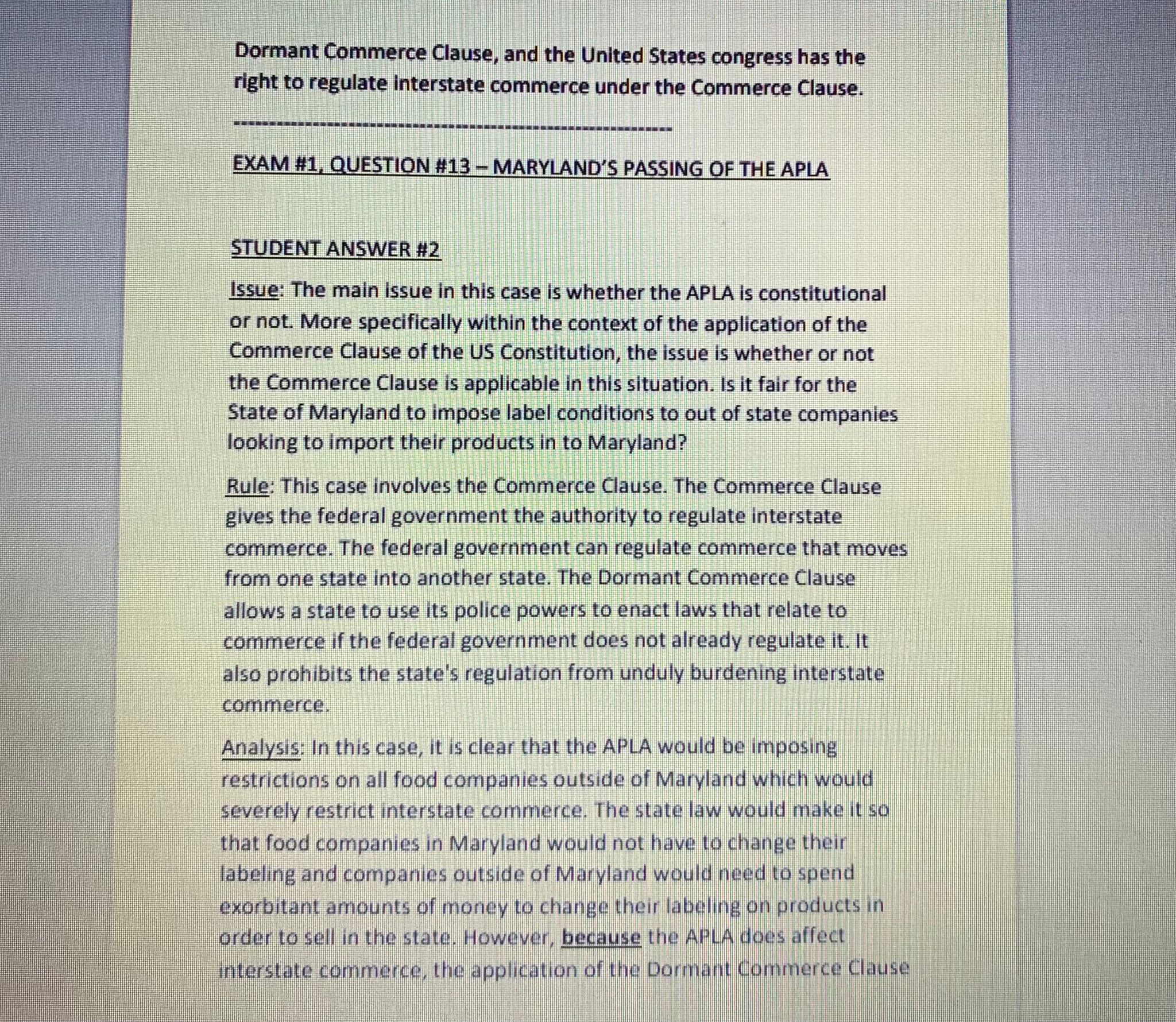
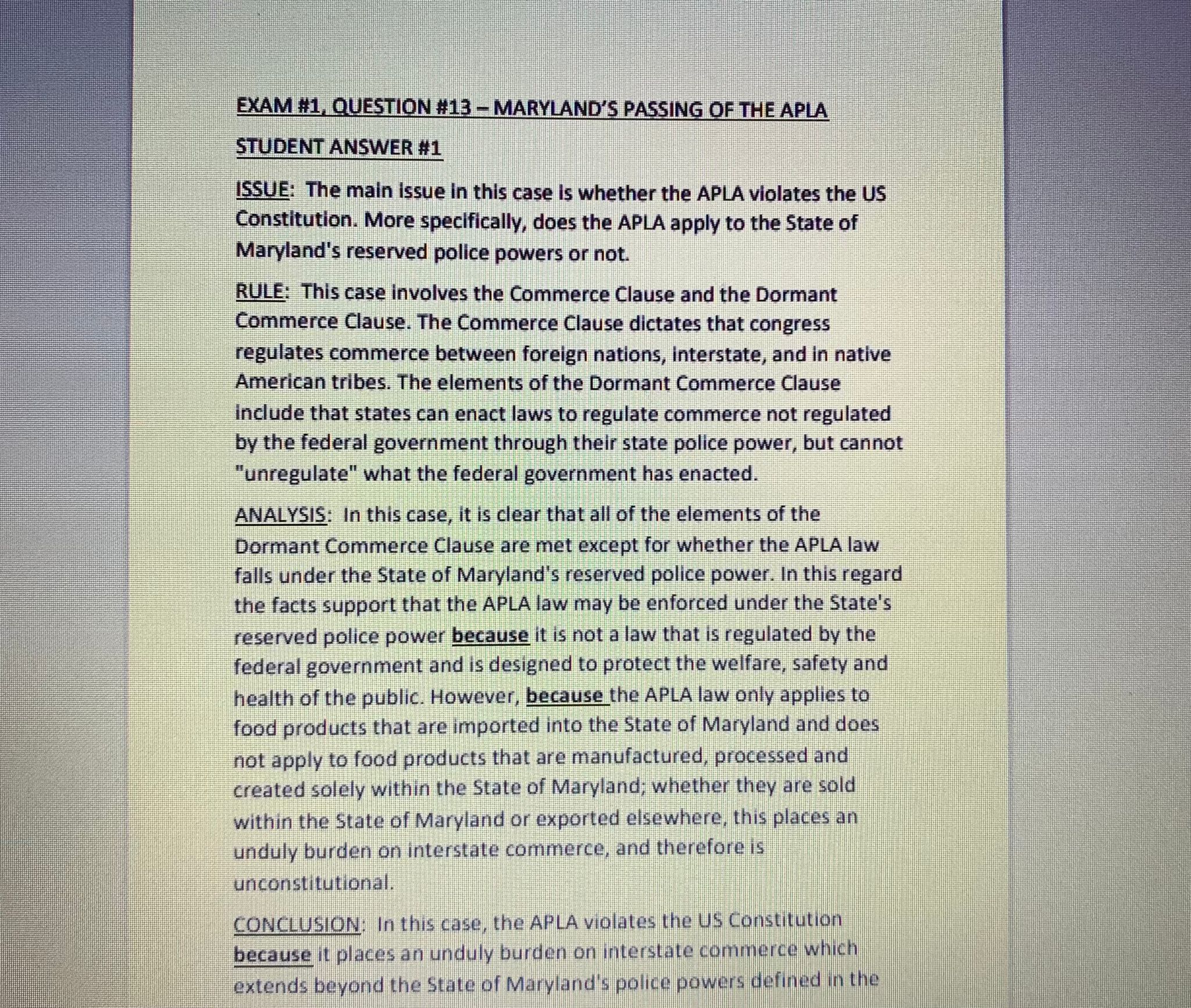
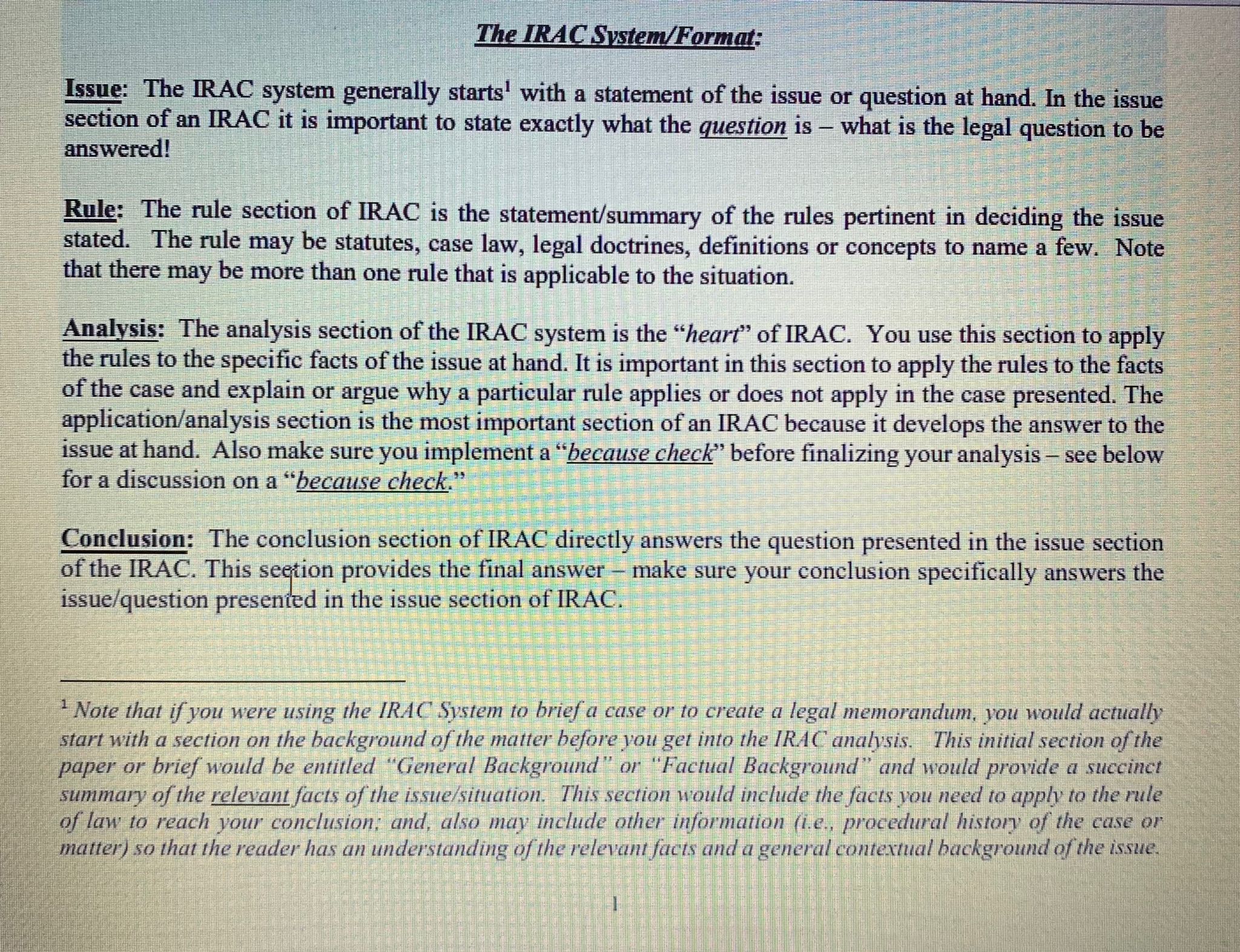
is in effect. I believe the APLA is unconstitutional because the law would unduly burden interstate commerce in Maryland. By imposing restrictions on labels to only food products from out of state and moving in to Maryland, companies like Pambell Soup would be forced to spend more money on labeling just to sell in Maryland. These companies would logistically stop shipping products into the state of Maryland in order to avoid the cost. This law would decrease imports on food into Maryland to the degree where it would fall under the rule of "uduly burdening interstate commerce." Conclusion: In this case, the APLA is unconstitutional because it would unduly burden interstate commerce. The Dormant Commerce Clause prohibits the APLA from imposing the label restrictions on food companies from outside of Maryland when importing their product into the state.Dormant Commerce Clause, and the United States congress has the right to regulate interstate commerce under the Commerce Clause. EXAM #1, QUESTION #13 - MARYLAND'S PASSING OF THE APLA STUDENT ANSWER #2 Issue: The main issue in this case is whether the APLA is constitutional or not. More specifically within the context of the application of the Commerce Clause of the US Constitution, the issue is whether or not the Commerce Clause is applicable in this situation. Is it fair for the State of Maryland to impose label conditions to out of state companies looking to import their products in to Maryland? Rule: This case involves the Commerce Clause. The Commerce Clause gives the federal government the authority to regulate interstate commerce. The federal government can regulate commerce that moves from one state into another state. The Dormant Commerce Clause allows a state to use its police powers to enact laws that relate to commerce if the federal government does not already regulate it. It also prohibits the state's regulation from unduly burdening interstate commerce. Analysis: In this case, it is clear that the APLA would be imposing restrictions on all food companies outside of Maryland which would severely restrict interstate commerce. The state law would make it so that food companies in Maryland would not have to change their labeling and companies outside of Maryland would need to spend exorbitant amounts of money to change their labeling on products in order to sell in the state. However, because the APLA does affect interstate commerce, the application of the Dormant Commerce ClauseEXAM #1, QUESTION #13 - MARYLAND'S PASSING OF THE APLA STUDENT ANSWER #1 ISSUE: The main issue in this case is whether the APLA violates the US Constitution. More specifically, does the APLA apply to the State of Maryland's reserved police powers or not. RULE: This case involves the Commerce Clause and the Dormant Commerce Clause. The Commerce Clause dictates that congress regulates commerce between foreign nations, interstate, and in native American tribes. The elements of the Dormant Commerce Clause Include that states can enact laws to regulate commerce not regulated by the federal government through their state police power, but cannot "unregulate" what the federal government has enacted. ANALYSIS: In this case, it is clear that all of the elements of the Dormant Commerce Clause are met except for whether the APLA law falls under the State of Maryland's reserved police power. In this regard the facts support that the APLA law may be enforced under the State's reserved police power because it is not a law that is regulated by the federal government and is designed to protect the welfare, safety and health of the public. However, because the APLA law only applies to food products that are imported into the State of Maryland and does not apply to food products that are manufactured, processed and created solely within the State of Maryland; whether they are sold within the State of Maryland or exported elsewhere, this places an unduly burden on interstate commerce, and therefore is unconstitutional. CONCLUSION: In this case, the APLA violates the US Constitution because it places an unduly burden on interstate commerce which extends beyond the State of Maryland's police powers defined in theThe IRAC System/Format: Issue: The IRAC system generally starts' with a statement of the issue or question at hand. In the issue section of an IRAC it is important to state exactly what the question is - what is the legal question to be answered! Rule: The rule section of IRAC is the statement/summary of the rules pertinent in deciding the issue stated. The rule may be statutes, case law, legal doctrines, definitions or concepts to name a few. Note that there may be more than one rule that is applicable to the situation. Analysis: The analysis section of the IRAC system is the "heart" of IRAC. You use this section to apply the rules to the specific facts of the issue at hand. It is important in this section to apply the rules to the facts of the case and explain or argue why a particular rule applies or does not apply in the case presented. The application/analysis section is the most important section of an IRAC because it develops the answer to the issue at hand. Also make sure you implement a "because check" before finalizing your analysis - see below for a discussion on a "because check." Conclusion: The conclusion section of IRAC directly answers the question presented in the issue section of the IRAC. This seetion provides the final answer - make sure your conclusion specifically answers the issue/question presented in the issue section of IRAC. Note that if you were using the IRAC System to brief a case or to create a legal memorandum, you would actually start with a section on the background of the matter before you get into the IRAC analysis. This initial section of the paper or brief would be entitled "General Background " or "Factual Background " and would provide a succinct summary of the relevant facts of the issue/situation. This section would include the facts you need to apply to the rule of law to reach your conclusion: and, also may include other information (i.e., procedural history of the case or matter) so that the reader has an understanding of the relevant facts and a general contextual background of the issue
Step by Step Solution
There are 3 Steps involved in it

Get step-by-step solutions from verified subject matter experts
 Study Help