





Question: Ethics can be a particular problem with financial reports. Accepted accounting principles leave ample room for arriving at different results in the short run. Highly
Ethics can be a particular problem with financial
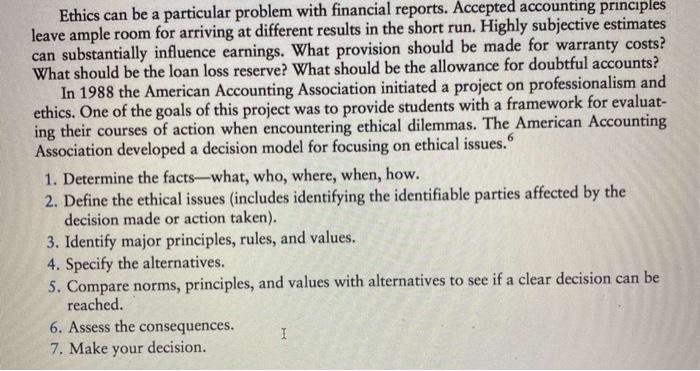
Ethics can be a particular problem with financial reports. Accepted accounting principles leave ample room for arriving at different results in the short run. Highly subjective estimates can substantially influence earnings. What provision should be made for warranty costs? What should be the loan loss reserve? What should be the allowance for doubtful accounts? In 1988 the American Accounting Association initiated a project on professionalism and ethics. One of the goals of this project was to provide students with a framework for evaluat- ing their courses of action when encountering ethical dilemmas. The American Accounting Association developed a decision model for focusing on ethical issues. 1. Determine the facts-what, who, where, when, how. 2. Define the ethical issues (includes identifying the identifiable parties affected by the decision made or action taken). 3. Identify major principles, rules, and values. 4. Specify the alternatives. 5. Compare norms, principles, and values with alternatives to see if a clear decision can be reached. 6. Assess the consequences. I 7. Make your decision. Ethics can be a particular problem with financial reports. Accepted accounting principles leave ample room for arriving at different results in the short run. Highly subjective estimates can substantially influence earnings. What provision should be made for warranty costs? What should be the loan loss reserve? What should be the allowance for doubtful accounts? In 1988 the American Accounting Association initiated a project on professionalism and ethics. One of the goals of this project was to provide students with a framework for evaluat- ing their courses of action when encountering ethical dilemmas. The American Accounting Association developed a decision model for focusing on ethical issues. 1. Determine the facts-what, who, where, when, how. 2. Define the ethical issues (includes identifying the identifiable parties affected by the decision made or action taken). 3. Identify major principles, rules, and values. 4. Specify the alternatives. 5. Compare norms, principles, and values with alternatives to see if a clear decision can be reached. 6. Assess the consequences. I 7. Make your decision

Step by Step Solution

There are 3 Steps involved in it

1 Expert Approved Answer
Step: 1 Unlock blur-text-image

Question Has Been Solved by an Expert!

Get step-by-step solutions from verified subject matter experts

Step: 2 Unlock
Step: 3 Unlock

Students Have Also Explored These Related General Management Questions!