







Question: Evaluating health care coverage Blake Wright was a self-employed window washer earning approximately $700 per week. One day, while cleaning windows on the eighth floor
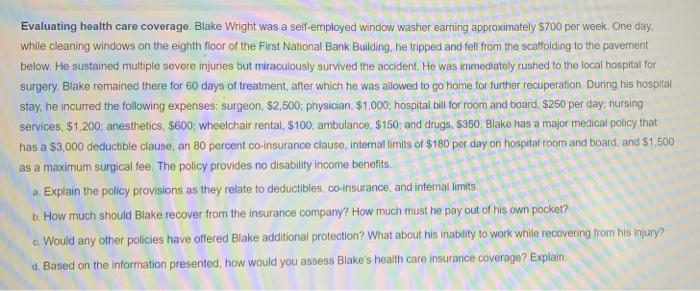

Evaluating health care coverage Blake Wright was a self-employed window washer earning approximately $700 per week. One day, while cleaning windows on the eighth floor of the First National Bank Building, he tripped and fell from the scaffolding to the pavement below. He sustained multiple severe injuries but miraculously survived the accident. He was immediately rushed to the local hospital for surgery. Blake remained there for 60 days of treatment, after which he was allowed to go home for further recuperation. During his hospital stay, he incurred the following expenses: surgeon. $2,500; physician $1,000, hospital bill for room and board, $250 per day: nursing services, $1.200 anesthetics. $600 wheelchair rental, $100, ambulance, $150, and drugs, $350. Blake has a major medical policy that has a $3,000 deductible clause, an 80 percent co-insurance clause, internal limits of $180 por day on hospital room and board, and S1,500 as a maximum surgical fee. The policy provides no disability income benefits. a. Explain the policy provisions as they relate to deductibles, co-insurance, and internal limits b. How much should Blake recover from the insurance company? How much must he pay out of his own pocket? c. Would any other policies have offered Blake additional protection? What about his inability to work while recovering from his injury? d. Based on the information presented, how would you assess Blake's health care insurance coverage? Explain Pros and cons of long-term care insurance Discuss the pros and cons of long-term-care insurance. Does it make sense for anyone in your family right now? Why or why not? What factors might change this assessment in the future
Step by Step Solution
There are 3 Steps involved in it

Get step-by-step solutions from verified subject matter experts
 Study Help