







Question: EXAMPLE 1 5 . 3 Studying job satisfaction Does the job satisfaction of assembly workers differ when their work is machine - paced rather than
EXAMPLE Studying job satisfaction
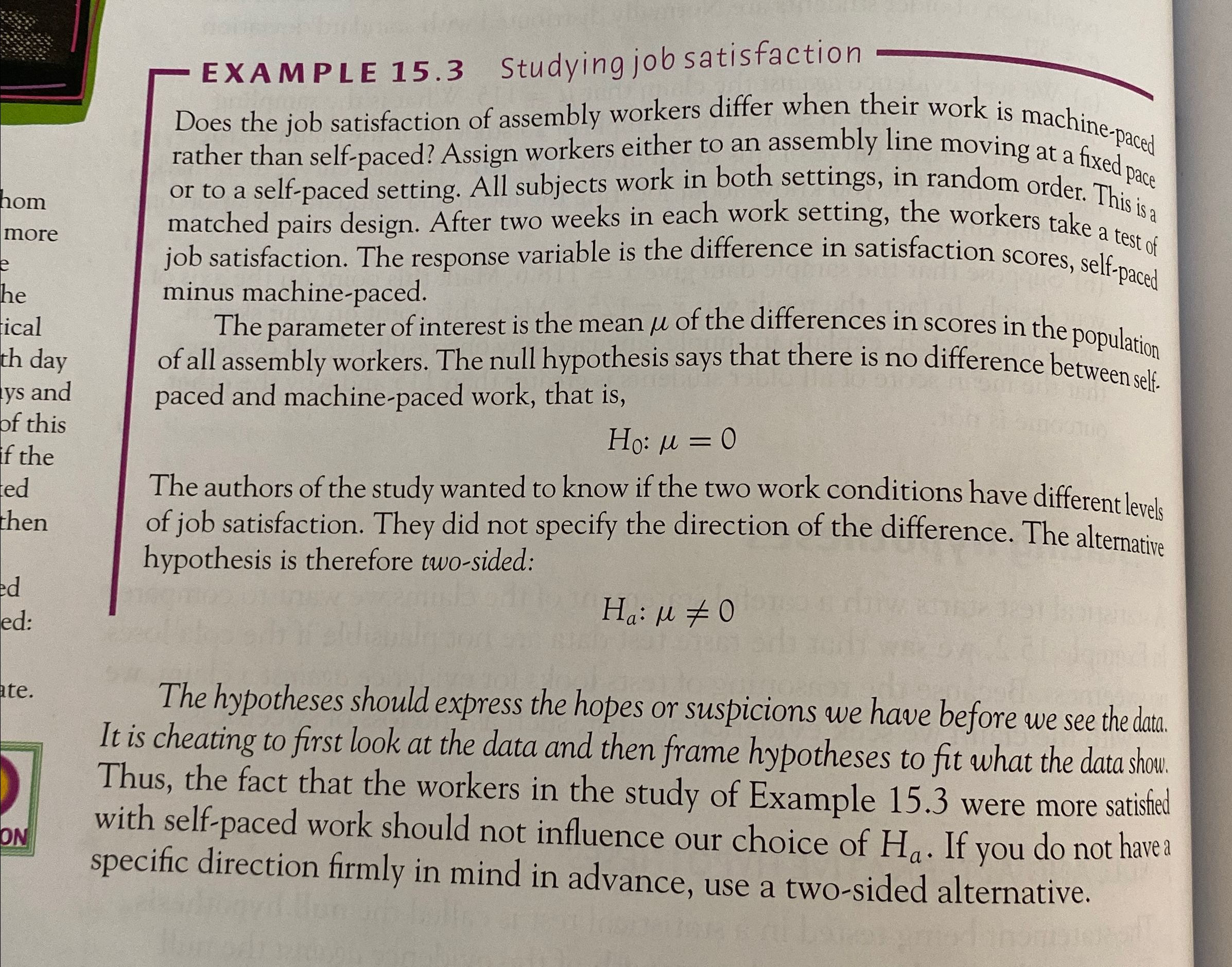
Does the job satisfaction of assembly workers differ when their work is machinepaced rather than selfpaced? Assign workers either to an assembly line moving at a fixed pace or to a selfpaced setting. All subjects work in both settings, in random order. This his matched pairs design. After two weeks in each work setting, the workers take a test of job satisfaction. The response variable is the difference in satisfaction scores, selfpaced minus machinepaced.
The parameter of interest is the mean of the differences in scores in the population of all assembly workers. The null hypothesis says that there is no difference between self. paced and machinepaced work, that is
:
The authors of the study wanted to know if the two work conditions have different levels of job satisfaction. They did not specify the direction of the difference. The alternative hypothesis is therefore twosided:
:
The hypotheses should express the hopes or suspicions we have before we see the data. It is cheating to first look at the data and then frame hypotheses to fit what the data show. Thus, the fact that the workers in the study of Example were more satisfed with selfpaced work should not influence our choice of If you do not havea specific direction firmly in mind in advance, use a twosided alternative.
Step by Step Solution
There are 3 Steps involved in it
1 Expert Approved Answer
Step: 1 Unlock

Question Has Been Solved by an Expert!
Get step-by-step solutions from verified subject matter experts
Step: 2 Unlock
Step: 3 Unlock
 Study Help