







Question: EXAMPLE 1: Assume that there are two nations in the world, Canada and Mexico, and that each country can produce only two products. Each country
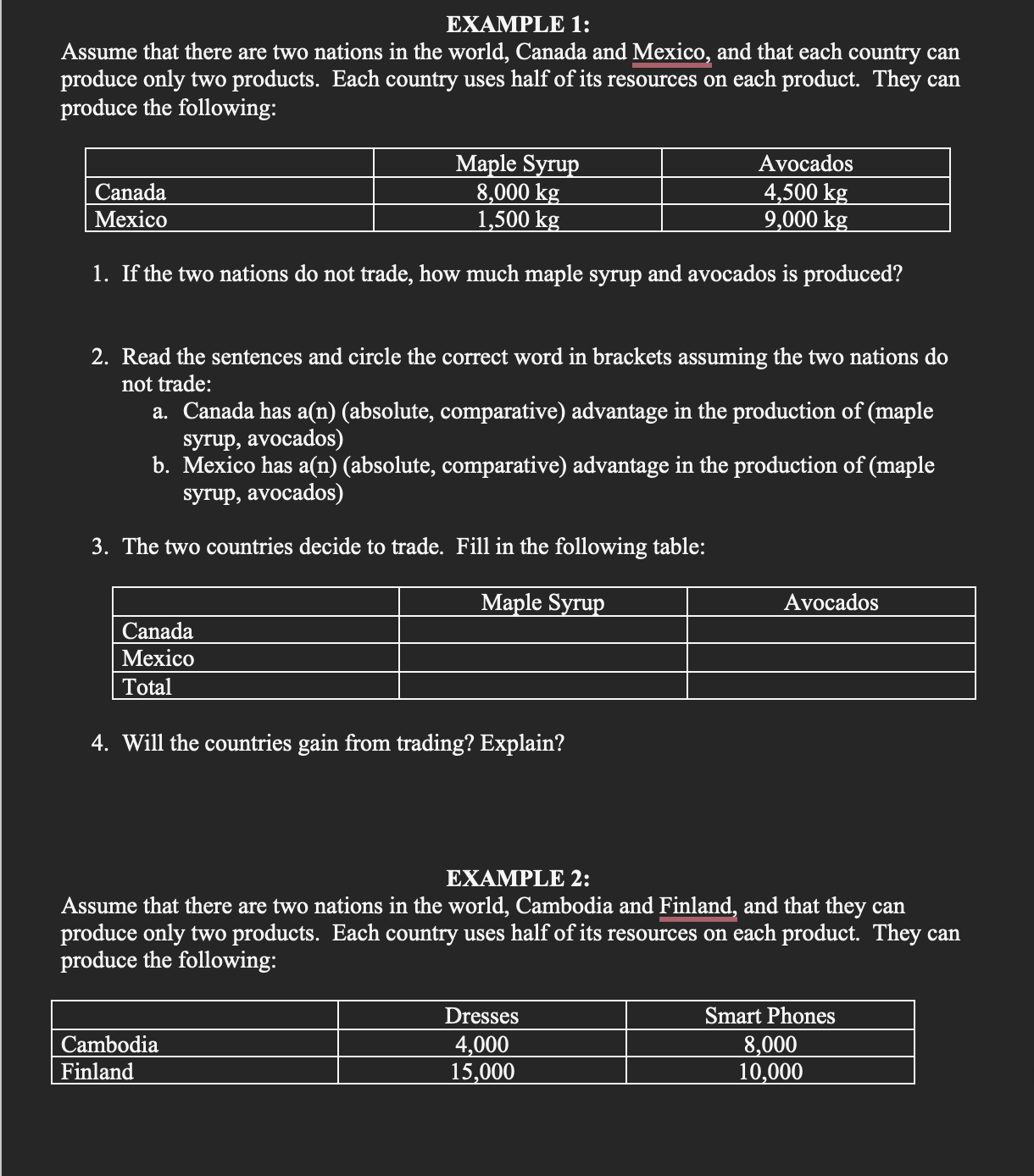
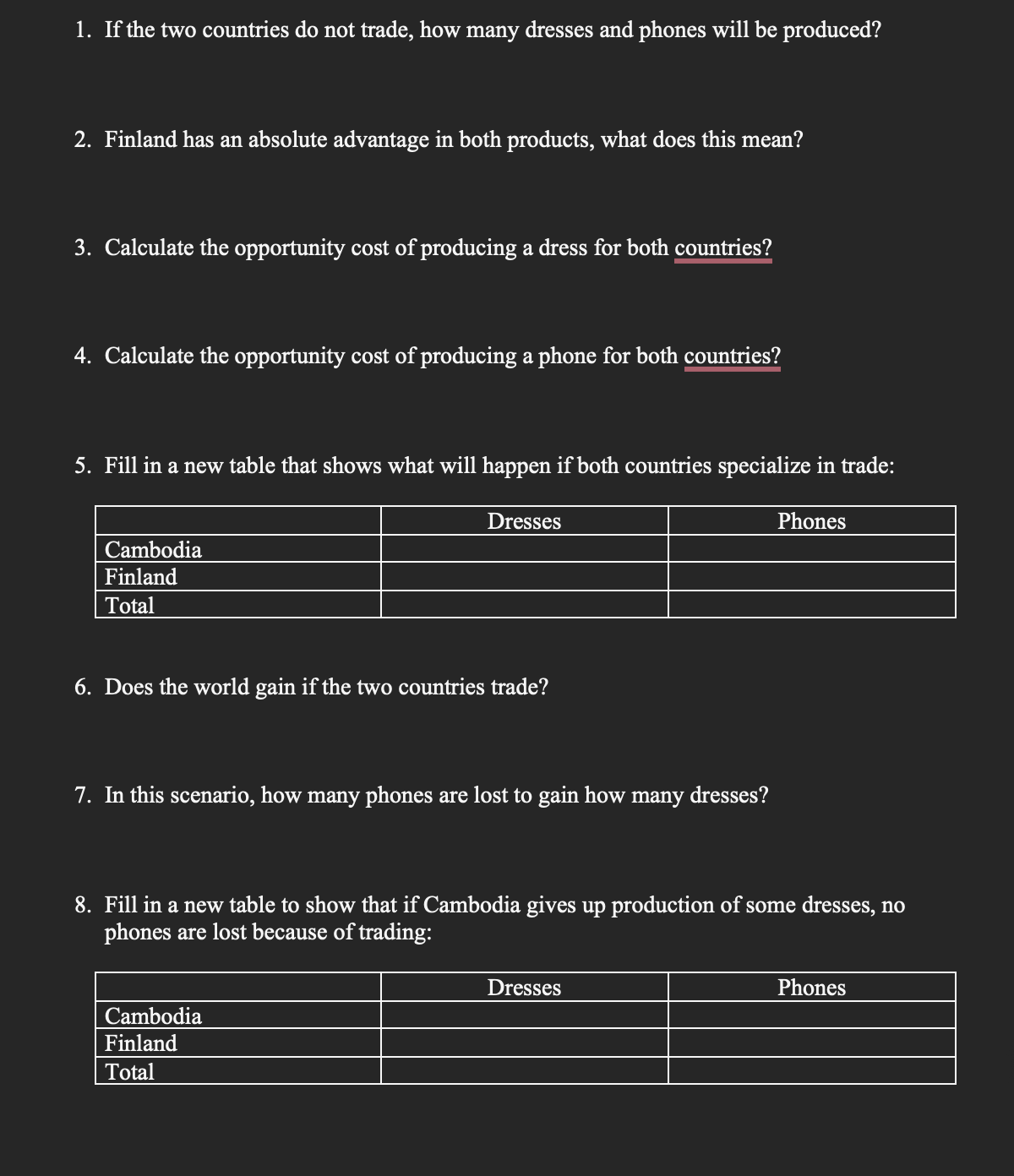
EXAMPLE 1: Assume that there are two nations in the world, Canada and Mexico, and that each country can produce only two products. Each country uses half of its resources on each product. They can produce the following: 1. If the two nations do not trade, how much maple syrup and avocados is produced? 2. Read the sentences and circle the correct word in brackets assuming the two nations do not trade: a. Canada has a(n) (absolute, comparative) advantage in the production of (maple syrup, avocados) b. Mexico has a(n) (absolute, comparative) advantage in the production of (maple syrup, avocados) 3. The two countries decide to trade. Fill in the following table: 4. Will the countries gain from trading? Explain? EXAMPLE 2: Assume that there are two nations in the world, Cambodia and Finland, and that they can produce only two products. Each country uses half of its resources on each product. They can produce the following: 1. If the two countries do not trade, how many dresses and phones will be produced? 2. Finland has an absolute advantage in both products, what does this mean? 3. Calculate the opportunity cost of producing a dress for both countries? 4. Calculate the opportunity cost of producing a phone for both countries? 5. Fill in a new table that shows what will happen if both countries specialize in trade: 6. Does the world gain if the two countries trade? 7. In this scenario, how many phones are lost to gain how many dresses? 8. Fill in a new table to show that if Cambodia gives up production of some dresses, no phones are lost because of trading
Step by Step Solution
There are 3 Steps involved in it

Get step-by-step solutions from verified subject matter experts
 Study Help