







Question: EXAMPLE 4 - 9 Before entering an underground utility vault to do repairs, a work crew analyzed the gas in the vault and found that
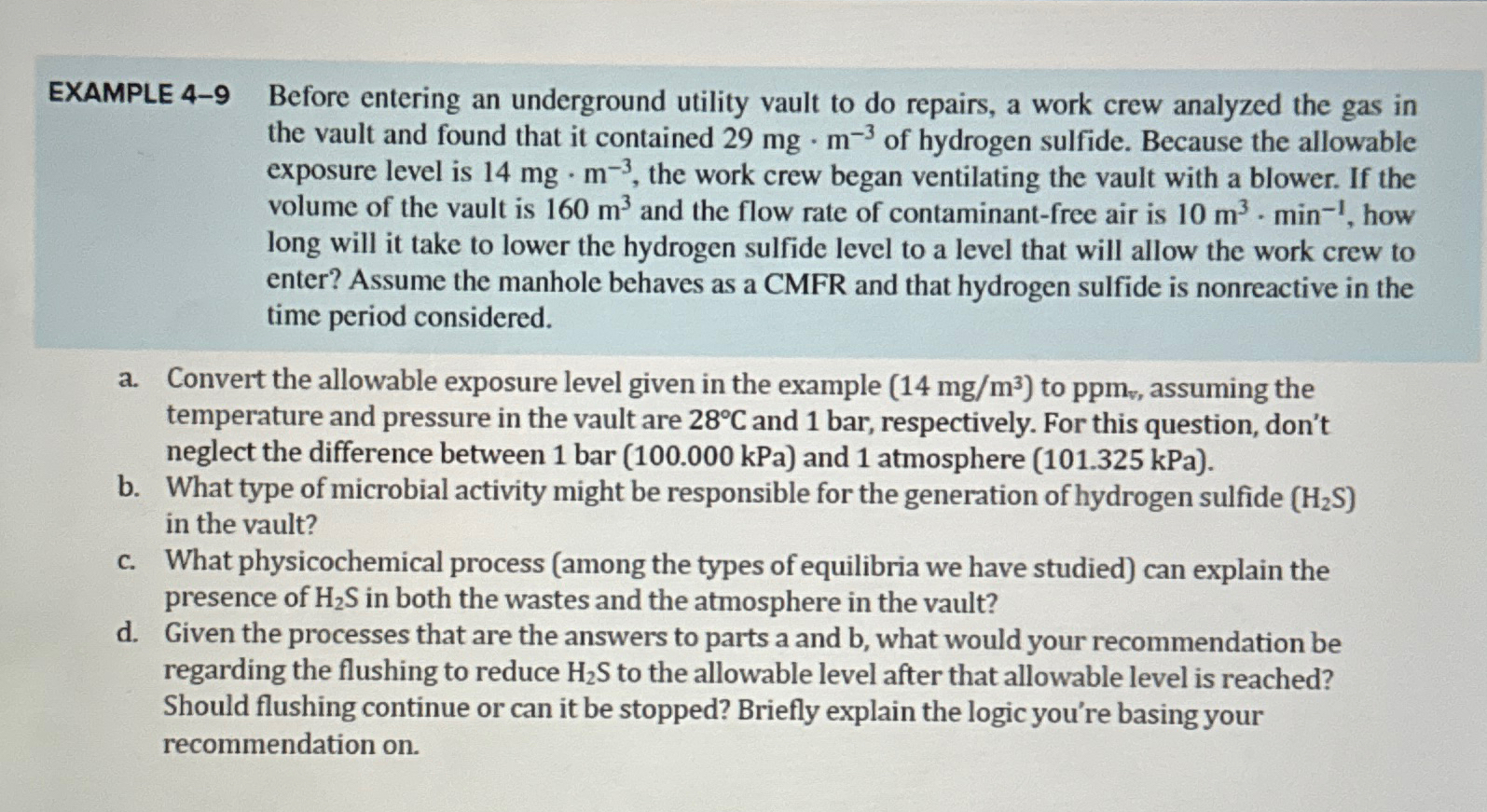
EXAMPLE Before entering an underground utility vault to do repairs, a work crew analyzed the gas in the vault and found that it contained of hydrogen sulfide. Because the allowable exposure level is the work crew began ventilating the vault with a blower. If the volume of the vault is and the flow rate of contaminantfree air is how long will it take to lower the hydrogen sulfide level to a level that will allow the work crew to enter? Assume the manhole behaves as a CMFR and that hydrogen sulfide is nonreactive in the time period considered.
a Convert the allowable exposure level given in the example to assuming the temperature and pressure in the vault are and respectively. For this question, don't neglect the difference between bar kPa and atmosphere kPa
b What type of microbial activity might be responsible for the generation of hydrogen sulfide in the vault?
c What physicochemical process among the types of equilibria we have studied can explain the presence of in both the wastes and the atmosphere in the vault?
d Given the processes that are the answers to parts a and what would your recommendation be regarding the flushing to reduce to the allowable level after that allowable level is reached? Should flushing continue or can it be stopped? Briefly explain the logic you're basing your recommendation on
Step by Step Solution
There are 3 Steps involved in it
1 Expert Approved Answer
Step: 1 Unlock

Question Has Been Solved by an Expert!
Get step-by-step solutions from verified subject matter experts
Step: 2 Unlock
Step: 3 Unlock
 Study Help