







Question: EXAMPLE 8 ( Practical stopping distance and perception / reaction time ) A car is traveling up a 2 % grade at 7 0 m
EXAMPLE Practical stopping distance and perceptionreaction time
A car is traveling up a grade at on good, wet pavement. The driver brakes to
try to avoid hitting stopped traffic that is ft ahead. The driver's reaction time is s
At first, when the driver applies the brakes, a software flaw causes the
antilock braking system to fail brakes work in nonantilock mode with efficiency
leaving ft skid marks. After the ft skid, the antilock brakes work with
efficiency. How fast will the driver be going when the stopped traffic is hit if the
coefficient of rolling resistance is constant at Assume minimum theoretical
stopping distance and ignore aerodynamic resistance.
SOLUTION:
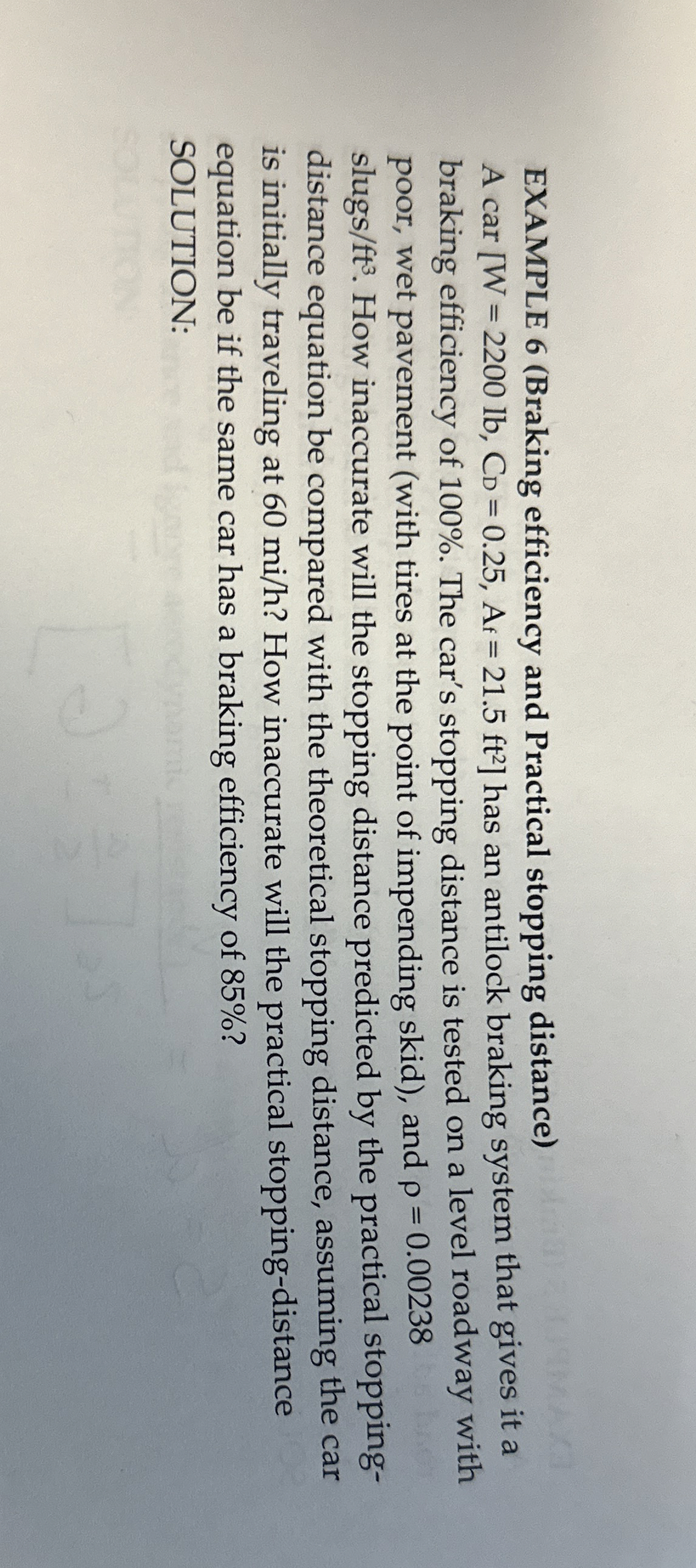
EXAMPLE Braking efficiency and Practical stopping distance
A car has an antilock braking system that gives it a
braking efficiency of The car's stopping distance is tested on a level roadway with
poor, wet pavement with tires at the point of impending skid and
slugs How inaccurate will the stopping distance predicted by the practical stopping
distance equation be compared with the theoretical stopping distance, assuming the car
is initially traveling at How inaccurate will the practical stoppingdistance
equation be if the same car has a braking efficiency of
SOLUTION:
Step by Step Solution
There are 3 Steps involved in it
1 Expert Approved Answer
Step: 1 Unlock

Question Has Been Solved by an Expert!
Get step-by-step solutions from verified subject matter experts
Step: 2 Unlock
Step: 3 Unlock
 Study Help