







Question: Example code ReturnAverage() slide 10 chapter 3 01.A: fill the following table Test Type Criterion Test Case Feasible Path (numbers Control Flow Statement coverage criterion
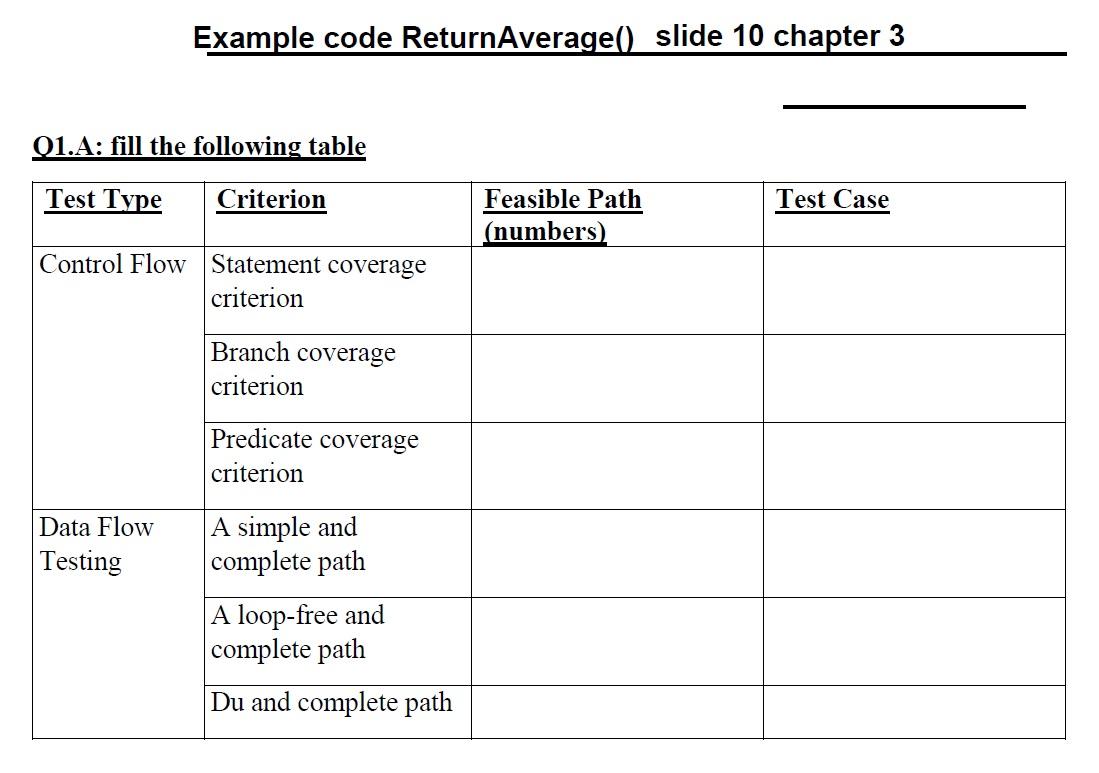
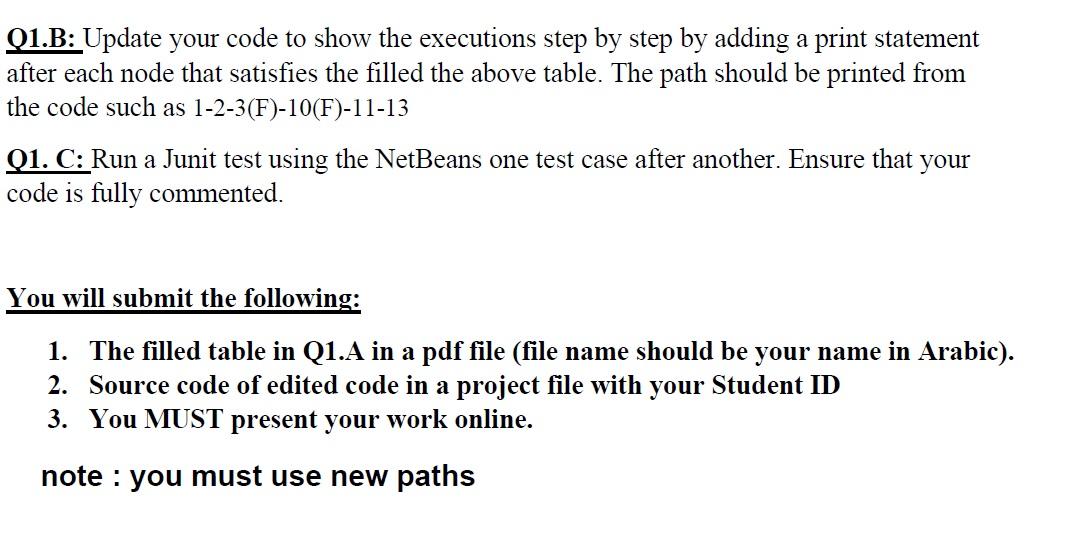
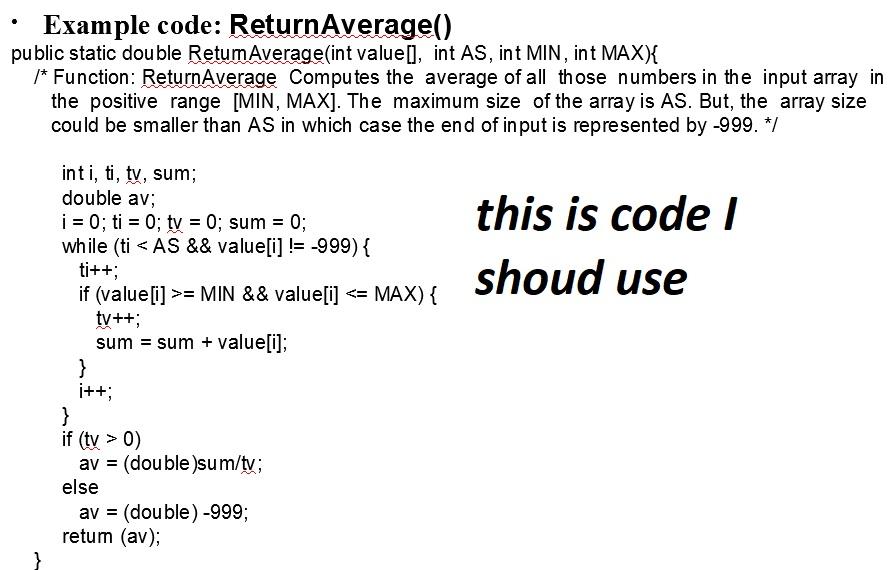
Example code ReturnAverage() slide 10 chapter 3 01.A: fill the following table Test Type Criterion Test Case Feasible Path (numbers Control Flow Statement coverage criterion Branch coverage criterion Predicate coverage criterion Data Flow Testing A simple and complete path A loop-free and complete path Du and complete path Q1.B: Update your code to show the executions step by step by adding a print statement after each node that satisfies the filled the above table. The path should be printed from the code such as 1-2-3(F)-10(F)-11-13 Q1. C: Run a Junit test using the NetBeans one test case after another. Ensure that your code is fully commented. You will submit the following: 1. The filled table in Q1.A in a pdf file (file name should be your name in Arabic). 2. Source code of edited code in a project file with your Student ID 3. You MUST present your work online. note : you must use new paths + Example code: Return Average() public static double Retum Average(int value[], int AS, int MIN, int MAXX{ /* Function: Return Average Computes the average of all those numbers in the input array in the positive range [MIN, MAX]. The maximum size of the array is AS. But, the array size could be smaller than AS in which case the end of in put is represented by -999. */ this is code / shoud use inti, ti, tv, sum; double av; i = 0; ti = 0; tv = 0; sum = 0; while (ti
Step by Step Solution
There are 3 Steps involved in it

Get step-by-step solutions from verified subject matter experts
 Study Help