Question: excel please undefined Forecasting Methods Excel is a great tool for forecasting, and often forecasting looks at different approaches Your data set is the demand*

excel pleaseexcel please undefined Forecasting Methods Excelexcel please undefined Forecasting Methods Excelexcel please undefined Forecasting Methods Excelexcel please undefined Forecasting Methods Excelundefined
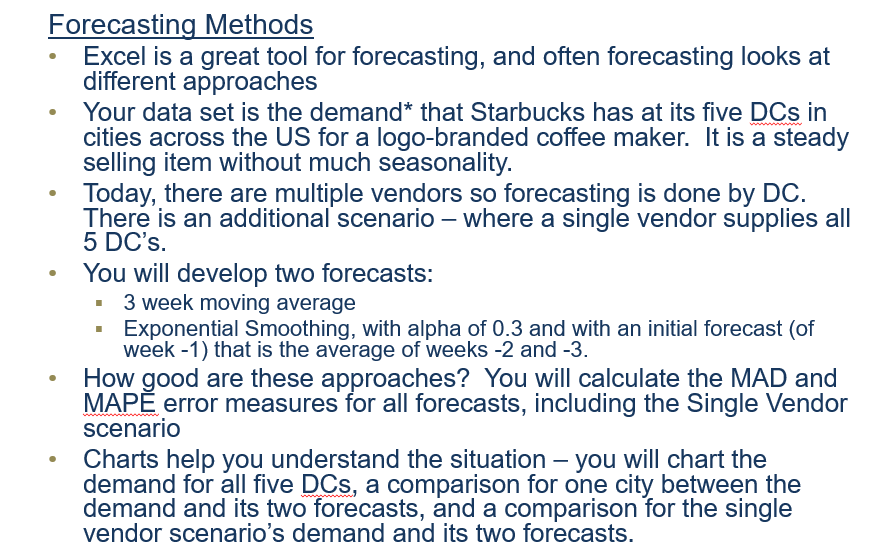
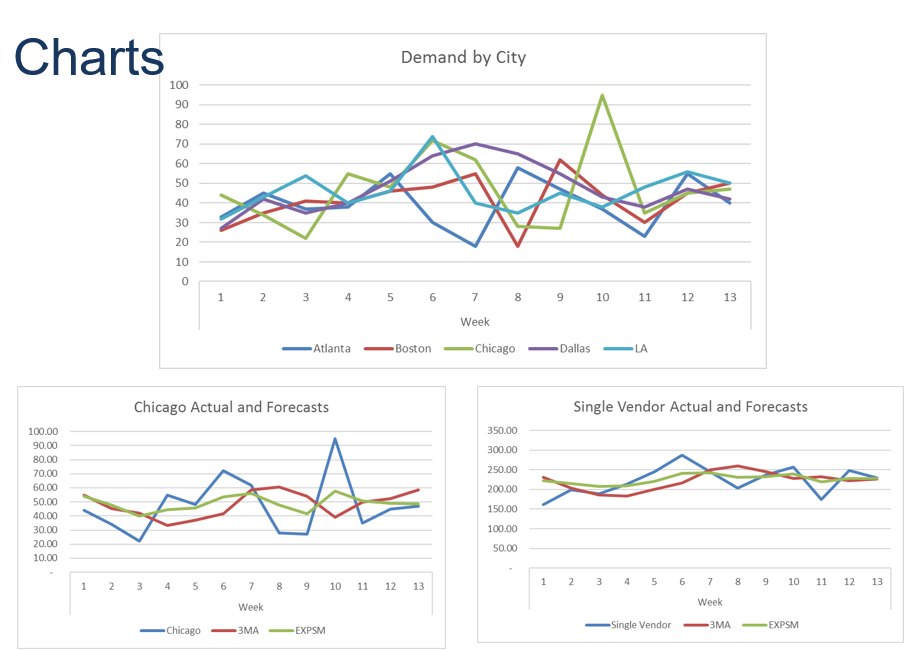
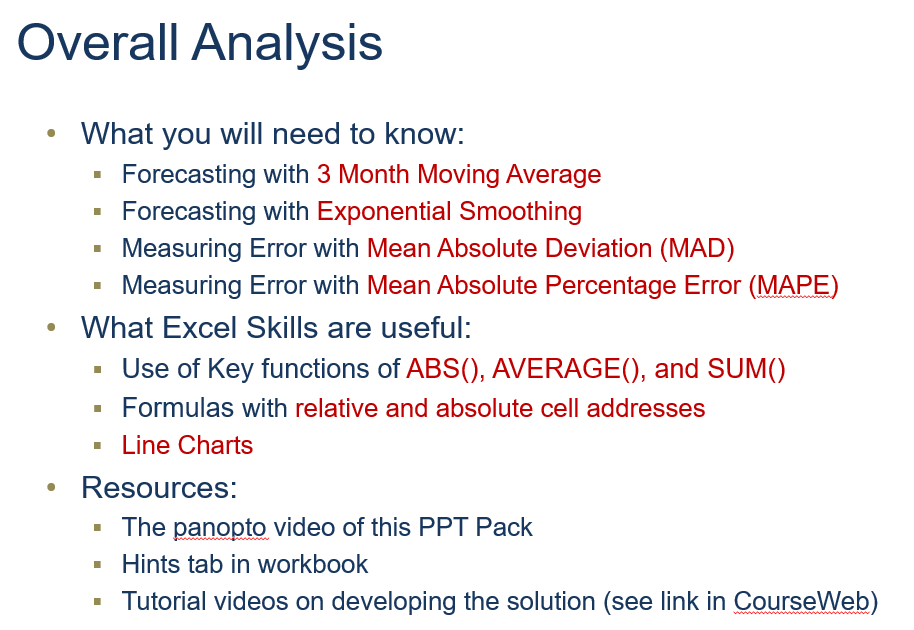
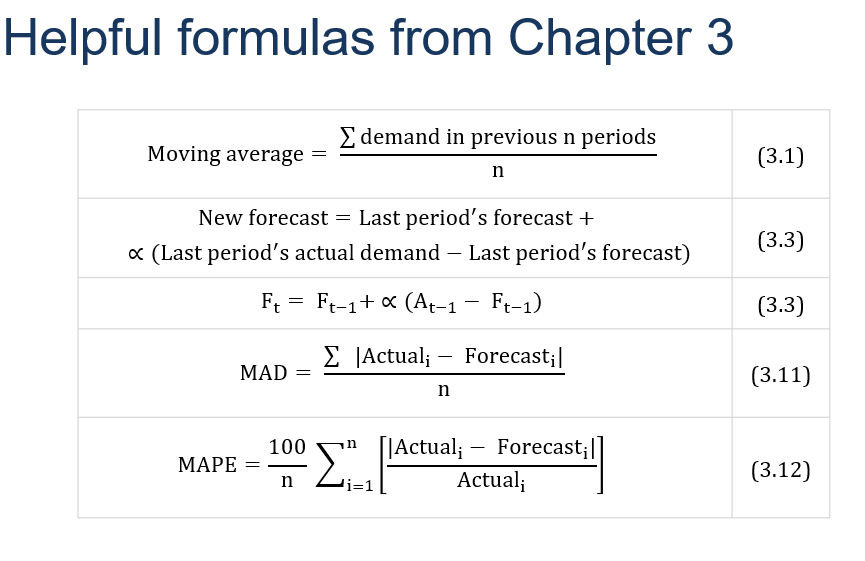
Forecasting Methods Excel is a great tool for forecasting, and often forecasting looks at different approaches Your data set is the demand* that Starbucks has at its five DCs in cities across the US for a logo-branded coffee maker. It is a steady selling item without much seasonality. Today, there are multiple vendors so forecasting is done by DC. There is an additional scenario - where a single vendor supplies all 5 DC's. You will develop two forecasts: . 3 week moving average Exponential Smoothing, with alpha of 0.3 and with an initial forecast (of week-1) that is the average of weeks -2 and -3. How good are these approaches? You will calculate the MAD and MAP error measures for all forecasts, including the Single Vendor scenario Charts help you understand the situation - you will chart the demand for all five DCs, a comparison for one city between the demand and its two forecasts, and a comparison for the single vendor scenario's demand and its two forecasts. Charts Demand by City 100 90 80 70 60 50 40 30 20 10 0 1 2 3 4 5 6 7 8 9 10 11 12 13 Week Atlanta Boston - Chicago Dallas -A Chicago Actual and Forecasts Single Vendor Actual and Forecasts 350.00 300.00 100.00 90.00 80.00 70.00 60.00 50.00 40.00 30.00 20.00 10.00 A 250.00 200.00 150.00 100.00 50.00 2. 3 4 6 7 8 9 1 10 1 11 2 3 4 5 12 5 6 7 8 9 13 13 10 11 12 Week Week EXPSM Single Vendor Chicago EXPSM Overall Analysis What you will need to know: Forecasting with 3 Month Moving Average Forecasting with Exponential Smoothing Measuring Error with Mean Absolute Deviation (MAD) Measuring Error with Mean Absolute Percentage Error (MAPE) What Excel Skills are useful: Use of Key functions of ABS(), AVERAGE(), and SUM() Formulas with relative and absolute cell addresses Line Charts Resources: The panopto video of this PPT Pack Hints tab in workbook Tutorial videos on developing the solution (see link in CourseWeb) Helpful formulas from Chapter 3 demand in previous n periods Moving average = n (3.1) New forecast = Last period's forecast + (Last period's actual demand Last period's forecast) (3.3) Ft = 1 Ft-1+

Step by Step Solution

There are 3 Steps involved in it

1 Expert Approved Answer
Step: 1 Unlock blur-text-image

Question Has Been Solved by an Expert!

Get step-by-step solutions from verified subject matter experts

Step: 2 Unlock
Step: 3 Unlock

Students Have Also Explored These Related General Management Questions!