







Question: Exercise 0 4 . 4 3 ( Bayes Theorem ) Question 1 2 of 1 7 Check My Work According to a 2 0 1
Exercise Bayes Theorem
Question of
Check My Work
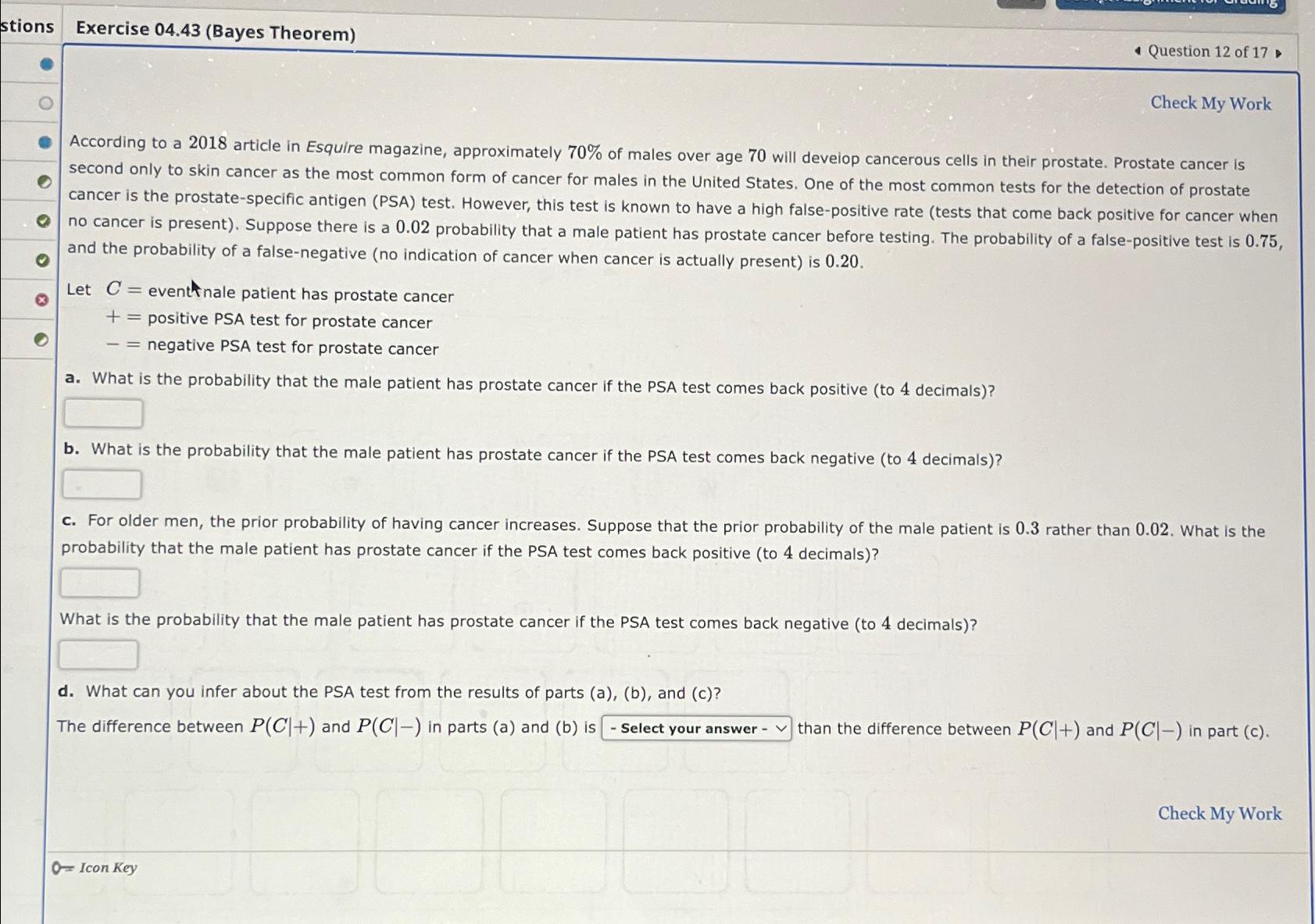
According to a article in Esquire magazine, approximately of males over age will develop cancerous cells in their prostate. Prostate cancer is second only to skin cancer as the most common form of cancer for males in the United States. One of the most common tests for the detection of prostate cancer is the prostatespecific antigen PSA test. However, this test is known to have a high falsepositive rate tests that come back positive for cancer when no cancer is present Suppose there is a probability that a male patient has prostate cancer before testing. The probability of a falsepositive test is and the probability of a falsenegative no indication of cancer when cancer is actually present is
Let event nale patient has prostate cancer
positive PSA test for prostate cancer
negative PSA test for prostate cancer
a What is the probability that the male patient has prostate cancer if the PSA test comes back positive to decimals
b What is the probability that the male patient has prostate cancer if the PSA test comes back negative to decimals
c For older men, the prior probability of having cancer increases. Suppose that the prior probability of the male patient is rather than What is the probability that the male patient has prostate cancer if the PSA test comes back positive to decimals
What is the probability that the male patient has prostate cancer if the PSA test comes back negative to decimals
d What can you infer about the PSA test from the results of parts ab and c
The difference between and in parts and is than the difference between and in part c
Check My Work
Icon Key
Step by Step Solution
There are 3 Steps involved in it
1 Expert Approved Answer
Step: 1 Unlock

Question Has Been Solved by an Expert!
Get step-by-step solutions from verified subject matter experts
Step: 2 Unlock
Step: 3 Unlock
 Study Help