







Question: Exercise 1 0 instructions: Exercise 1 0 instructions: Define a function called print _ sudoku ( grid ) that takes a 2 D list (
Exercise instructions: Exercise instructions:
Define a function called printsudokugrid that takes a list a list of lists representing
a Sudoku grid as its parameter.
The function should format the output so that each number is aligned in a gridlike
structure. Empty cells represented by should be displayed as dots for clarity.
Add horizontal lines to separate the subgrids for better visual structure.
YOU MUST USE THE MAIN FUNCTION, see below
Example Setup:
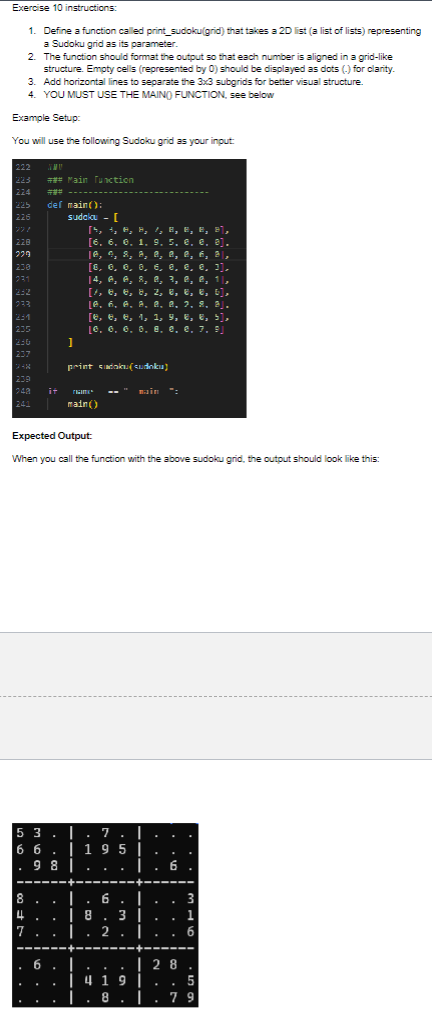
You will use the following Sudoku grid as your input:Main functiondef main:
sudoku
theta theta theta theta
printsudokusudoku
if :
main When you call the function with the above sudoku grid, the output should look like this:
Define a function caled printsudokugrid that takes a D list a list of lists representing
a Sudoku grid as its parameter.
The function should format the output so that each number is aligned in a gridlike
structure. Empty cells represented by should be displayed as dots for clarity.
Add horizontal lines to separate the subgrids for better visual structure.
YOU MUST USE THE MAINO FUNCTION, see below
Example Setup:
You will use the following Sudoku grid as your input:
Expected Output:
When you call the function with the above sudoku grid, the output should look like this:
Step by Step Solution
There are 3 Steps involved in it
1 Expert Approved Answer
Step: 1 Unlock

Question Has Been Solved by an Expert!
Get step-by-step solutions from verified subject matter experts
Step: 2 Unlock
Step: 3 Unlock
 Study Help