







Question: CLINAL DISTRIBUTIONS Work in a small group or alone to complete this exercise. We learned in this lab that skin color has a clinal
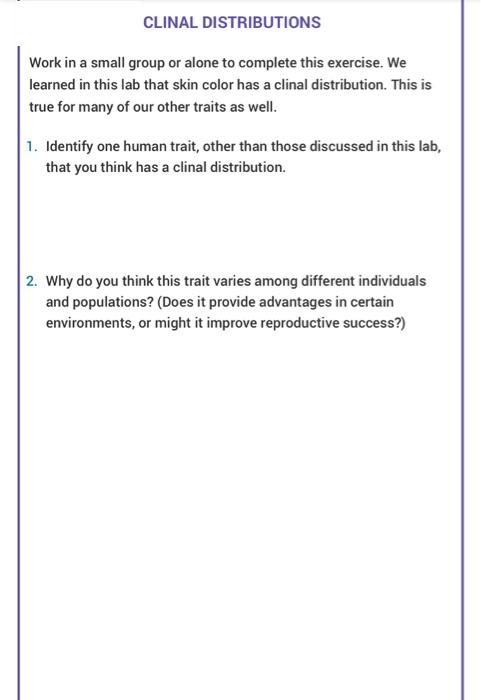
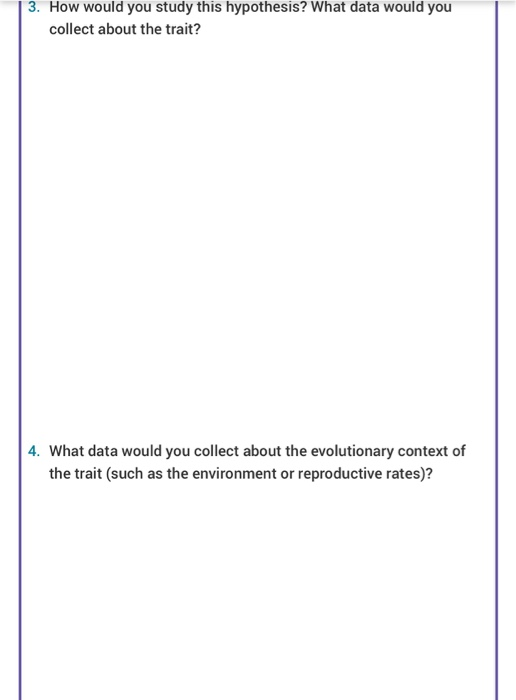
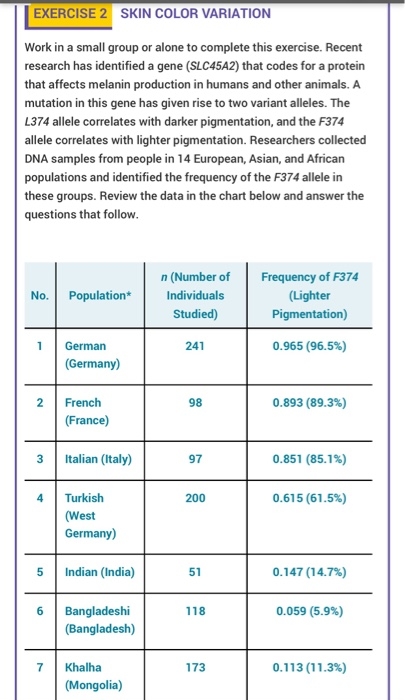
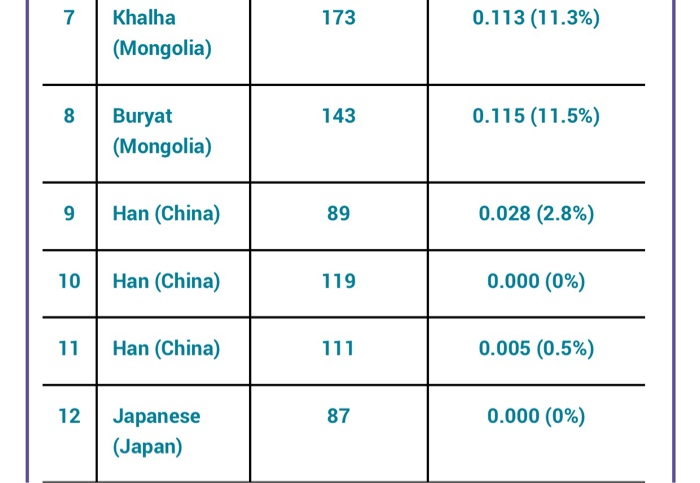
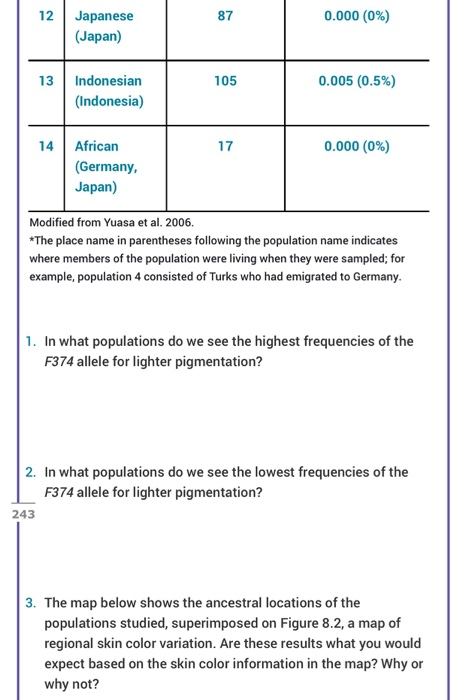
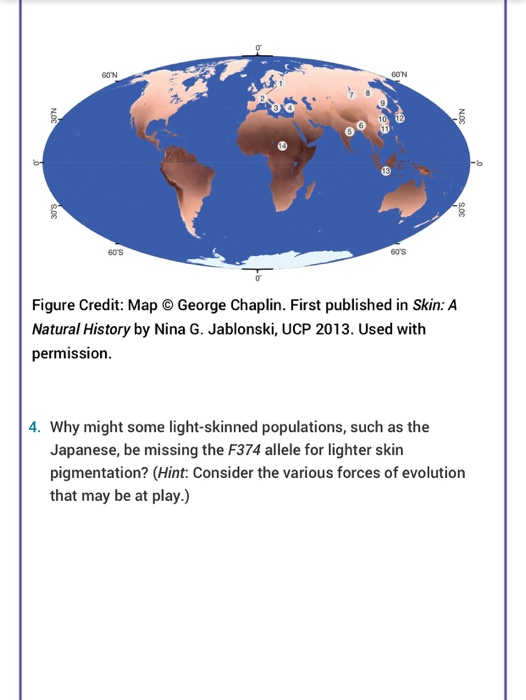
CLINAL DISTRIBUTIONS Work in a small group or alone to complete this exercise. We learned in this lab that skin color has a clinal distribution. This is true for many of our other traits as well. 1. Identify one human trait, other than those discussed in this lab, that you think has a clinal distribution. 2. Why do you think this trait varies among different individuals and populations? (Does it provide advantages in certain environments, or might it improve reproductive success?) 3. How would you study this hypothesis? What data would you collect about the trait? 4. What data would you collect about the evolutionary context of the trait (such as the environment or reproductive rates)? EXERCISE 2 SKIN COLOR VARIATION Work in a small group or alone to complete this exercise. Recent research has identified a gene (SLC45A2) that codes for a protein that affects melanin production in humans and other animals. A mutation in this gene has given rise to two variant alleles. The L374 allele correlates with darker pigmentation, and the F374 allele correlates with lighter pigmentation. Researchers collected DNA samples from people in 14 European, Asian, and African populations and identified the frequency of the F374 allele in these groups. Review the data in the chart below and answer the questions that follow. No. 1 2 3 4 5 6 7 Population* German (Germany) French (France) Italian (Italy) Turkish (West Germany) Indian (India) Bangladeshi (Bangladesh) Khalha (Mongolia) n (Number of Individuals Studied) 241 98 97 200 51 118 173 Frequency of F374 (Lighter Pigmentation) 0.965 (96.5%) 0.893 (89.3%) 0.851 (85.1%) 0.615 (61.5%) 0.147 (14.7%) 0.059 (5.9%) 0.113 (11.3%) 7 8 9 10 11 12 Khalha (Mongolia) Buryat (Mongolia) Han (China) Han (China) Han (China) Japanese (Japan) 173 143 89 119 111 87 0.113 (11.3%) 0.115 (11.5%) 0.028 (2.8%) 0.000 (0%) 0.005 (0.5%) 0.000 (0%) 12 13 14 243 Japanese (Japan) Indonesian (Indonesia) African (Germany, Japan) 87 105 17 0.000 (0%) 0.005 (0.5%) 0.000 (0%) Modified from Yuasa et al. 2006. *The place name in parentheses following the population name indicates where members of the population were living when they were sampled; for example, population 4 consisted of Turks who had emigrated to Germany. 1. In what populations do we see the highest frequencies of the F374 allele for lighter pigmentation? 2. In what populations do we see the lowest frequencies of the F374 allele for lighter pigmentation? 3. The map below shows the ancestral locations of the populations studied, superimposed on Figure 8.2, a map of regional skin color variation. Are these results what you would expect based on the skin color information in the map? Why or why not? NOC 30$ 60'N 60'S 60N 60'S 30N 30'S Figure Credit: Map George Chaplin. First published in Skin: A Natural History by Nina G. Jablonski, UCP 2013. Used with permission. 4. Why might some light-skinned populations, such as the Japanese, be missing the F374 allele for lighter skin pigmentation? (Hint: Consider the various forces of evolution that may be at play.) -6
Step by Step Solution
3.45 Rating (165 Votes )
There are 3 Steps involved in it
1 Some of the traits other than the skin color which belongs to the clinal distribution criteria will be hair form Body posture such as the height of the individual This trait varies from one geograph... View full answer

Get step-by-step solutions from verified subject matter experts
 Study Help